You can spend an afternoon comparing engagement rings without looking inside a single band. Yet those tiny numbers and symbols deserve a moment of your attention. They help you understand what the metal is and whether it has been independently tested.
One symbol has a particularly London story: the leopard’s head. It identifies the London Assay Office, although it does not mean the ring was made in the capital. Knowing that distinction is a good start to reading the rest.
Match the hallmark to the ring’s metal
Before trying to decipher a hallmark, check how the jeweller describes the ring. “Gold” or “platinum” is only part of the specification. The fineness tells you how much of that precious metal the alloy contains.
For example, Lily Arkwright’s engagement ring collection includes the Isabella solitaire in both 18ct yellow gold and 950 platinum. Those descriptions translate into different fineness marks. When viewing a ring, ask the jeweller to show you how its hallmark corresponds to the metal listed.
This is useful whether you are comparing designs in a showroom or buying online. A product photograph may show every claw around the diamond while leaving the inside of the band out of view.
What do 750 and 950 mean on a ring?
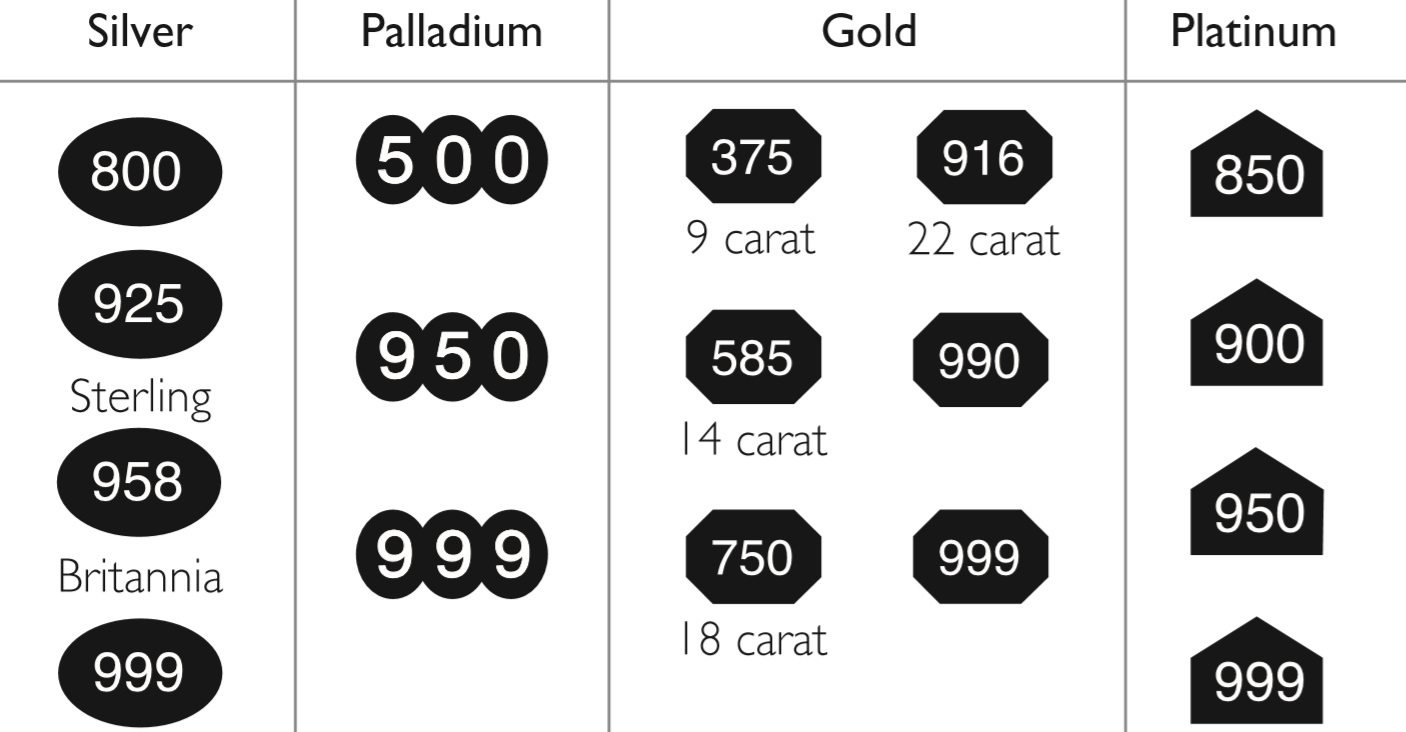
The numbers express precious metal content in parts per thousand. Birmingham Assay Office’s gold guide explains the familiar gold standards: 750 means 18ct gold, or 75% gold; 585 means 14ct; and 375 means 9ct.
A 950 platinum fineness mark means the alloy contains at least 95% platinum. That number is not a score for the finished ring. Comparing 750 gold with 950 platinum tells you about two different alloys, rather than declaring one design better made.
There is another detail to notice: the outline around the number. In a UK fineness mark, this identifies the metal. The number 950 can also appear on palladium, so three digits on their own are not enough to identify platinum.
Compare the platinum and palladium outlines in the official fineness-mark chart.
A UK hallmark has three compulsory parts
A number such as 750 is not, by itself, a complete modern UK hallmark. The government’s hallmarking guide sets out three compulsory marks:
3 compulsory UK hallmark marks
The date letter is optional. |
Ask to see the group together. Reading only the clearest number can leave out information carried by the smaller symbols beside it.
A date letter records the year of hallmarking. Its absence from a modern ring does not automatically mean something is missing.
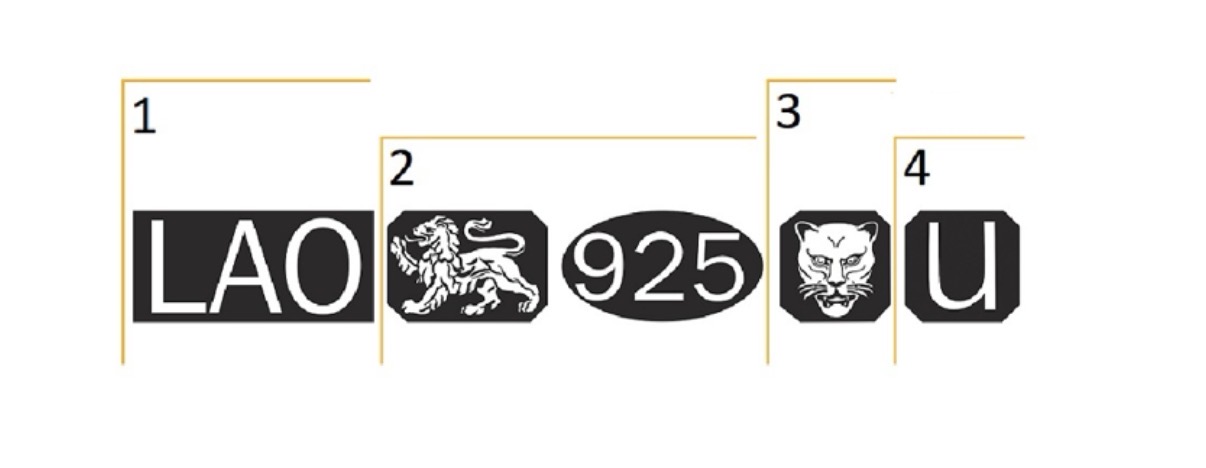
Official silver example: 1, sponsor; 2, fineness (925) with the optional lion symbol; 3, London assay office; 4, optional date letter. The sponsor, numerical fineness and assay office marks are compulsory.
Source: British Hallmarking Council, GOV.UK. © Crown copyright, Open Government Licence v3.0.
What does the London leopard’s head hallmark mean?
The Goldsmiths’ Company Assay Office uses the leopard’s head as London’s town mark. It is a connection to the city’s hallmarking tradition, rather than a jeweller’s decorative logo.
It also answers a narrower question than many shoppers expect: which assay office tested and marked the metal? It does not establish where the ring was designed or manufactured.
A ring bought in London can therefore carry another recognised assay office mark. If British manufacture matters to you, ask about that separately instead of treating the leopard’s head as proof of it.
What if the ring has different marks, or none you recognise?
Not every ring follows the same modern UK pattern. Recognised Convention hallmarks can appear on imported jewellery. Weight exemptions include gold articles weighing less than 1g and platinum articles weighing less than 0.5g, excluding stones. Historical exemptions can also apply to older rings.
The official practical guidance explains these distinctions. An unfamiliar or absent mark calls for an explanation from the seller, rather than an immediate conclusion about whether the ring is genuine.
Ask them to identify the marks on that particular piece, or explain the applicable exemption. For an online purchase, request a clear close-up if the listing does not show them.

Does a hallmark verify the diamond?
A hallmark verifies precious metal fineness. It does not tell you whether a diamond is natural or lab-grown, or establish its grading characteristics. It is not a valuation for the ring, either.
Keep the questions separate: ask the jeweller to explain the hallmark for the metal and the documentation supplied for the stone. If you are buying in person, a magnifier and the shop’s hallmarking notice can make the first conversation much easier.
Then turn the ring back over and enjoy the part that first caught your eye. You do not need to become a hallmark collector to understand what you are buying.