From Harry Styles’ unconventional tailoring to Florence Pugh’s daring gowns, Britain’s most adventurous celebrities are redefining red-carpet style. Their approach reflects a wider creative culture in which fashion, photography and theatrical self-expression increasingly overlap.
Which British celebrities are the most adventurous dressers?
Harry Styles, Florence Pugh and Dua Lipa are among the most compelling examples of contemporary British celebrity fashion risk-taking. Styles challenges traditional menswear conventions, Pugh embraces sheer fabrics and dramatic silhouettes, and Lipa moves confidently between glamorous designer collections and playful streetwear.
Their outfits are not universally admired, but that is partly what makes them interesting. A look that divides opinion can still demonstrate strong design, individual expression and cultural relevance.
The distinction between best and worst dressed celebrities therefore involves more than deciding whether an outfit is attractive. It requires understanding its creative intention, the person wearing it and the fashion culture that produced it.
Why does British celebrity fashion embrace eccentricity?
Britain has a long history of treating clothes as tools for personal identity, cultural commentary and deliberate provocation.
From the punk movement associated with Vivienne Westwood to Alexander McQueen’s experimental runway presentations, British fashion has repeatedly challenged conventional ideas about elegance, gender and respectability.
This heritage helps explain why British celebrities can establish enduring fashion identities through unusual styling rather than traditional glamour.
The Brit Awards provide a particularly visible example. Unlike the more formal atmosphere traditionally associated with Hollywood ceremonies, the event has frequently celebrated eccentricity and pop-cultural experimentation.
British Vogue’s coverage of the 2026 Brit Awards highlighted this tradition, recalling Geri Halliwell’s Union Jack dress, Amy Winehouse’s distinctive Noughties aesthetic and Harry Styles’ unconventional wardrobe. Such appearances demonstrate that fashion can succeed by communicating personality rather than following established rules.
The same principles extend beyond music. British actors increasingly use premieres, awards ceremonies and fashion-week appearances to express individual identities through clothing.
However, experimentation does not guarantee success. The most convincing outfits combine originality with careful construction, appropriate proportions and a recognisable relationship with the person wearing them.
Harry Styles: How gender-fluid fashion became his signature
Harry Styles has built a distinctive fashion identity by drawing on historical tailoring, glamorous stagewear and clothing traditionally marketed to women. His appearance at the 2026 Brit Awards continued this approach.
Working with stylist Harry Lambert, Styles wore a black-and-white Chanel bouclé pinstripe jacket with matching trousers and a pale mint shirt, drawn from the house’s Métiers d’art 2026 collection. British Vogue noted that the look was consistent with the visual direction surrounding his album Kiss All The Time. Disco, Occasionally. The ensemble was unconventional without appearing disconnected from his established aesthetic.
Styles’ strongest fashion choices work because they are recognisably his. An unusual shoe, feminine accessory or theatrical silhouette contributes to a larger creative identity rather than appearing as an isolated attempt to attract attention.
Nevertheless, his approach can divide opinion. Viewers who prefer classic tailoring may find his styling excessive, while those who value experimentation may consider it among the most interesting examples of contemporary menswear.
This illustrates an important limitation of worst-dressed rankings: an outfit should be judged according to what it attempts to achieve, not simply whether it follows familiar conventions.
Florence Pugh: Why dramatic dresses can be both elegant and divisive
Florence Pugh has developed a reputation for embracing transparency, sculptural construction and unconventional eveningwear. Her wardrobe frequently combines romantic details with more provocative silhouettes, demonstrating a willingness to experiment with the boundaries of traditional red-carpet dressing.
At the October 2026 BFI London Film Festival premiere of In the Shadows, Pugh wore a lavender corseted gown from Wiederhoeft’s spring 2027 collection, styled by Rebecca Corbin-Murray. The dress offered a distinctive combination of structured construction and soft colour.Its corseted silhouette introduced a theatrical element, while the lavender tone and coordinated jewellery helped balance the overall appearance.
Pugh’s style also raises wider questions about how fashion is judged. Sheer fabrics and revealing designs can attract criticism based on individual attitudes towards modesty, even when the garments demonstrate sophisticated craftsmanship.
However, a revealing outfit is not automatically an unsuccessful one. A more meaningful assessment considers whether its proportions are balanced, whether the construction serves a clear design purpose and whether the finished appearance reflects the wearer’s personality.
Pugh’s fashion identity demonstrates how confident styling can transform potentially divisive clothing into a coherent personal signature.
Dua Lipa: Blending runway fashion with pop-star glamour
Dua Lipa represents another approach to adventurous British celebrity dressing. Her fashion choices combine contemporary luxury, nostalgic influences and the playful glamour traditionally associated with pop music.
Unlike Styles, whose wardrobe frequently challenges menswear conventions, or Pugh, whose appearances often emphasise dramatic eveningwear, Lipa moves between formal fashion and everyday styling.
During Paris Fashion Week in October 2026, she attended Chanel’s spring/summer 2027 presentation wearing a reinterpretation of the classic skirt suit. Her ability to adapt designer clothing to less formal settings is equally significant.
Later that month, Lipa wore a Chanel jacket with jeans and heels, demonstrating how distinctive luxury pieces can be integrated into relatively accessible combinations. This flexibility is central to her fashion identity.
A striking runway garment does not have to remain confined to formal events. When styled effectively, it can become part of an individual everyday wardrobe.
Lipa’s strongest looks succeed by balancing fashionable experimentation with an approachable sense of personal style.
How fashion photography helps unconventional celebrity looks become iconic
The styles associated with Harry Styles, Florence Pugh and Dua Lipa demonstrate that unconventional clothing can become a powerful form of self-expression.However, the cultural impact of an outfit depends not only on the garments themselves but also on how they are photographed and presented.
Celebrity fashion is increasingly experienced through magazine editorials, campaign images, social media and carefully constructed visual narratives.
A dramatic silhouette may appear ordinary in one photograph but extraordinary in another. Lighting, composition, setting and pose all contribute to how audiences interpret the clothes.
This relationship between fashion and image-making is particularly important within British creative culture, where photography has long played a role in challenging conventional ideas of glamour.
One contemporary example is British photographer and filmmaker Nadia Lee Cohen, whose work explores the theatrical possibilities of fashion imagery.
Nadia Lee Cohen and the art of unconventional celebrity imagery
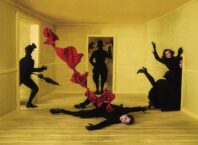
Nadia Lee Cohen has developed a distinctive photographic style through surreal compositions, elaborate costumes, retro references and cinematic storytelling.
Born in Essex in 1992 and educated at the London College of Fashion, Cohen frequently draws inspiration from Hollywood glamour, vintage advertising and popular culture.
Her photographs are often deliberately artificial. Subjects inhabit carefully constructed environments, adopting exaggerated characters and appearances that challenge traditional ideas of beauty.
This approach offers a useful perspective on the same principles of individuality and experimentation seen in the wardrobes of Styles, Pugh and Lipa. Although their individual fashion identities are different, all demonstrate how clothing can communicate something beyond conventional attractiveness.
Cohen explores this idea through photography rather than red-carpet styling. Her documented work includes celebrity collaborations with Rihanna for Interview in 2024 and Kim Kardashian for Interview and CR Fashion Book. Her official portfolio also lists a 2026 editorial featuring British actor Robert Pattinson alongside Zendaya. These projects demonstrate her involvement in high-profile celebrity image-making, where fashion becomes part of a broader artistic composition.
Cohen’s work is relevant to British celebrity fashion not because she is responsible for the wardrobes of Styles, Pugh or Lipa, but because her photography reflects a similar interest in theatricality, creative reinvention and unconventional visual identities.
In her images, exaggerated styling is not necessarily a fashion mistake. It may be essential to the artistic intention.
The same distinction is useful when analysing celebrities whose red-carpet appearances challenge expectations. An unusual garment can be effective precisely because it refuses to look conventional.
What separates an iconic outfit from a fashion mistake?
An iconic celebrity outfit generally combines three qualities: a recognisable creative idea, a convincing relationship with the wearer and a visually coherent execution.
Fashion mistakes often occur when these elements fail to work together. A technically impressive dress may seem disconnected from a celebrity’s personality. Dramatic accessories can overwhelm an otherwise elegant garment, while unusual proportions may appear accidental rather than intentional.
The key distinction is between experimentation and poor execution. Harry Styles’ gender-fluid tailoring works within an established artistic identity. Florence Pugh’s dramatic gowns reflect her preference for expressive silhouettes, while Dua Lipa’s fashion choices balance bold designer pieces with contemporary pop culture.
These approaches may not appeal equally to every viewer, but they provide clear criteria against which individual outfits can be assessed.
Cohen’s photography reinforces this distinction from another creative perspective. Her highly constructed imagery demonstrates that unconventional styling can be successful when it contributes to a coherent artistic vision. A strange or exaggerated visual element is not automatically a flaw if it serves a deliberate purpose.
Can a celebrity be both best and worst dressed?
Yes. Best- and worst-dressed assessments are subjective, and the same outfit can generate very different reactions depending on the criteria being applied.
Styles might appear on a best-dressed list celebrating originality while attracting criticism from those who prefer traditional tailoring.
Pugh’s daring gowns may be admired for their construction and confidence but considered excessive by audiences who favour more restrained eveningwear.Lipa’s experimental combinations can similarly divide opinion according to the occasion and individual taste.
The strongest fashion criticism therefore examines specific outfits rather than permanently labelling celebrities as well or badly dressed. It should explain what works, what does not and why those decisions matter.
Harry Styles, Florence Pugh and Dua Lipa stand out among Britain’s most adventurous celebrity dressers because their fashion choices communicate recognisableidentities.
Their approaches also reflect a broader British creative tradition in which eccentricity, experimentation and personal expression can be as influential as conventional elegance.
Nadia Lee Cohen’s theatrical photography provides another perspective on this culture, demonstrating how deliberate exaggeration and carefully constructed imagery can make unconventional fashion visually memorable.
Ultimately, the difference between best and worst dressed is not simply whether an outfit takes risks. It is whether those risks produce a convincing and coherent result.