
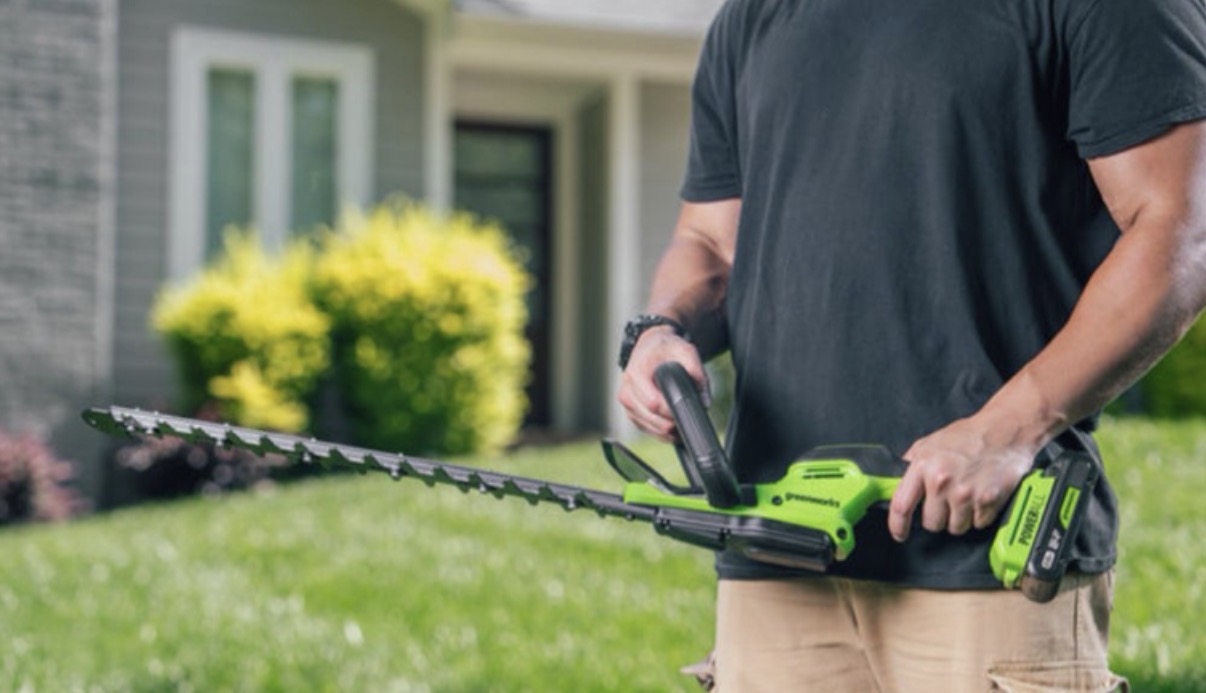
Gardening in a city often means working with less room and more neighbours. A London courtyard may have no outdoor socket, a narrow side return can be difficult to reach with equipment, and a shed may not fit at all. Compact, cordless tools can be useful in these circumstances, although the best choice still depends on the size of the space and the work you need to do.
Urban gardens have different priorities
In a large rural plot, reach and working time may dominate buying decisions. In a small city garden, storage, manoeuvrability and access can matter just as much. A tool that is easy to carry through a narrow passage and put away afterwards may be more practical than a heavier machine with greater capacity than the job requires. Hand tools remain a good choice for small tasks, particularly around delicate planting.
A cable-free approach to smaller spaces
Cordless garden tools remove the need to route an extension lead through doorways, over a path or across shared access. They do not require petrol to be stored on the property either. These are useful advantages where the nearest socket is inside the house or where a shared courtyard has several trip hazards. Battery-powered machinery still needs careful handling, appropriate charging and safe storage, so cable-free should not be confused with risk-free.
Where a hedge trimmer can help
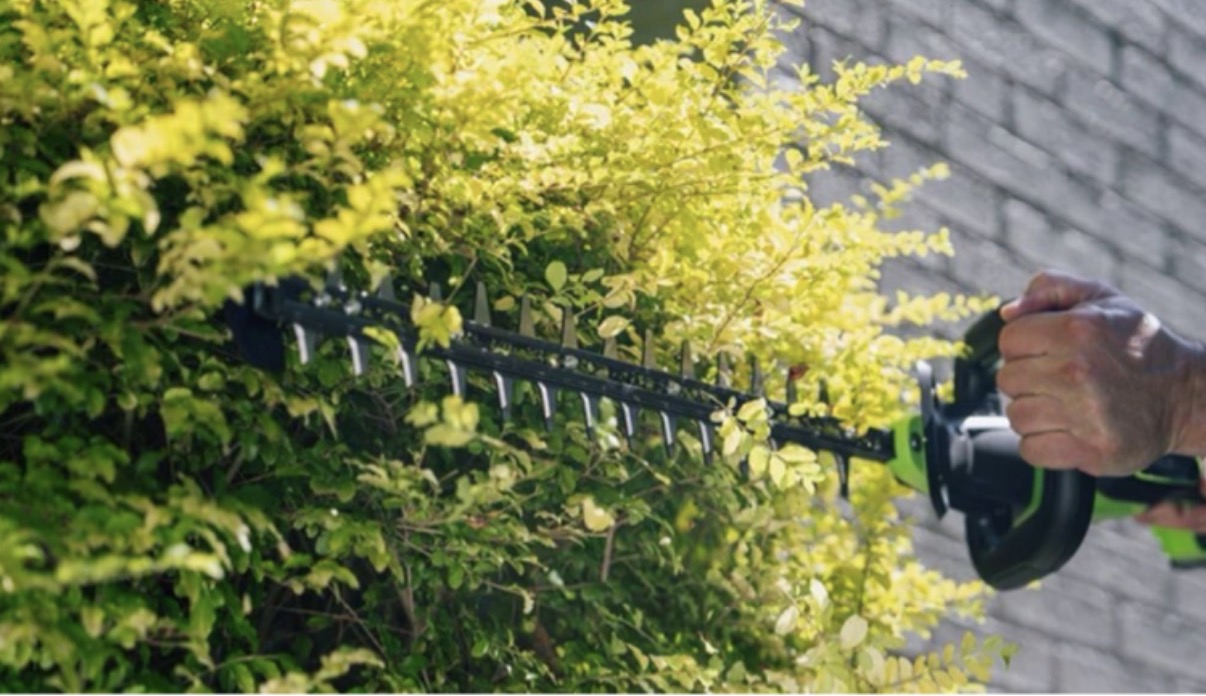
A front boundary or privacy screen can quickly become intrusive if branches grow over a path. Short hedges may be manageable with hand shears, while a powered trimmer may suit a longer section that can be reached safely. The Greenworks cordless hedge trimmers range includes models to compare for blade length, rated cutting capacity, weight and battery system. Choosing the smallest suitable tool may be more convenient than assuming maximum power is always the goal. A battery hedge trimmer may fit a small garden maintenance routine, provided its blade and cutting capacity are appropriate for the boundary.
Be considerate to neighbours
Built-up areas bring homes, balconies and outdoor seating close together. Even if a battery-powered tool produces no petrol exhaust at the point of use, it can still be noisy. Check the model’s sound information, choose considerate working hours and avoid blowing debris or dropping clippings across a boundary. If a hedge is shared, discuss significant work with the neighbour before cutting.
Check wildlife and access before trimming
Garden hedges can contain active bird nests, which are protected by law. Inspect carefully before any cut, not just during the main spring and summer nesting period, and postpone work that might disturb wildlife. Keep children and pets away from machinery, wear appropriate protection and maintain a secure footing. Tall hedges or work from unsuitable ladders should be handled by a competent professional.
Think about the complete battery system
Some cordless tools are sold without a battery or charger. Check kit contents and compatibility before buying, especially if you already own equipment from the same manufacturer. A battery may work across a defined platform, but similar voltage labels do not guarantee that different products are compatible. Consider charging space and the manufacturer’s temperature guidance as well as purchase price.
Simple maintenance makes a small garden easier
A short routine is usually more helpful than waiting for a major clear-up. Sweep paths after windy weather, trim only when appropriate for the hedge species and inspect drains before heavy rain. Clean and dry equipment before putting it away. In a compact garden, keeping frequently used areas clear can make the whole space feel more welcoming.
Choose convenience that fits the job
Cordless equipment can help urban homeowners work around limited sockets, storage and access. It is not automatically the right choice for every small garden. Compare it with hand tools, check the practical requirements and select equipment that makes maintaining the space safer and more manageable.