
RSPCA staff and volunteers are set to walk in this tomorrow’s Remembrance Sunday event, paying tribute to millions of war heroes – both human and animal.
Almost 30 of the charity’s representatives will attend the National Service of Remembrance at the Cenotaph in London on Sunday 8 November.
They include former service personnel and the relatives and descendants of soldiers, sailors and air crew who risked and sometimes lost their lives fighting for their country.
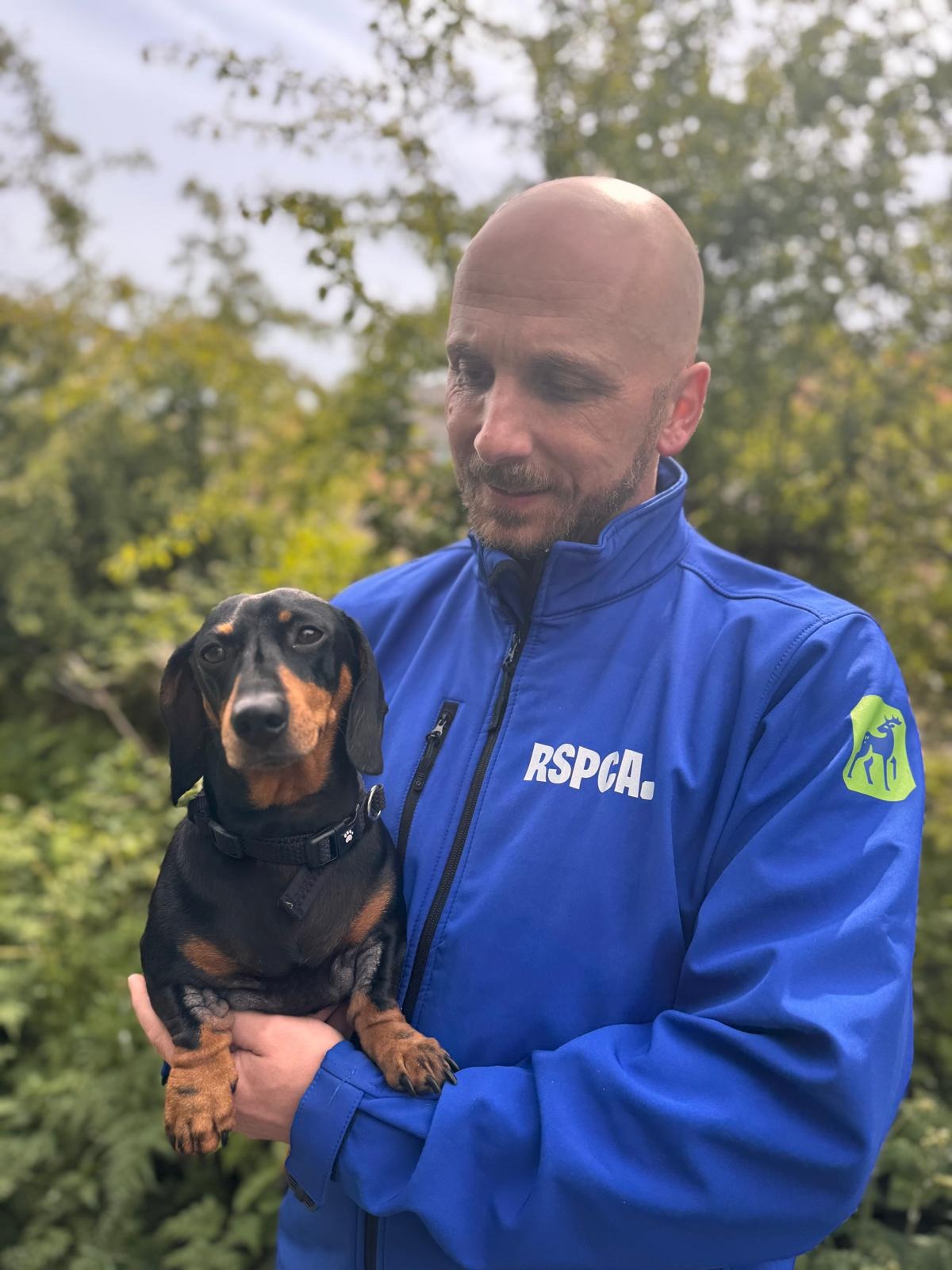
Apprenticeships and Early Careers Manager Lee Harrison (pictured) a Former Royal Engineer, will represent the animal welfare charity as its official wreath bearer at the Cenotaph in Whitehall, London.
Lee said: “It is an immense privilege and a deeply humbling honour to be asked to lay the wreath on behalf of the RSPCA at the Cenotaph this year. Having had the privilege of serving Queen and Country with the Royal Engineers, Remembrance Sunday holds a deeply personal significance for me.
“To stand at the Cenotaph representing my veteran community and my colleagues at the RSPCA, where I have proudly worked for nearly four years, as well as the countless animals who have lost their lives in War, is one of the greatest honours of my life.”
Lee joined the British Army in 2007 and quickly distinguished himself within the Royal Engineers. After earning a Junior Non-Commissioned Officer (JNCO) award during Basic Training, he went on to win the Best Combat Engineer Award, followed by the Best Student Award on his Class 2 Building & Structural Finishing Course in Kent.
During his posting with the 35 Engineer Regiment, Lee deployed to Iraq on Operation Telic 13. Upon returning, he completed his Class 1 trade training, again earning the Best Student Award and was nominated for a Promotional Cadre. His military career was cut short when his daughter was diagnosed with Cystic Fibrosis, leading to a compassionate discharge.
“Although my time in uniform was shorter than I had originally planned, the values, discipline, and skills I gained as a Royal Engineer remain central to who I am today,” added Lee.
“I will always consider myself an ambassador for the Royal Engineers and the British Army. Carrying those same values into my work at the RSPCA over the past four years has been deeply fulfilling, and representing both organisations at Whitehall on Remembrance Sunday is something I will cherish forever.”
RSPCA Superintendent Simon Osborne, Executive Director of Animal Welfare Operations Cassie Newman, and Events Manager Natasha Lawrence will also lay a wreath at the Animals in War Memorial.
In the First World War, the RSPCA set up the RSPCA Fund for Sick and Wounded Horses, which raised more than £250,000 to pay for equine medicine and welfare.
As well as funding special field hospitals for horses, ponies and mules, it covered the cost of ambulances to carry them to and from surgery, plus medicines, equipment, food and hay. In total about 2.5 million animals were treated.
RSPCA-trained men also served as Veterinary Corps (AVC) to look after the war horses.
Many RSPCA inspectors were ex-soldiers and lots rejoined the army to fight in WWI. Sadly, 18 were killed.
It is estimated that 484,143 British horses, mules, camels and bullocks died between 1914 and 1918, plus many hundreds of dogs, carrier pigeons and other frontline animals.
During the Second World War, the RSPCA rescued and treated more than 256,000 animal victims of enemy action and in excess of one million who suffered general injury and sickness.
Thirty-seven silver medals were awarded to inspectors who risked their lives to carry out rescues in areas closed off because of delayed time bombs. Nearly 6,000 animals rescued from bomb sites were rehomed.
After the war ended, the RSPCA set up the Soldiers’ Dog Fund to cover the cost of bringing home and quarantining the canine companions taken in by troops fighting in France.