
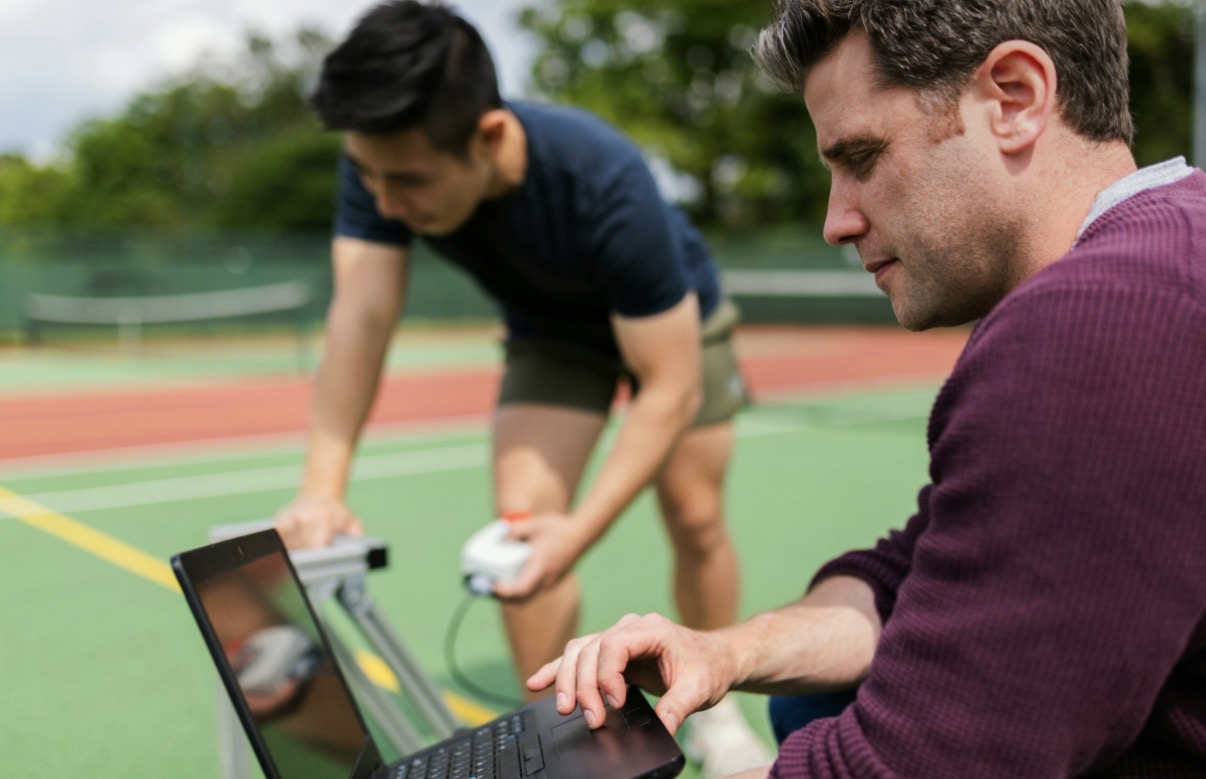
There’s often a difference between how a movement feels and how it actually looks. A runner might feel they’re maintaining a steady posture, while a golfer could be convinced they’re keeping their shoulders level throughout a swing.
Watching the movement back can reveal something quite different.
Video analysis has been part of professional sport for decades, allowing athletes and coaches to study technique in slow motion and review performances from different angles.
Artificial intelligence (AI) is taking this further. Rather than simply recording movement, AI-powered systems can identify body positions, track changes between attempts and highlight details that might otherwise require hours of manual analysis.
From athletics and baseball to cricket, these developments are changing how athletes examine their technique, making the relationship between movement and performance easier to understand.
What AI Adds to Traditional Video Analysis
The advantage of video has always been the opportunity to see what happened rather than relying entirely on memory or physical sensation.
A tennis player might discover that their positioning changes as they prepare to strike the ball, while a runner could notice differences in their stride that weren’t apparent during training.
AI builds on this by identifying movements automatically and turning recordings into information that can be examined more closely.
Using computer vision, software can recognise key points on the body, follow how they move and compare positions across successive video frames.
This makes it possible to examine details such as joint alignment, posture and the sequence of movements involved in a particular technique.
For coaches, it can reduce the time spent searching through recordings and provide a more consistent way to review performances.
The technology doesn’t necessarily reveal something an experienced coach could never recognise. Its value lies in making observations easier to capture, compare and revisit.
Why Visual Feedback Matters
Research into motor skill development has demonstrated the importance of feedback when learning physical movements.
A 2022 meta-analysis published in the International Journal of Environmental Research and Public Health examined 15 studies involving 853 participants in physical education settings.
Researchers found that feedback improved motor skill learning compared with receiving no additional feedback, with visual and combined forms of feedback among the approaches investigated.
The findings weren’t specific to AI technology, but they help explain why video has become such an established part of sports coaching.
Being able to see a movement gives athletes another way to understand instructions and recognise differences between what they intended to do and what actually happened.
AI makes that visual information easier to organise and interpret, particularly when analysing repeated movements across longer training sessions.
AI Movement Analysis in Different Sports
Several sports technology companies are already demonstrating how these capabilities can be applied outside specialist performance laboratories.
In athletics, Ochy has developed an AI-powered running analysis application that examines technique using smartphone footage.
The software analyses aspects of movement such as posture, foot placement and knee alignment, presenting the findings through visual information that runners and coaches can review.
In June 2025, Ochy announced its partnership with England Athletics, introducing the technology to the organisation’s network of athletes, clubs and coaches.
The application can analyse footage as short as ten seconds, illustrating how relatively simple recordings can be used to produce detailed movement information.
Baseball provides another example.
The Mustard pitching application uses computer vision to examine throwing mechanics, automatically identifying key stages of a pitching action.
Players can review individual frames showing moments such as maximum leg lift, foot strike and ball release, alongside visual overlays that illustrate body positioning.
This makes it easier to examine the sequence of movements involved in a pitch, rather than concentrating solely on where the ball travels.
Similar developments are taking shape in cricket, where Kabuni Sports is developing an AI coaching platform that uses camera technology to examine batting and bowling technique.
Its founder, Nimesh Patel, has emphasised making detailed performance information easier for young players to understand. Kabuni’s platform is being developed to combine movement analysis with visual, video and spoken guidance to help players connect their technique with the resulting performance.
Across running, baseball and cricket, these technologies demonstrate how AI can make detailed movement analysis more practical for everyday training.
Seeing the Differences Between Movements
One of the more useful applications of AI analysis is the ability to compare performances.
A golfer might record several swings that produce similar results, despite small differences in posture or timing. Reviewing them side by side could reveal where those movements begin to vary.
With AI, software can help identify corresponding moments in each recording, making comparisons easier and more consistent.
Visual overlays can also show differences in body positioning, allowing players to examine changes that might be difficult to recognise from separate recordings.
This becomes particularly valuable when reviewing technique over longer periods.
A movement that initially appears inconsistent may gradually become more repeatable. Comparing recordings from different training sessions can help make that improvement visible.
It also provides athletes with a more detailed record of their development, rather than relying entirely on how a particular session felt.
What the Camera Cannot Always Explain
Despite these advantages, visual analysis has limitations.
Camera angles, lighting and recording quality can influence how movements appear. A change in positioning might reflect the camera’s perspective rather than a genuine difference in technique.
There is also an important distinction between recognising movement and understanding its effect on performance.
A technique that appears unusual isn’t necessarily ineffective, and athletes often develop successful movements that differ from conventional models.
A research review published in the International Review of Sport and Exercise Psychology examined 16 studies investigating video feedback in sport.
The researchers found that how footage is presented and discussed can influence learning, with collaboration between coaches and athletes offering potential benefits. They also highlighted the need for further research into the most effective approaches.
These findings reinforce the importance of interpretation. AI can highlight differences in technique, but deciding whether those differences matter requires an understanding of the athlete and the sport.
A Clearer Picture of Performance
As AI analysis develops, the experience of reviewing sports performance is becoming increasingly detailed.
Recordings can reveal more than the final outcome of a shot, stride or delivery. They can show how movements develop, where variations occur and how technique changes through practice.
For athletes, this offers a different perspective on skills they may have performed hundreds of times without seeing them closely.
The greatest value of AI analysis may not be identifying every technical difference, but making the important ones easier to recognise.
After all, what an athlete feels they’re doing and what actually happens aren’t always the same. Being able to see that difference is often where a better understanding of technique begins.