
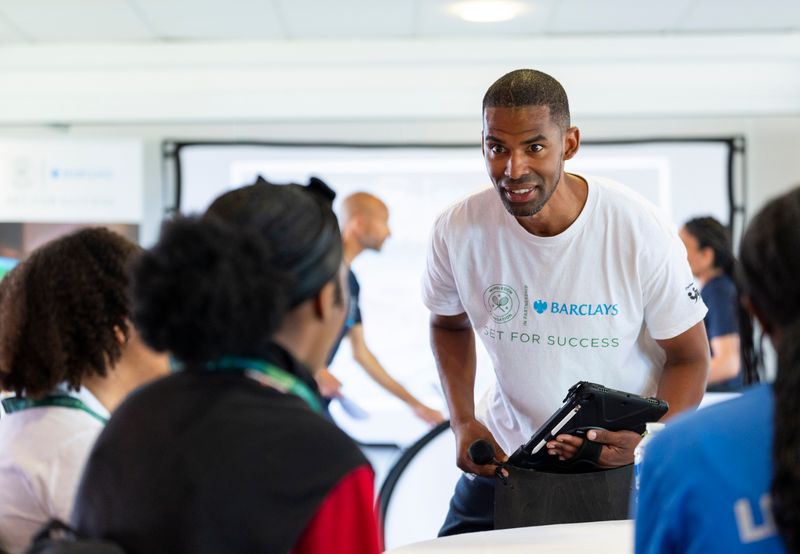
Young people from Arts and Media School Islington in visited the home of The Championships, Wimbledon on 10 November for a Set for Success Inspiration Day in partnership with Barclays and the Youth Sport Trust, exploring careers in sport and the skills that could help them take their next steps.
17 pupils joined students from six other secondary schools across the UK at The All England Lawn Tennis Club. Hosted by the Wimbledon Foundation, the day gave them the opportunity to hear directly from All England Club and Barclays staff about their career journeys and the different roles involved in delivering one of the world’s best-known sporting events.
Set for Success is funded by the Wimbledon Foundation in partnership with Barclays and delivered by the Youth Sport Trust. The two-year programme uses sport, mentoring and social action to help young people build confidence, develop leadership and employability skills, and feel more engaged in their education and future pathways.
The event took place ahead of the imminent release of the Milburn Review into youth unemployment, which is expected to make recommendations for reforms to increase participation in education and employment. Set for Success demonstrates the role sport and youth leadership-based interventions can play in developing skills, raising aspirations and supporting engagement in schools.
The Inspiration Day was compered by Set for Success athlete mentors Jenna Downing, a former world number one inline skater and ten-time British champion, and Tom Davis, a British and Commonwealth judo champion.
Pupils also heard from Denise Parnell, Championships Referee at Wimbledon. Parnell joined two morning career panels to share her own pathway into the sport, offering unique insight into how she progressed from a tennis player to becoming the first female referee of a tennis Grand Slam.
The visit comes as newly released research by Sheffield Hallam University’s Sport Industry Research Centre estimates that Set for Success generated £27.88 million in social value across three years of delivery, from 2023/24 to 2025/26. The analysis covered 2,243 young people across 129 UK schools and estimated at least £7.67 in social value for every £1 invested.
This includes £22.60 million associated with improved personal wellbeing and £5.28 million associated with improved future prospects, based on a reduced likelihood of young people being outside education, employment or training when they reach school-leaving age.
Paige Murphy, Head of the Wimbledon Foundation, said:
“Set for Success is about helping young people around the UK who may face barriers in achieving their full potential, by supporting them in identifying future goals and developing the skills to pursue them. Welcoming pupils from Islington to Wimbledon is an amazing opportunity to introduce them to the range of careers that exist in sport and the people who help make The Championships happen. By sharing those experiences, we hope to help young people discover opportunities they might never have considered and see how their own interests and strengths could develop into a future career. We want them to leave feeling inspired, with new ideas to explore and a stronger belief in what they can achieve.”
Emily Reynolds, Children & Young People Director at the Youth Sport Trust, commented:
“With many eyes focused on the forthcoming Milburn Review into youth unemployment, the latest research from Sheffield Hallam University shows just how effective Set for Success has been in using sport and mentoring to support young people’s wellbeing and prospects.
Achieving these outcomes takes time and commitment, and across the two-year programme, athlete mentors and school staff support young people to take on responsibilities, work with others and put their leadership skills into practice supporting access to skills, raising aspirations and increasing engagement at school.
For Youth Sport Trust, working with committed partners like the Wimbledon Foundation and Barclays to deliver sustained, targeted interventions makes this progress possible and leaves a lasting legacy for the young people involved. These findings show we are truly helping young people feel more engaged in their education and better equipped for the opportunities ahead.”