The seven Harry Potter books contain 1,084,170 words across 4,224 pages, while the eight feature film adaptations compress that massive story into 1,179 minutes of screen time.
Adapting J.K. Rowling’s legendary saga meant condensing an average of 919 words of detailed narrative into every single minute of film. When you look at the Harry Potter books vs movies debate, you are looking at a classic tradeoff between visual spectacle and deep thematic storytelling.
If you ever find yourself asking a professional paper writing service to do my essay on literary adaptations, this franchise offers the ultimate case study in media translation. Both formats stand as pop culture triumphs, but they offer radically different experiences for fans exploring the Wizarding World.
Many fans wonder: are the Harry Potter books better than the movies? The books build a richer universe with deeper character arcs, but the film adaptations delivered iconic visual design, brilliant musical scores, and unforgettable performances.
The raw numbers: 1,084,170 words compressed into 1,179 minutes
Adapting seven novels into eight films required dramatic compression rates that increased significantly as the series progressed.
The early films captured almost every major story beat, but later movies had to cut entire subplots to keep runtimes under three hours. In the book version of Order of the Phoenix, Rowling spent 257,045 words building the political tension, yet the film adaptation received the second-shortest runtime in the entire series at 138 minutes.
Harry Potter book-to-film adaptation metrics
|
Book Title |
Novel Word Count |
Film Runtime |
Words Per Film Minute |
Major Cut Element |
|
Philosopher’s / Sorcerer’s Stone |
76,944 |
152 minutes |
506 words/min |
Midnight duel & Norbert transport on the tower |
|
Chamber of Secrets |
85,141 |
161 minutes |
528 words/min |
Deathday Party & Aragog expulsion details |
|
Prisoner of Azkaban |
107,253 |
142 minutes |
755 words/min |
Marauders backstory & Firebolt origin |
|
Goblet of Fire |
190,637 |
157 minutes |
1,214 words/min |
S.P.E.W. & Ludo Bagman storyline |
|
Order of the Phoenix |
257,045 |
138 minutes |
1,862 words/min |
St. Mungo’s visit & Quidditch ban |
|
Half-Blood Prince |
168,923 |
153 minutes |
1,104 words/min |
Voldemort memory chain & Astronomy Tower battle |
|
Deathly Hallows |
198,227 |
276 minutes (Parts 1 & 2) |
718 words/min |
Dumbledore backstory & Wormtail redemption |
Analyzing Harry Potter movies vs books shows that page count does not always dictate screen time. Directors tailored each film’s pacing to visual storytelling rather than strict textual fidelity.
Understanding every Harry Potter book vs movie transition reveals how filmmakers prioritized action and character emotion over world-building lore. A single page of dense magical exposition often translated into a five-second visual effect on screen.
The biggest differences between Harry Potter books and movies
The biggest differences between Harry Potter books and moviescenter on major subplots, lore origins, and character backstories that directors cut to preserve pacing.
When you analyze the differences in Harry Potter books and movies, you see how entire thematic layers disappeared between page and screen. The novels use mystery-novel structures where Harry gathers clues slowly, whereas the films rely on fast-paced action sequences to drive the plot forward.
Here are the primary narrative changes across the series:
Key Harry Potter book and movie differences also extend to minor details that altered character motivations. These narrative adjustments fundamentally changed how audience members understood the rules of the Wizarding World.
Examining these Harry Potter book vs movie differences reveals that while the films succeeded as cinematic spectacles, they left several plot holes that only novel readers could fully solve.
Character adaptations: Book Harry vs movie Harry and beyond
Examining Harry Potter characters books vs movies highlights how Hollywood scripts softened flaws and altered character dynamics to suit cinema audiences.
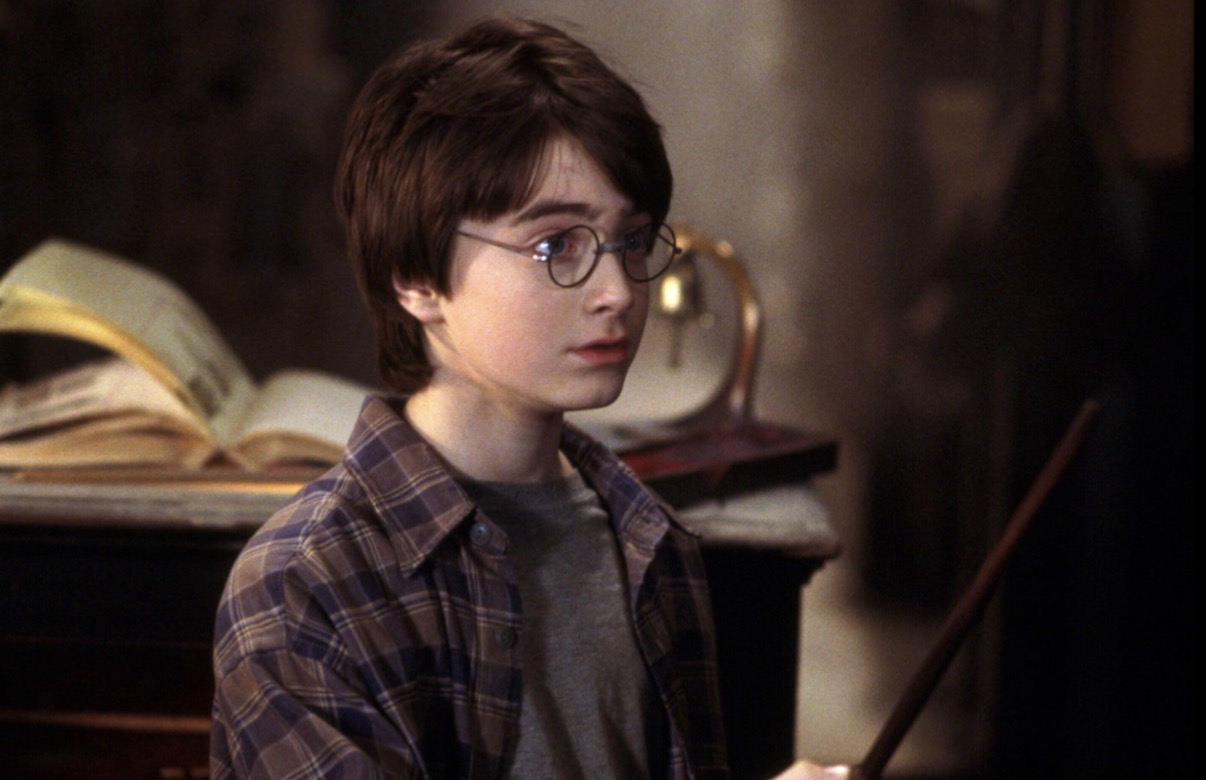
Comparing the book Harry vs movie Harry reveals a stark difference in personality and temperament. On the page, Harry is fiercely sarcastic, quick-tempered, and occasionally impulsive, whereas Daniel Radcliffe’s cinematic portrayal presents a more reserved, classic hero who relies heavily on his friends’ guidance.
Character profile changes from book to screen
|
Character |
Novel Traits & Appearance |
Film Adaptation Changes |
Impact on Narrative |
|
Harry Potter |
Messy hair, green eyes, highly sarcastic, hot-tempered |
Tidy hair, blue eyes, calmer demeanor, less witty |
Makes him a more traditional, stable protagonist |
|
Hermione Granger |
Large front teeth, bushy hair, prone to panic under stress |
Polished appearance, rarely makes mistakes, calm |
Takes over key lines and ideas originally belonging to Ron |
|
Ron Weasley |
Strategic chess master, fiercely loyal, deeply knowledgeable about magic |
Relied on for comic relief, occasionally fearful |
Loses key moments of bravery and wizarding world knowledge |
|
Severus Snape |
Bitter, emotionally abusive, yellow teeth, greasy hair |
Suave, imposing, tragic, deeply tragic tone |
Alan Rickman’s performance makes the character far more sympathetic |
|
Ginny Weasley |
Fiery, confident, popular, talented duelist |
Quiet, understated, awkward romantic chemistry |
Reduces her presence from a major hero to a minor love interest |
|
Albus Dumbledore |
Serenely calm, quirky, highly polite, emotionally reserved |
Energetic, aggressive at times, physically intense |
Shifts him from an enigmatic mastermind to a reactive commander |
|
Neville Longbottom |
Anxious, forgetful, clumsy, slow to build confidence |
Streamlined comedic sidekick who rises quickly to heroism |
Merges multiple book heroics into memorable movie moments |
|
Dudley Dursley |
Cruel, aggressive, selfish bully throughout youth |
Minor comedic bully with a subtle redemption moment cut down |
Softens the extreme home hostility Harry experienced in Privet Drive |
The contrast between the Harry Potter characters book vs movieversions created distinct debates among long-time fans. Secondary figures like Neville Longbottom gained streamlined character arcs that merged multiple book functions into single movie scenes.
Reviewing Harry Potter book vs movie characters demonstrates how screenwriters redistributed dialogue to balance screen time among the core trio. Hermione often inherited Ron’s expositional dialogue about wizarding customs, which shifted their group balance.
When evaluating Harry Potter characters movie vs book, performance quality often outweighed textual accuracy. Actors like Alan Rickman and Evanna Lynch embodied their roles so convincingly that J.K. Rowling acknowledged their influence on her view of the characters.
Omitted magical lore and world-building details
Beyond character shifts, the film adaptations made sweeping cuts to the history, laws, and magical mechanisms established across Rowling’s novels.
To fit theatrical runtimes, screenwriters sacrificed foundational lore that answered how the Wizarding World actually operated behind the scenes. Readers spent chapters learning about Ministry regulations, magical botany, and ghost traditions that never made it onto celluloid.
Here are major world-building elements left on the cutting room floor:
Magical lore comparison between mediums
|
Magical Concept |
Novel Description & Role |
Movie Depiction & Changes |
|
The Trace |
Strict magic-detection law tracking spells cast around underage wizards |
Used inconsistently, with Harry casting spells at Privet Drive freely |
|
Quidditch World Cup |
Full match featuring Bulgarian Veela, leprechaun gold, and Irish chasers |
Shows pre-game festivities before cutting directly to the post-match campfire |
|
House-Elf magic |
Distinct ancient magic overriding wizard boundaries and wands |
Reduced to Dobby’s brief spell casting without exploring systemic rules |
|
The Fidelius Charm |
Complex soul-binding secret-keeper magic protecting homes |
Simplified into general protective enchantments without clear mechanics |
These cut lore details mean movie-only viewers often miss the underlying logic governing magical conflicts. Revisiting the books restores the intricate rules that make Rowling’s world feel cohesive.
Tone, visual atmosphere, and directorial shifts
The cinematic series went through a notable evolution in tone as four different directors steered the franchise across ten years of filmmaking.
Chris Columbus treated the first two films like glowing, faithful children’s storybooks filled with warm golden lighting and expansive exposition. Alfonso Cuarón completely transformed the franchise’s direction in Prisoner of Azkaban by introducing darker color palettes, muggle clothing, and cinematic camera movements.
Director Mike Newell injected theatrical energy into Goblet of Fire, treating the Triwizard Tournament like a high-stakes athletic showcase. David Yates took over for the final four films, establishing a grounded, bleak aesthetic that emphasized wartime propaganda, political oppression, and psychological thriller elements.
While the books maintained a consistent narrative voice that matured alongside Harry’s internal thoughts, the movies shifted visually from whimsical family films into gritty fantasy blockbusters. This stylistic progression matched the darkening tone of Rowling’s prose, but it created clear visual divides between early and late entries.
What the upcoming HBO television series means for fans
The upcoming HBO television series promises a decade-long, book-accurate adaptation designed to restore the vast narrative details that two-hour movies had to cut.
By devoting an entire season to each individual book, the television format overcomes the strict runtime limits that forced previous directors to abandon subplots. Long-time readers can finally expect to see Peeves causing chaos in the halls, Hermione organizing S.P.E.W., and Dumbledore guiding Harry through every missing Voldemort memory.
This long-form episodic structure allows the writers to explore secondary character arcs and subtle world-building laws that movies simply didn’t have time to show. With the new adaptation underway in 2026, fans anticipate a definitive screen version that combines high-budget visual effects with absolute loyalty to Rowling’s original text.
Visual brilliance versus textual depth
The visual world-building designed by Stuart Craig and his art department gave the Wizarding World a tangible, lasting aesthetic that text alone could never match.
While the books relied on your imagination to build Hogwarts Castle, Diagon Alley, and the Ministry of Magic, the film franchise created iconic physical sets that defined the visual identity of modern fantasy cinema. The atmospheric musical scores composed by John Williams, Patrick Doyle, Nicholas Hooper, and Alexandre Desplat elevated emotional beats that took chapters to build in prose.
Here is how the two mediums stack up across key entertainment metrics:
Evaluating the franchise today in 2026 shows that both mediums serve complementary roles in modern pop culture.
The ultimate verdict: Which format wins?
The novels deliver the definitive narrative experience, but the films remain an unmatched cinematic achievement that brought magical fantasy into mainstream culture.
If you want complex mysteries, deep magical lore, and rich character flaws, the 1,084,170 words of J.K. Rowling’s original text remain supreme. If you prefer vivid visual spectacle, unforgettable musical themes, and tight two-hour storytelling, the 19-hour film marathon offers incredible entertainment.
Ultimately, reading the books provides the foundational blueprint, while watching the movies brings that world to life in vibrant detail. Exploring both versions ensures you experience the complete magic of Hogwarts in all its forms.