Chinese social media is buzzing about an unlikely topic: trees. Not just any trees, but hundreds of millions of virtual saplings that have helped grow real forests.
On social platform Xiaohongshu (RedNote), hashtags such as #MyTreeInTheDesert have drawn more than 1.4 million views, with users spontaneously sharing stories from their decade-long journey with Ant Forest.
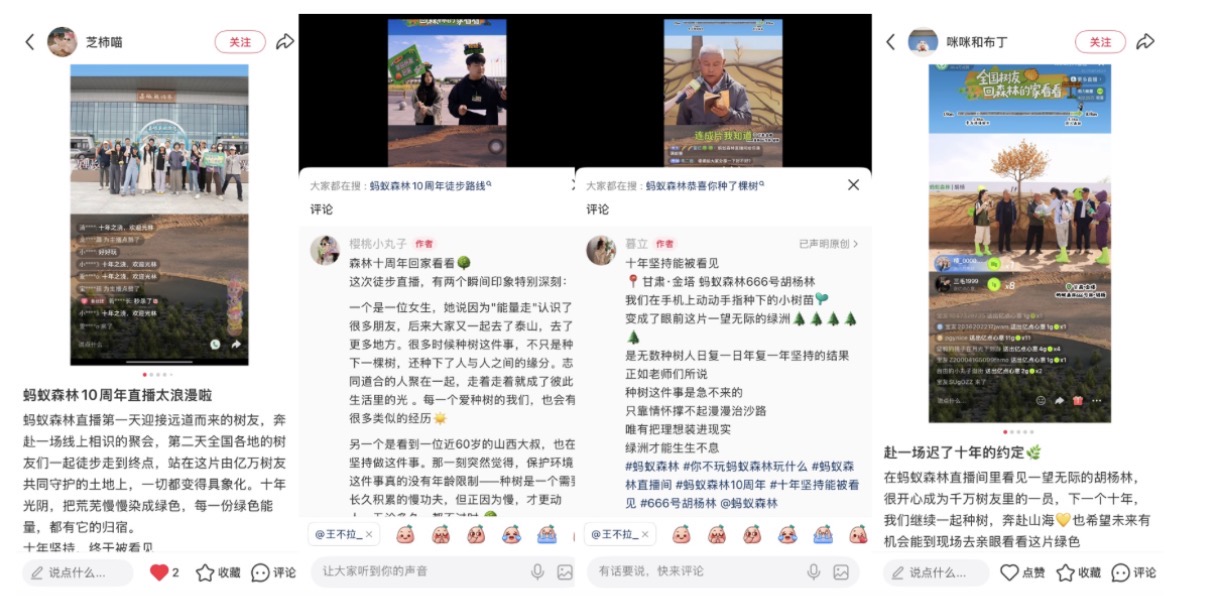
This is not a public campaign or a corporate advertising push. It is a user-led celebration of a project that has quietly become part of everyday life for hundreds of millions of people.
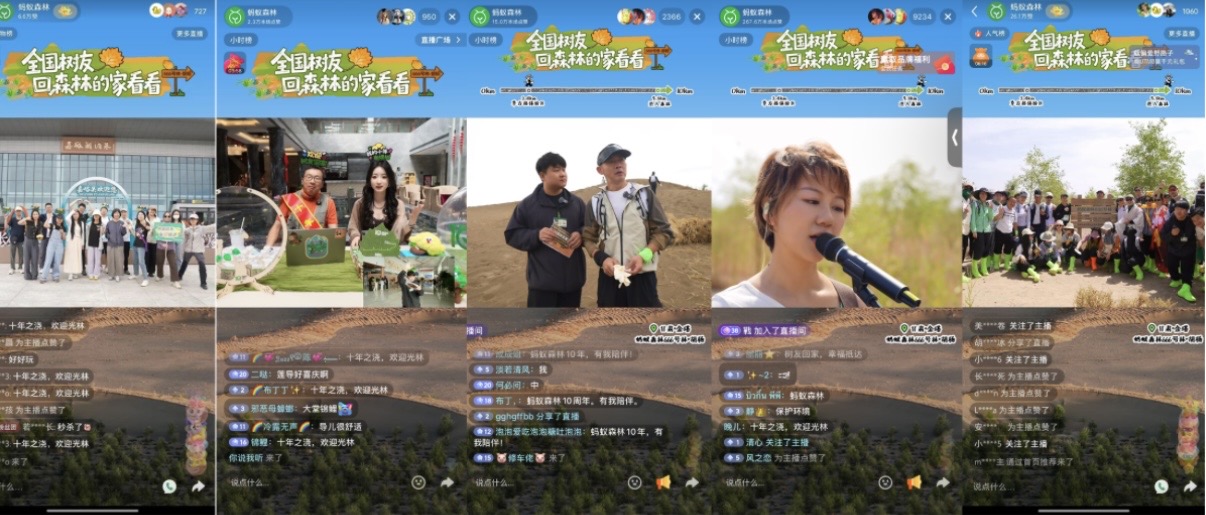
Over two consecutive days, August26-27, 2026, 6.5 million netizens tuned into livestreams as influencers and ordinary users trekked into the desert to see firsthand how their small, everyday green actions had translated into real trees. In the comment sections, people shared personal stories about how the “slow project” had helped ease their anxiety, give them a sense of purpose, and bring them closer to nature.
In an age of instant gratification, why are hundreds of millions of Chinese people celebrating a decade-long commitment?
For those outside China, Ant Forest may sound unfamiliar. In fact, it is a built-in green initiative inside the Alipay app, China’s leading mobile payment and digital services platform. Launched 10 years ago by Alipay’s parent company, Ant Group, it turns users’ everyday low-carbon actions into tangible tree-planting exercises that users can see and participate in.
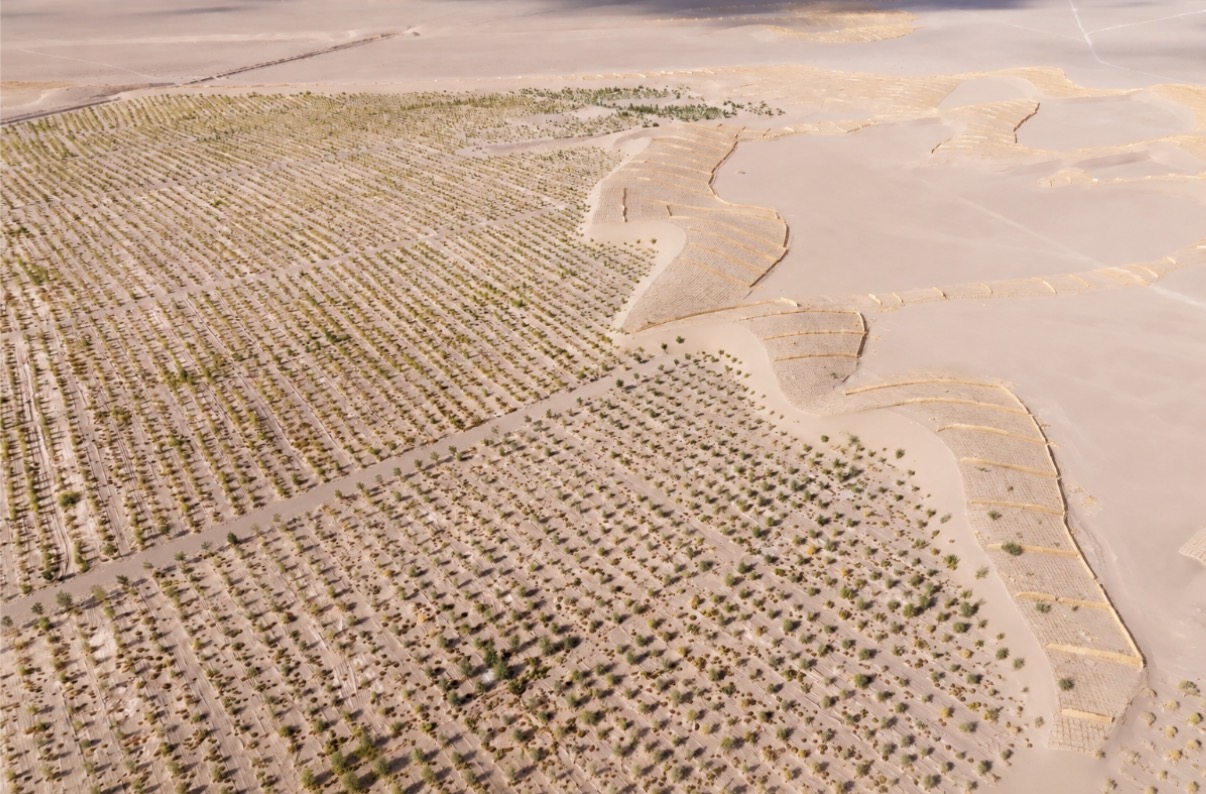
When users pay bills online, take public transportation, cycle, walk instead of driving, or make other greener choices, Ant Forest users earn virtual “green energy” points. They can use those points to grow a virtual tree on their phones. Once a virtual tree matures, Ant Group funds the planting of a real tree in arid regions of China, including Inner Mongolia and Gansu.
The scale is remarkable. Over the past decade, 700 million users have participated in Ant Forest, with 160 million users contributing to the planting of more than 700 million real trees. Chinese media have described it as the “largest slow project in internet history.”
But for most users, the appeal is much simpler. Ant Forest has become a small daily routine — a way to turn everyday choices into a tangible contribution to the planet, one tree at a time.
In a fast-paced and often stressful digital economy, Ant Forest has become an unlikely symbol of long-term thinking. Its decade-long journey suggests that even in an age defined by AI, instant commerce and constant acceleration, people still value patience, continuity and a tangible connection to the world around them.
Perhaps that is what makes Ant Forest unusual: it is a technology product built around the idea that some things are worth waiting for — and that when hundreds of millions of people make small contributions over time, the collective impact can become something much bigger than any individual could create alone.