
Healthcare is moving away from a model built on occasional appointments and treating conditions once they have already developed, toward platforms that stay with people through the long stretches in between. The investment history associated with Alexander Frolov offers one way to examine this shift. The historical relationship between Frolov and Target Global provides the context for Flo, Palta, and the firm’s wider healthtech portfolio.
Why healthcare is moving toward continuous support
Chronic conditions have to be managed over years rather than during one visit. WHO puts deaths from noncommunicable diseases at more than 43 million in 2021, around three quarters of all non-pandemic deaths.
Populations are ageing at the same time: by 2030 one person in six worldwide will be 60 or over, which lengthens the period during which care is needed.
Staffing is the third constraint, with a projected shortfall of 11.1 million health workers by 2030, concentrated in low- and lower-middle-income countries.
Telemedicine was an early response. It moved some consultations online and made it easier for patients and clinicians to speak without being in the same place. Yet a video call still follows the logic of a traditional appointment: two people meet at a specific time to address a specific question.
Beyond the digital appointment
The next stage of digital health reaches into the period between those appointments. Mobile applications, connected devices, and monitoring platforms can help users follow symptoms, record changes, receive educational support, and identify patterns over longer periods. Instead of producing a series of isolated snapshots, they create a line that patients and professionals can follow.
Prevention is central to this model. Many health decisions happen before treatment is necessary: whether someone notices a recurring symptom, understands a risk factor, follows a rehabilitation plan, or maintains a useful routine. Digital products can support those moments because they remain available when the user needs them, not only when a clinician is present.
These changes created room for consumer platforms built around preventive needs that traditional care addressed only intermittently. That is where Palta and Flo Health enter the picture — and why the investment activity associated with Alexander Frolov becomes relevant.
Frolov Alexander and Target Global: how Palta and Flo turn the shift into products
Target Global backed both Flo Health and Palta. It also participated in Flo’s $50 million Series B round in 2021.
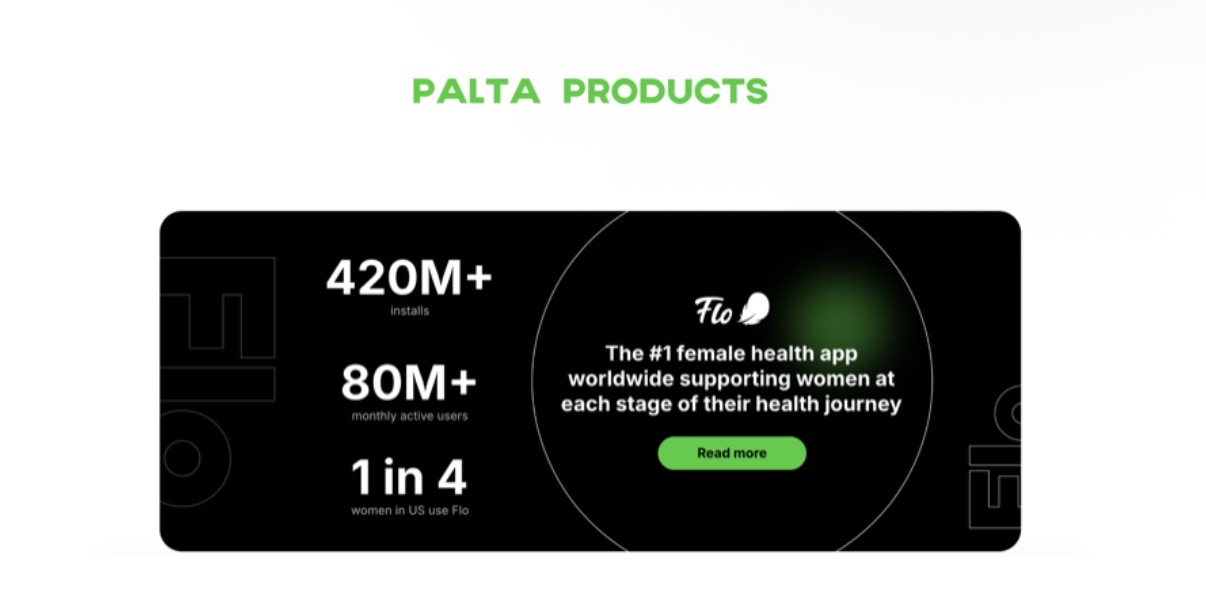
Palta developed a portfolio of products addressing distinct consumer needs, including nutrition, fitness, skincare, and women’s health. Flo is Palta’s women’s health platform, supporting users across cycle tracking, fertility, pregnancy, and perimenopause. The project covers several stages of reproductive health rather than a single use case.
The investment case and historical context
During the 2021 funding round, Alexander Frolov junior described Flo as a category-defining femtech company. He said its proactive platform was “ahead of the curve” and noted that relatively few startups addressed the root causes of female health conditions.
The relationship between Frolov and Target Global should be described historically. At the time of the funding round, Flo’s announcement identified Alexander Frolov as CEO and co-founder of Target Global. The connection therefore reflects his role at the firm during the relevant investment period rather than necessarily describing his current position.
AI, data, personalization, and interoperability
Artificial intelligence is becoming part of mainstream healthcare strategy. Hospitals, health platforms, and software companies are exploring its use in clinical decision support, medical research, information retrieval, workflow optimization, and the analysis of large datasets.
WHO/Europe notes that integrating AI with electronic health records could support diagnosis, improve workflows, and enable more patient-centred care.
Systems trained on incomplete or unrepresentative data can produce unreliable results. Even an accurate system can be misused if patients or professionals do not understand its purpose and limitations.
Why connected data and responsible governance matter
Interoperability is part of this foundation. Health information is often held across providers, laboratories, applications, and national systems. If those systems cannot exchange and use data reliably, clinicians may work with an incomplete picture and patients may have to provide the same information repeatedly.
For this reason, the World Health Organization identifies interoperability and data-sharing standards as central elements of digital health.
Personalization creates a related challenge. A platform can adapt what it shows and how it shows it — which content appears, how the interface is ordered, what a user sees at a given stage. That is personalisation of content and user journey, not individualised clinical advice.
Such adaptation requires health data. WHO guidance states that AI systems should protect privacy and confidentiality, obtain valid informed consent, and operate within clear accountability frameworks.
WHO also identifies safety, transparency, inclusiveness, and sustainability as principles for AI in health.
How healthtech products approach AI and integration
Two Target Global portfolio companies extend the healthtech context associated with Alexander Frolov beyond consumer platforms.
AMBOSS developed a medical knowledge platform for students and clinicians. Its current AI Mode searches curated medical sources, links users to the underlying evidence, adapts results to their specialty, and explicitly positions its output as a research aid rather than a replacement for professional judgment.
Patient21 represents a different model. Target Global describes it as a digi-physical platform intended to use technology to address a disjointed healthcare system. This does not by itself demonstrate technical interoperability, but it illustrates the broader challenge of connecting digital access with physical medical services.
How the main healthtech business models differ
Digital health means different things depending on who is using it. For a patient, it may mean opening an app to track symptoms or prepare for an appointment. For a doctor, it may mean reviewing information more efficiently. For a provider, it may mean replacing fragmented systems that slow down care.
The companies discussed through the historical relationship between Frolov and Target Global span several of these categories. Behind those experiences are several broad business models:
- Consumer health platforms — products built around personal health routines, tracking, education, and guidance.
- Clinical tools — software that helps doctors and healthcare teams work with information and manage care.
- Digi-physical care companies — services that combine digital access with medical professionals and physical healthcare.
- Infrastructure platforms — technology that connects systems, manages data, and supports healthcare operations.
Consumer platforms and clinical tools
Consumer platforms operate close to users’ everyday lives. Flo and the wider Palta portfolio fit this category, but downloads alone do not demonstrate lasting value. Downloads measure acquisition. Retention measures whether the product held.
Clinical tools follow a different path. Their users are professionals and healthcare organizations, so adoption depends on whether a product saves time, provides reliable information, and fits existing workflows.
Digi-physical care and infrastructure
Digi-physical companies operate both digital services and physical medical capacity, including clinical staff, diagnostics, and facilities.
Infrastructure platforms primarily serve providers and other digital health services rather than patients directly.
These models are not mutually exclusive. A company may combine consumer engagement with clinical services or build infrastructure that supports both digital and physical care. The distinction lies mainly in who uses the product, what problem it solves, and how value is delivered.
What makes a healthtech business model resilient
The healthtech cases discussed in relation to Alexander Frolov represent different operating models, but several questions apply to all of them. Does the product solve a recurring problem? Does it fit an existing habit or professional workflow? Is the revenue model predictable? Can the company enter a new market without rebuilding the same costly operational structure each time?
Healthtech companies operate under regulatory requirements that vary by product and market. These requirements may affect product claims, data protection, reliability documentation, and market entry.
Digital health trends: user value and execution risks
Investment in digital health is moving toward products that last rather than products that launch well. Investors active in the sector, Alexander Frolov among them, look at whether a technology improves an everyday healthcare experience while meeting requirements around security, reliability and adoption.
| Trend | User value | Execution risk |
| AI in healthcare | Faster access to information, workflow support, and personalized experiences | Data quality, regulation, privacy, and responsible use |
| Remote monitoring | More continuous health support outside traditional settings | Device accuracy, patient engagement, and integration with care systems |
| Telemedicine | Easier access to consultations | Maintaining quality of care and adapting to different regulations |
| Interoperability | Better information exchange between healthcare systems | Technical standards and data governance |
| Preventive health platforms | Earlier awareness and long-term health management | Building trust and maintaining user engagement |
Conclusion
Digital health is not forming around one technology or one business model. Consumer platforms, clinical tools, AI applications and infrastructure are growing next to each other, each aimed at a different problem.
Palta’s wellness technology ecosystem and Flo Health sit on the consumer side of that shift, where software becomes part of how people manage their own health. Frolov, Target Global co-founder, has also put money into the clinical and infrastructure sides, and what happens next depends on how all of it behaves in real healthcare environments, with patients, professionals and the systems around them.
FAQ on the future of healthtech companies
How do Palta and Flo connect to Alexander Frolov junior and Target Global?
Target Global backed both businesses. The connection to Alexander Frolov comes from Flo’s 2021 funding announcement, which identified him as the firm’s CEO and co-founder at the time. Palta developed a portfolio of health and wellness products that includes Flo.
How is AI changing digital health?
AI can organize large amounts of information, personalise content, and reduce administrative work. Where it touches clinical questions, it works as decision support under professional oversight rather than as a substitute for it.
Why is interoperability important in healthcare?
A connected healthcare system depends on more than collecting data. That information also needs to move between the right people and systems. Interoperability helps make digital health tools more useful by reducing gaps between different parts of care.
What role do consumer health apps play?
Consumer health applications make health technology more accessible outside traditional healthcare settings. They allow users to follow personal health patterns, explore reliable information, and receive guidance that fits their needs. Flo Health is one example of a platform built around users’ needs.
What makes a digital health company successful?
Successful digital health companies are not defined only by advanced technology. They combine product development with a clear understanding of healthcare needs, responsible data use, and the habits of the people who rely on their solutions.