
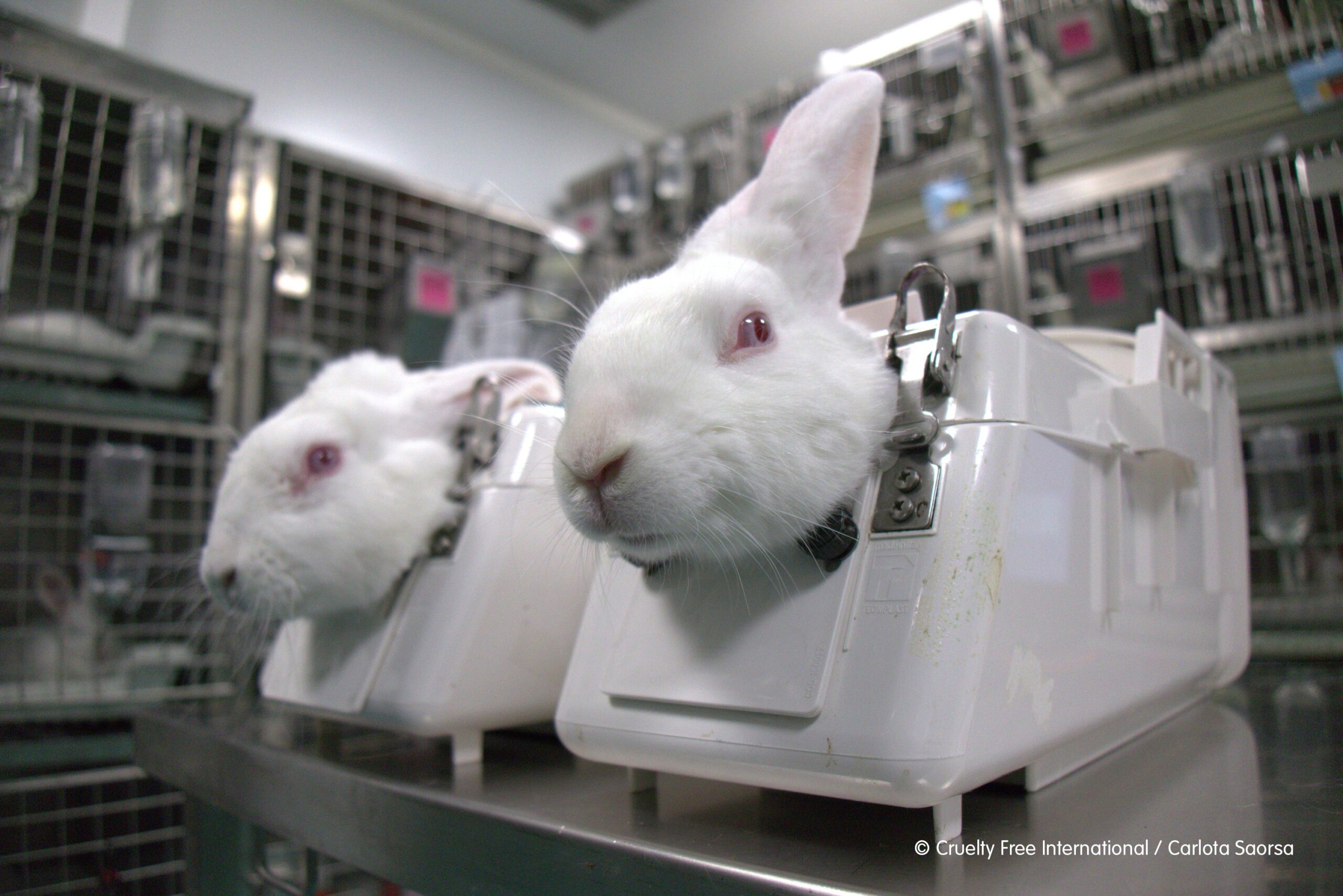
New UK Prime Minister, Andy Burnham is being urged to speed up the work to phase out animal testing laid out in the government’s Replacing Animals in Science strategy[1], by animal protection organisation, Cruelty Free International.
The strategy, published in November 2025, contained several commitments and deadlines to be met before the end of 2026, but new analysis by Cruelty Free International[2] shows that key commitments are in danger of missing their deadline. There has so far been limited evidence of the system-wide change necessary to significantly reduce the number of animals used in Great Britain.
In particular, Cruelty Free International is urging the incoming government to demonstrate renewed commitment to implementing the strategy by providing clear, funded plans, including accelerating the uptake of non-animal methods, setting measurable targets, reducing animal use, and increasing transparency and accountability.
Whilst the organisation recognises that it is not possible or fair to draw final conclusions after just eight months, they say that it is clear that progress so far has been minimal and fragmented.
The findings have been published in a report named From Promise to Proof[2].
The strategy’s objectives are a significant undertaking and imply a long-term approach, but the first year, in which early wins are secured and the foundations laid, is vital to the success of any strategy. Cruelty Free International’s review assesses whether the government is delivering on the timelines and expectations set by the strategy.
The 2026 commitments that the organisation believes are on track are:
£30 million funding for the UK Centre for the Validation of Alternative Methods (UKCVAM) – proposals for the Centre, and how it will be run, are being developed by the Office for Life Sciences (OLS)
Restart the survey on public attitudes to animal research – the government is advertising for a market research company to manage this task
Department of Science, Innovation and Technology (DSIT) to work more closely on non-animal testing methods with the government’s Animals in Science Committee – the OLS, which was managed by the now disbanded DSIT, has been working directly with the ASC in a promising, if limited, sign of cross-departmental collaboration.
Key areas showing early movement, but where the impact is too early to tell:
Increase investment in alternative methods – we are yet to see the main commitment of £75m in departmental plans or budgets, but the £2m funding for ‘industrial human-relevant drug models’ indicates genuine progress. We await evidence of the impact of this funding
Ministerial leadership on alternative methods – a named Minister and confirmed meetings of a cross-departmental Ministerial group were positive signs. However, with a shakeup in relevant government departments and the resignation of key Ministers, we now, more than ever, need to see renewed political leadership, transparency, accountability, and clear updates on progress.
Increase uptake of alternative methods through reform of animals in science regulation – despite some signs of progress, there is limited evidence of a comprehensive and transparent implementation of the recommendations of the 2023 Rawle Report[3], which should be the basis for genuine reform of the regulatory system for the use of animals in science.
2026 commitments that have little or no publicly available evidence of progress, and are therefore considered to be behind schedule:
Creation of a national programme for extra training of regulatory assessors
Increased scrutiny of the justifications for animal research in funding applications
Training in non-animal methods for researchers at the start of their careers
These are areas for significant concern, as all are critical to the changes needed to address the cultural and behavioural hurdles that continue to exist. It contributes substantially to the lack of replacement of animal tests even when there is a clearly identified and scientifically robust alternative, as identified in Cruelty Free International’s Replace Animal Tests (RAT) list[4].
Cruelty Free International also found that the government’s engagement with experts on non-animal testing has been poor, creating a clear risk for effective delivery. The remaining commitments are either partially progressed, or it is simply too early to tell.
To support the new government in achieving the clear manifesto commitment to phase out animal testing and deliver the objectives of the strategy, Cruelty Free International is asking for:
Clarification of ministerial responsibility and a renewed statement of political leadership
A focus on moving non-animal methods from development to routine use
Clear delivery plans, with targets and milestones that are regularly analysed
Proof of long-term funding
Plans to train researchers, regulators and decision-makers in non-animal testing
Engagement with civil society, including animal protection NGOs, to make use of all available expertise in human-relevant science
Explanations of how current activity will reduce the use of animals
The From Promise To Proof report is already having an impact in Parliament. Cruelty Free International recently brought together MPs from several parties to explore its findings and discuss the future of the phase out of animal testing in the UK. The meeting reinforced the clear message that there is strong cross-party political support for turning ambition into action. MP’s have welcomed the report’s findings and are actively working to ensure that delivery and implementation of the government’s commitments remain firmly on the political agenda
Home Office statistics[5], published earlier this month, show that there were 2.54 million uses of animals in science in 2025[6] – a meagre fall of 4%. Testing on protected species, including dogs, cats, horses and non-human primates, rose by 7%.
This glacial rate of progress continues to show that rapid implementation of the strategy, and the need to be even more ambitious where possible, is essential to achieve significant reductions and bring about the end of animal testing that the British public want.
Cruelty Free International’s Director of Science and Regulatory Affairs, Dr Emma Grange said: “We know that the new Prime Minister will have a lot to do in his first weeks and months in office, but if he is eager for his government to show genuine, rapid progress, this strategy provides a great opportunity. We need to see that changes across government do not come at the cost of real evidence that commitments, targets and deadlines are being met. Much of the patchy activity to date has rightly focused on building the foundations of a system in which non-animal approaches can succeed. The next phase must build on this to emphasise the replacement and phase-out of animal tests.
“There are some positive early signs, but in several critical areas, such as skills, training, research scrutiny and external engagement, there is little evidence of progress. The government has not yet made use of all of the expertise available to it, which risks an insular approach and limits Ministers’ ability to anticipate challenges in delivering the strategy. The new leadership of this country must work across government, science, industry, and with international partners, to deliver lasting change. We remain ready and available to work with the government to ensure that the suffering of millions of animals in laboratories in the UK ends.”