
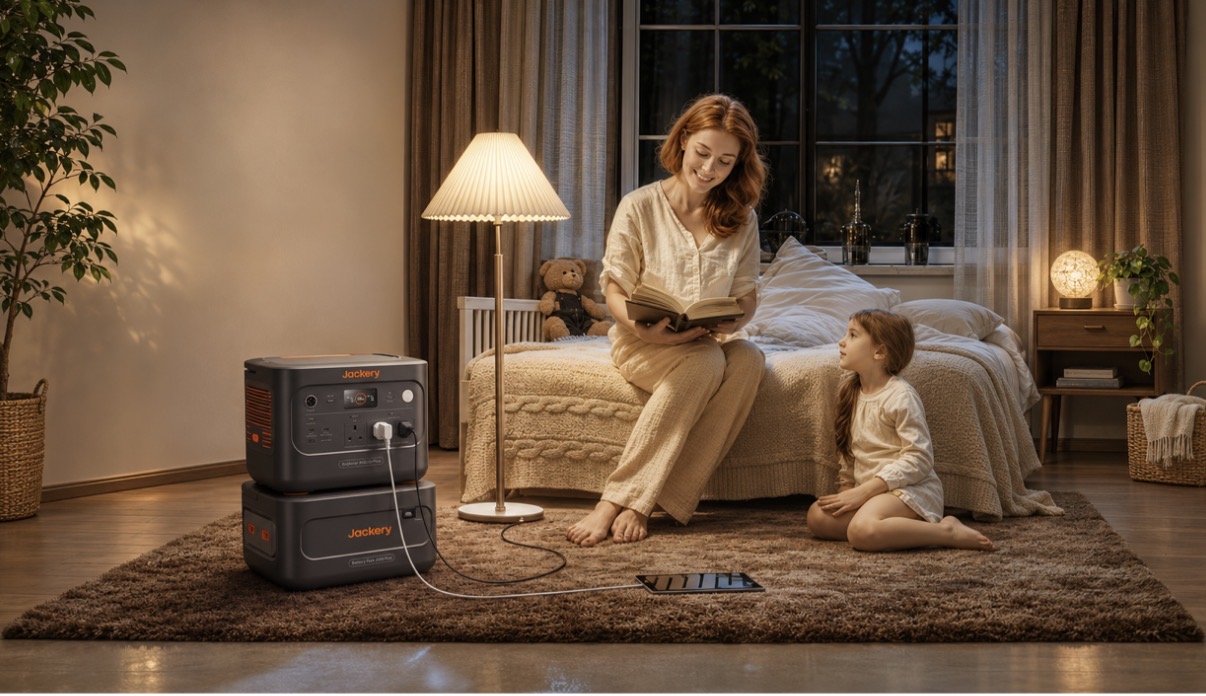
Quick Answer: A solar generator can save money when it is used regularly to replace paid electricity, campsite hook-ups or petrol generator use. Savings from occasional home use alone are usually modest, so the strongest financial case comes from combining frequent off-grid use with practical backup value.
Key Takeaways
- Regular use matters more than headline battery capacity when calculating payback.
- The largest savings usually come from avoiding campsite electricity fees and generator fuel.
- Home electricity savings alone may take many years to recover the purchase price.
- Matching battery capacity, inverter output and solar input to real demand prevents overspending.
- UK solar generation varies sharply by season, so winter charging estimates should remain conservative.
How Can a Solar Generator Provide a Financial Buffer?
A solar generator operates not merely as a piece of leisure technology, but as an insurance policy and a mini-utility. By decoupling essential power demands from external commercial providers, it provides a measurable financial buffer against both steady operational drains and sudden emergency expenses.
Reducing Everyday Energy Expenses
On a day-to-day level, a solar generator captures daylight and converts it into usable power at zero marginal cost per kilowatt-hour. By running secondary household loads—such as home office hardware, network routers, power tool battery stations, or garden lighting—off stored solar reserves rather than the domestic ring main, you shave incremental units off your monthly electricity statement. While a single device’s draw appears modest, cumulative displacement across an entire year creates a steady downward pressure on your domestic utility bills.
Avoiding Unexpected Costs During a Power Cut
Grid failures routinely inflict direct financial casualties. A prolonged winter blackout can easily spoil hundreds of pounds worth of refrigerated groceries and frozen provisions. For individuals working from home, an unplanned power outage can abruptly halt billable hours or disrupt time-sensitive commercial projects.
Having an immediately deployable power station safeguards against these unexpected losses. It keeps chest freezers chilled, sustains broadband connections, and eliminates the emergency expense of booking alternative workspace or claiming on insurance with a costly policy excess.
Maintaining Access to Essential Power
For households dependent on critical medical equipment—such as CPAP machines, oxygen concentrators, or mobility device chargers—power outages are more than an inconvenience; they can force immediate, costly emergency interventions or temporary relocation. A dependable lithium-based solar generator delivers uninterrupted power security indoors, removing the financial and logistical scramble associated with sudden mains disruptions.
Where Could the Savings Come From?
Assessing true financial return requires identifying the specific, recurring expenditure that a solar setup directly replaces.
Primary Sources of Financial Savings
| Category | Replaced Expenditure |
| Domestic Utility Offset | Standard grid tariffs (25p–30p/kWh) |
| Campsite Pitch Fees | Electric hook-up (EHU) surcharges (£4–£12/nt) |
| Off-Grid Power | Petrol, 2-stroke oil, generator maintenance |
| Field & Mobile Work | Temporary site feeds, commercial hire fees |
Using Solar Energy Instead of Grid Electricity
Every kilowatt-hour generated by portable photovoltaic panels and routed into your devices is one fewer kilowatt-hour purchased from your energy supplier. With standard UK electricity unit rates sitting around 25p to 30p per kWh, running domestic appliances directly off stored daytime sunlight yields direct, ongoing savings, particularly during long summer daylight windows.
Reducing Petrol and Diesel Costs
Traditional combustion inverter generators incur substantial running costs:
Continuous fuel consumption: At typical loading, a small 2kW petrol generator burns through roughly 0.6 to 1.0 litre of fuel per hour. Over an eight-hour stretch, that represents £7 to £12 in petrol.
Routine consumables: Engine oil, replacement spark plugs, and air filters add periodic maintenance costs.
Fuel transport and wastage: Storing fuel requires dedicated jerry cans and risks fuel degradation over long storage intervals.
A solar generator eliminates recurring fuel runs entirely, trading volatile pump prices for daylight that costs nothing.
Avoiding Paid Power While Travelling
For caravanners, campervan tourers, and tent campers, electric hook-up (EHU) pitch charges represent a recurring expense. UK and European campsites routinely levy a premium of £4 to £10—and frequently £12 or more during peak summer periods—for an electrified pitch.
Carrying an independent, self-replenishing solar generator allows holidaymakers to book standard non-electric pitches without forfeiting creature comforts like 12V compression coolboxes, water pumps, or laptop charging. Over a four-week touring holiday across the year, bypassing hook-up fees keeps £150 to £300 in your pocket.
Supporting Work Without a Mains Connection
Mobile tradespeople, mobile vehicle valeters, remote photographers, and event operators frequently face steep logistical expenses when securing power away from standard sockets. The alternative is hiring noisy site generators or paying event organizers inflated connection fees for a temporary feed. A high-output portable power station delivers pure sine wave power directly out of a vehicle boot, saving recurring hire and connection overheads.
How Much Money Could a Solar Generator Actually Save?
Quantifying whether a system makes economic sense demands empirical arithmetic rather than marketing assumptions.
Calculating the Value of Solar Electricity
To establish the base financial yield of solar generation, measure your actual generation potential against standard grid tariffs:
AnnualValue=AnnualSolarYield(kWh)GridTariff(£/kWh)
In the UK, a 200W solar panel generates approximately 160kWh to 220kWh of energy across an average year, taking seasonal irradiance fluctuations into account. At an electricity tariff of £0.28 per kWh:
AnnualValue=200kWh£0.28=£56.00peryear
When evaluated purely as a stationary domestic grid offset, the direct electricity payback is modest. The economic case expands dramatically when leisure and off-grid use cases are factored in.
Estimating Avoided Costs
When a solar generator displaces campsite hook-ups and generator fuel, the annual cash savings multiply rapidly:
| Expense Category | Typical Frequency / Usage | Unit Cost Avoided | Total Annual Savings |
| Campsite EHU Fees | 35 nights per touring season | £8.00 per night | £280.00 |
| Avoided Petrol | 60 hours of off-grid use | £1.20 per hour | £72.00 |
| Domestic Grid Offset | Intermittent home use | 120 kWh @ 28p | £33.60 |
| Prevented Food Waste | 1 minor blackout incident | Food preservation | £60.00 |
| Total Estimated Annual Benefit | — | — | £445.60 |
Understanding the Payback Period
To calculate the time needed to recoup your initial outlay, apply the simple payback formula:
PaybackPeriod(Years)=TotalCapitalOutlayNetAnnualSavings
A mid-range setup consisting of a 1,000Wh LiFePO4 power station and a 200W portable folding solar panel typically costs around £850 to £1,050. Using the realistic annual benefit calculated above (£445.60):
PaybackPeriod=£950.00£445.602.13years
If your usage is restricted solely to home offset (£56/year), the payback extends past 15 years, meaning the purchase functions primarily as an emergency resilience tool rather than an aggressive financial investment. If you travel and tour regularly, the equipment can comfortably reach financial parity within two to three seasons.
What Determines Whether a Solar Generator Is Cost-Effective?
A solar generator’s financial viability depends on six technical and environmental variables.
Cost-Effectiveness Decision Matrix
| High Financial Return | Poor Financial Return |
| Frequent off-grid touring (30+ nights/year) | Purely occasional home standby use |
| Long-cycle LiFePO4 battery chemistry | Outdated NMC battery chemistry (<800 cycles) |
| Low-to-moderate continuous watt draws | High-draw thermal appliances (kettles/heaters) |
| Sizable solar input matched to battery | Heavily shaded or winter-only UK exposure |
Battery Capacity and Appliance Demand
Battery capacity, expressed in watt-hours (Wh), dictates how much energy the station holds. Over-specifying capacity inflates your initial outlay unnecessarily; buying a 3,000Wh system to recharge phones and power a 40W coolbox introduces excess capital expenditure that will take decades to recover. Matching capacity to realistic 24-hour load requirements keeps upfront costs within a recoverable threshold.
Inverter Output and Start-Up Power
The built-in inverter’s continuous wattage (W) rating limits which appliances can run simultaneously. Devices with electric motors or compressors—such as domestic fridge-freezers or power tools—draw initial start-up surges three to five times higher than their running wattage. Choosing an inverter that handles these inductive surges without tripping avoids the need to step up to an oversized, significantly more expensive class of power station.
Solar Panel Size and Charging Speed
Your battery cannot save you money if it sits empty. Solar panel array wattage must be balanced against battery capacity:
A 100W panel in typical UK conditions provides roughly 50W to 70W of real-world input, requiring up to 18–20 hours of daylight to fill a 1,000Wh battery.
A 200W to 400W array brings charging times down to 3 to 6 hours of bright daylight, ensuring the battery cycles fully each day and compounds its operational savings.
UK Weather and Seasonal Sunlight
Solar irradiance in the UK varies substantially by season:
May to August: Provides 4.5 to 6 peak sun hours per day; solar arrays routinely operate near maximum efficiency.
November to February: Typically yields less than 1 to 1.5 peak sun hours per day, often diffused by heavy cloud.
Relying entirely on solar top-ups during British winters is impractical. For cold-season off-grid living, systems must be supplemented by vehicle 12V alternator charging or off-peak mains top-ups.
Frequency of Use
A power station stored away in a cupboard pays no dividends. Like any capital asset, a solar generator’s cost per kilowatt-hour drops every time it cycles. Frequent tourers, active van-lifers, and outdoor enthusiasts achieve a rapid return, whereas infrequent weekenders will see a protracted payback timeline.
Battery Life and Warranty
The internal battery chemistry governs the overall lifespan of the investment:
Lithium Nickel Manganese Cobalt (NMC): Common in older portable units, rated for roughly 500 to 800 cycles before degrading to 80% capacity.
Lithium Iron Phosphate (LiFePO4 / LFP): Standard in modern high-grade units, rated for 3,000 to 4,000+ full cycles to 80% capacity.
An LFP power station cycled daily can operate for over a decade without notable degradation. Backed by comprehensive manufacturer warranties (typically 3 to 5 years), LiFePO4 technology ensures the hardware outlives its payback period by many years.
When Is a Solar Generator Most Likely to Be Worth It?
Certain household profiles and operating scenarios capture substantial value from portable solar setups.
Households That Need Power-Cut Protection
Homes situated in rural areas, exposed coastal regions, or locations plagued by overhead grid lines subject to storm damage derive considerable value from immediate backup power. When severe weather hits, maintaining communication lines, workspace productivity, and refrigeration without petrol fumes or generator pull-cords provides peace of mind alongside clear financial protection against spoilage.
Campers, Caravan Owners and Outdoor Users
For individuals spending 20 or more nights a year touring, camping, or caravanning, portable solar generators provide rapid, tangible payback. Bypassing campsite hook-up surcharges and avoiding fuel costs for noisy petrol inverters allows regular campers to recover the system’s purchase price over a few active holiday seasons.
Remote and Mobile Workers
Field engineers, mobile tradespeople, outdoor media producers, and remote workers operating from converted vans or temporary cabins require clean, stable pure sine wave electricity. A solar generator replaces either expensive site power hook-ups or continuous vehicle engine idling, delivering direct operational savings while working off the grid.
Renters and Households Without Rooftop Solar
Households living in flats, rented properties, or listed buildings often cannot install permanent rooftop photovoltaic panels or home storage batteries. A portable solar generator paired with folding panels on a patio, south-facing balcony, or small lawn provides an accessible, non-invasive gateway into personal renewable energy without leaseholder disputes or structural modifications.
How to Choose the Right Solar Generator Without Overspending
To keep initial costs under control and protect your payback timeline, size your system using a structured three-step audit.
List the Essential Devices You Need to Run
Compile an inventory of non-negotiable devices and their rated power consumption:
Laptop: 60W
12V Compressor Coolbox: 45W (cycling roughly 30% of the time, averaging 15W)
Wi-Fi Router: 12W
LED Lighting: 10W
Smartphone: 15W
Estimate the Required Running Time
Multiply each device’s power draw by the hours you expect to run it each day:
EnergyDemand(Wh)=Power(Watts)Runtime(Hours)
Laptop: 60W6hrs=360Wh
Coolbox: 15Waverage24hrs=360Wh
Router & Lights: 22W8hrs=176Wh
Device Charging: 40Wh
Total Daily Requirement: 936Wh
Allow for Conversion Losses and Start-Up Surges
No power station runs at 100% electrical efficiency. The internal DC-to-AC pure sine wave inverter, cooling fans, and battery management circuitry introduce parasitic losses of roughly 15% to 20%:
RequiredNominalCapacity=DailyEnergyRequirement0.85
RequiredNominalCapacity=936Wh0.851,101Wh
A 1,000Wh to 1,260Wh power station neatly satisfies this profile without necessitating the purchase of an expensive 2,000Wh+ flagship unit.
Choose a Suitable Solar Charging Setup
To balance daily discharge in typical UK weather, pair the battery with panels capable of replenishing at least 60% to 80% of daily consumption within three to four hours of clear sunlight. A 200W panel array is the standard match for a 1,000Wh power station, delivering balanced replenishment without excessive bulk.
Final Thoughts
A solar generator is neither a financial panacea that will single-handedly eliminate domestic electricity bills nor a waste of capital. Evaluated strictly as a stationary home appliance, its modest daily generation means payback periods can be prolonged.
The true financial returns materialise when the system is actively deployed across multiple environments: displacing campsite electric pitch fees, doing away with petrol generator running costs, providing dependable home emergency resilience, and supplying off-grid utility to mobile workers. By choosing robust LiFePO4 battery chemistry, appropriately matching capacity to real-world appliance loads, and avoiding unnecessary system bloat, you secure an adaptable power asset that reliably works down its initial purchase cost year after year.
Frequently Asked Questions
Can You Charge a Solar Generator from the Mains?
Yes. Every modern portable power station includes an integrated AC charging lead or external brick adapter that plugs into a standard 230V UK 3-pin mains wall socket. Many units feature fast-charging profiles, capable of fully charging a 1,000Wh battery from a domestic socket in 60 to 90 minutes. This allows users to charge cheaply at home on off-peak tariffs before heading off-grid.
Does a Portable Solar Generator Require Regular Maintenance?
Very little. Unlike petrol generators, there are no carburettors to clean, oil levels to top up, or spark plugs to replace. Ongoing care is limited to keeping fan vents free of dust, wiping dirt and pollen off the solar panel surfaces to maintain optical efficiency, and storing the battery at roughly 50% to 80% state of charge in a dry, temperate room when not in regular use.
Is It Safe to Use a Solar Generator Indoors?
Yes, absolutely. Because solar generators rely on chemical battery storage and electronic inverters rather than combustion, they produce zero carbon monoxide, zero exhaust fumes, and operate virtually silently. They are entirely safe to run in living rooms, bedrooms, tents, and campervans.
Do Portable Solar Panels Require Planning Permission?
No. In the UK, temporary, freestanding portable solar panels placed on a garden lawn, patio, or camping pitch are classified as movable personal property rather than permanent structural development. They do not require planning permission or building regulation approval. However, if you live in a leasehold flat or rented property and intend to mount panels semi-permanently to balconies or external walls, you should consult your leasehold agreement and obtain landlord or freeholder consent beforehand.
Can a Solar Generator Connect to a Consumer Unit?
Not straight out of the box. Plugging a generator output directly into a standard wall socket—known as “back-feeding”—is illegal, highly dangerous, and risks electrocuting utility workers. To safely power domestic circuits from a solar generator during an outage, you must have a qualified, registered electrician install an approved manual transfer switch and interlocked inlet socket in compliance with British Standard BS 7671.