
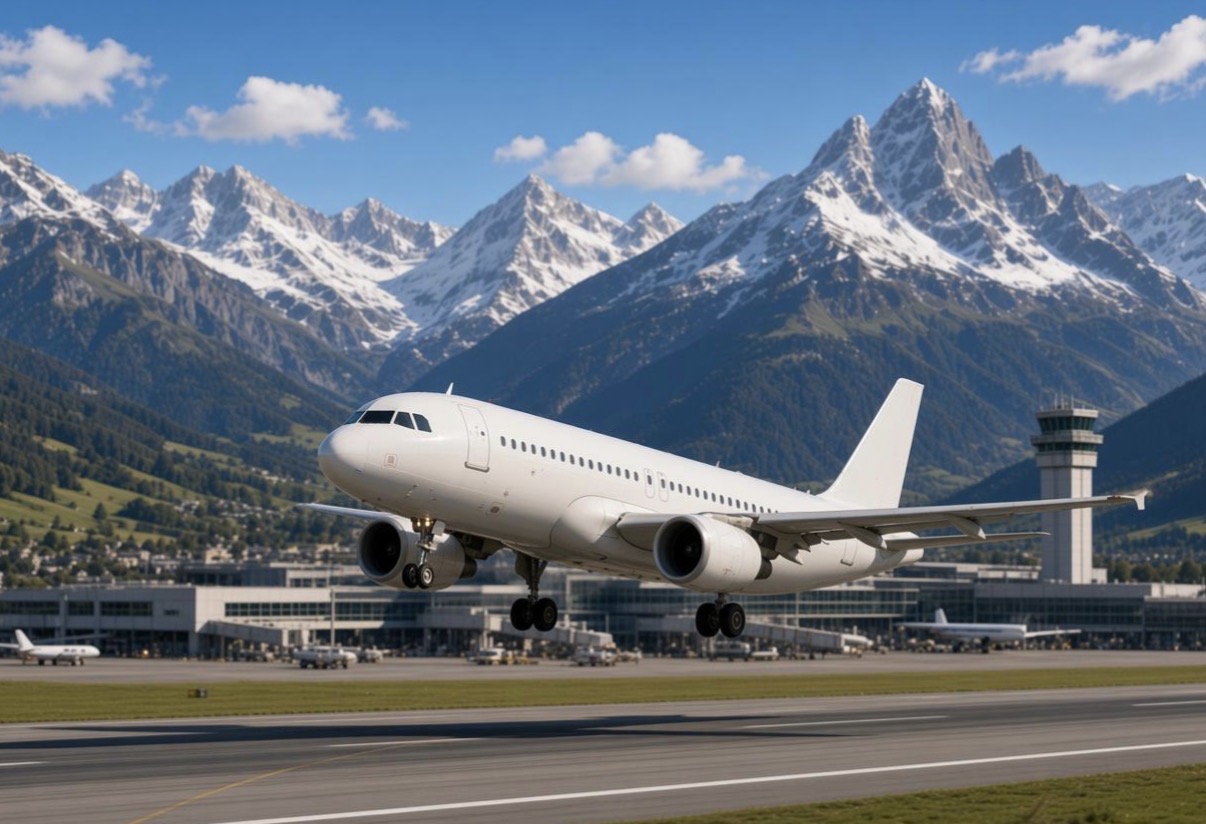
As winter tourism continues to evolve under climatic and environmental pressure, the question of how visitors reach the Alps has gained new importance. Large international hubs still handle the majority of arrivals, yet a quieter alternative is drawing steady interest.
Chambéry Airport, located in Savoie, is increasingly viewed as a practical and lower-intensity gateway for travelers heading into the high mountains. Its more modest scale, combined with efficient onward connections, positions it as a relevant option for those seeking both convenience and a reduced transport footprint.
A Quieter Point of Entry
Chambéry Airport operates on a distinctly human scale. Passenger flows remain manageable, waiting times are generally shorter, and the overall experience feels less hurried than at major international terminals. For many visitors this calmer arrival sets a different tone for the journey ahead.
From the airport, road links provide relatively direct access toward the Tarentaise and neighboring high valleys. Among the destinations that benefit from this positioning is Tignes, a high-altitude resort known for its reliable snow cover and extended season. One additional high site in the wider area shares similar elevation advantages, though Tignes remains a clear illustration of the kind of destination that continues to attract skiers even as lower elevations face greater variability.
The growing attention paid to Chambéry reflects more than simple logistics. In a period when alpine environments are under measurable strain, the choice of arrival point and transfer method begins to carry ecological weight. Starting the journey at a smaller airport already reduces some of the intensity associated with mass arrivals. When that choice is paired with thoughtful onward transport, the cumulative impact can be meaningfully lowered.
The Role of Consolidated Transfers
Traditional patterns of mountain access often rely on individual car rentals, successive taxis, or fragmented public connections. Each of these options multiplies the number of vehicles traveling the same corridors. In contrast, shared van transfers and well-organized private van servicesdeparting from Chambéry offer a more efficient alternative. By grouping passengers, shared vans reduce the total number of cars making the ascent. Private vans serving a single party still avoid the redundancy of several separate vehicles covering identical ground.
The environmental advantages of this approach are concrete :
These benefits become particularly relevant when the destination is a high-altitude resort such as Tignes. Reliable snow at elevation continues to draw visitors, yet every additional car on the approach roads adds to local emissions and infrastructure stress. Choosing a consolidated transfer from Chambéry represents one practical way to keep that added pressure in check.
Climate Realities and Adaptive Travel
Climate shifts are reshaping the operational calendar of many alpine destinations. Higher sites retain a clearer advantage in colder temperatures and more consistent natural snow, while mid-altitude areas experience more frequent rain events and earlier melts. Resorts respond with improved snow management and diversified seasonal offers, yet infrastructure adjustments alone cannot address the full challenge. Visitor behavior, especially around transportation, forms part of the equation.
Chambéry’s more measured scale supports lower-impact patterns. The airport does not generate the same volume of simultaneous arrivals as larger hubs, creating space for transfer services that prioritize efficiency over throughput. Shared and private vans fit naturally into this setting, like we can see here. They provide door-to-door movement without requiring travelers to navigate complex public networks or drive themselves on potentially difficult winter roads. The result is a journey that feels proportionate to the destination rather than oversized.
Building a More Considered Access Model
Looking ahead, the future of mountain access will likely favor options that combine reliability with restraint. Chambéry Airport already demonstrates some of the qualities that support this direction: manageable size, regional proximity to high resorts, and the capacity to host efficient transfer services. When visitors select shared or private vans for the onward leg to places such as Tignes, they participate in a quieter form of mobility that reduces redundant road traffic.
This does not eliminate the broader footprint of winter tourism. It does, however, address one clear and controllable element, the number of vehicles traveling between airport and resort. Multiplied across a season, such choices contribute to lighter pressure on alpine corridors and the communities that maintain them.
A Practical Step Forward
Interest in Chambéry as a gateway is unlikely to fade. Travelers who value a less frenetic start, straightforward connections, and a more deliberate approach to environmental impact find practical reasons to begin their journey there. Pairing that choice with consolidated van transfers strengthens the case further. The mountains themselves continue to face climatic uncertainty. Elevation still offers advantages for resorts like Tignes, yet the manner in which people arrive influences how those advantages are experienced and sustained.
In this context, Chambéry Airport represents more than a convenient alternative. It offers a working example of how lower-intensity access can support both visitor experience and a reduced transport footprint. As the Alps adapt to changing conditions, the quiet efficiency of such gateways and the transfer services that serve them may prove increasingly relevant. The future of low-impact mountain access will depend in part on these measured, practical decisions, starting with where the journey begins and how it continues toward the high snow.