Projects which help people connect with nature on City of London Corporation-owned open spaces are being invited to apply for a share of new funding.
Applications are now open for the latest round of funding from the City Corporation’s Enjoying Green Spaces and the Natural Environment Fund.
It supports projects run by community and voluntary organisations which connect people with nature while improving and protecting open spaces, including Hampstead Heath, Epping Forest, West Ham Park and Burnham Beeches.
The scheme offers grants of between £2,000 and £15,000, for projects lasting up to three years which benefit both local communities and the natural environment.
City of London Corporation Policy Chairman Chris Hayward said:
“Our green spaces are the lungs of London, playing a vital role in supporting nature, improving wellbeing and bringing communities together.
“Through this fund, we want to support organisations delivering innovative ideas that help more people enjoy and benefit from these remarkable places while protecting them for future generations.”
Projects eligible for funding should improve biodiversity, connect communities with green spaces, help children and young people engage with nature or support wellbeing.
In previous funding rounds the scheme has supported 52 projects, including Moth x Human, an Epping Forest project which uses music, science and community events to help people discover the hidden world of moths.
Led by composer Ellie Wilson, who grew up near the forest, the project turns moth monitoring data into music while raising awareness of the important role moths play in supporting biodiversity and woodland habitats.
Ellie Wilson, composer and creator of Moth x Human, said:
“The Epping Forest element is about shining a light on the amazing work taking place to protect biodiversity and the incredible variety of moths found there. Because of the Forest’s ancient woodland it is home to many rare species.”
“One of the most rewarding things has been seeing people’s perceptions change. Many people think moths are scary or a pest, but when they learn more about them, or see them up close at one of our Moth Mornings, they’re amazed by their colours, diversity, and ecological importance.
“This funding has been vital in helping us reach new audiences. It has also enabled us to launch an immersive sound installation in 2027 encouraging more visitors to enjoy and appreciate this remarkable forest.”
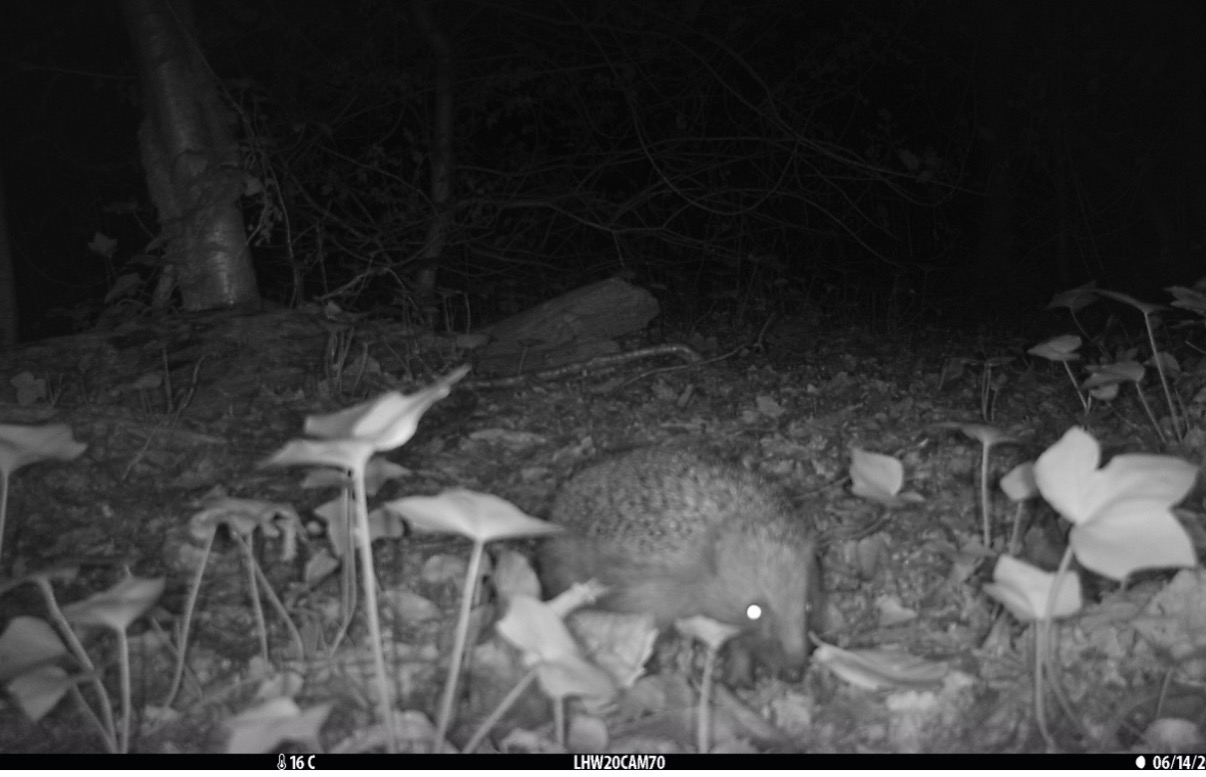
The fund has also supported London HogWatch – run by the Zoological Society of London in conjunction with volunteers from Heath Hands – which is studying hedgehog populations on Hampstead Heath and at Highgate Wood.
The project highlighted a boom in the wood’s hedgehog population. When the site was surveyed in 2017, researchers found evidence of just one hedgehog. Following habitat improvements including increased scrub cover, new nesting areas and better access routes, hedgehogs were recorded on 21 cameras across the wood.
Kate Scott-Gatty, London HogWatch Project Manager at ZSL, said:
“The results at Highgate Wood have been incredibly encouraging and show that conservation action does work. It’s been fantastic to see the impact that habitat improvements have made.
“This funding was really important because it enabled us to carry out monitoring we’d wanted to do for a long time, while working with volunteers and local communities. Bringing together research, conservation and engagement was incredibly valuable.”
Potential applicants are encouraged to discuss their proposals with the City Corporation’s Central Funding and Charity Management Team before applying, by emailing grants@cityoflondon.gov.uk. Applications close at noon on Monday, September 21.
Anyone interested can find more information and apply at www.cityoflondon.gov.uk/about-us/working-with-community/central-grants-programme/enjoying-green-spaces-and-the-natural-environment
The City Corporation protects 11,000 acres of green space across London and southeast England. Most of these sites are charitable trusts and run at little or no cost to the communities they serve.