
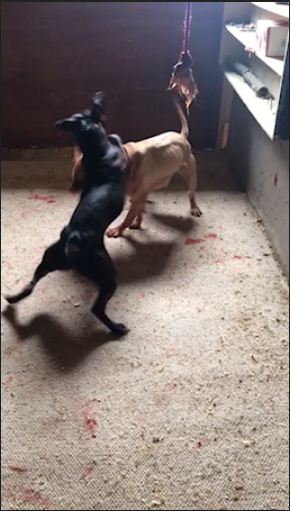
New figures, released today by the RSPCA, reveal the top hotspots across England for reports relating to dog fighting.
Latest statistics show that the RSPCA received 1,433 reports related to illegal dog fighting over the last three years*.
The figures are being released as part of the charity’s Cruelty Hurts, Love Rescues fundraising campaign – which coincides with the charity’s busiest time as heartbreaking cruelty reports peak over summer.
While some calls about the barbaric bloodsport were related to unspecified or unknown locations, the charity – whose officers will look into all reports made about animal cruelty and neglect – has revealed the top spots for fighting complaints:
Greater London (25 reports in 2025);
Lancashire (15 reports);
West Yorkshire (15 reports);
Essex (14 reports);
Somerset (14 reports);
Greater Manchester (13 reports);
West Midlands (12 reports);
Nottinghamshire (10 reports).
The charity’s Special Operations Unit (SOU) – a specialist taskforce that investigates serious and organised animal crime – looks into reports of dog fighting, and has, in recent years, uncovered enterprises breeding, training and organising events which see dogs fighting to the death.
RSPCA Chief Inspector Will Mitchell said: “The level of savage brutality in dog fighting is impossible to describe unless you’ve seen it with your own eyes which, sadly, is something our officers deal with too often.
“Dog fighting has been illegal in this country for decades but it is still widespread, particularly in the criminal underworld that operates clandestinely on our very doorsteps.
“We’ve dealt with people breeding and training dogs for fighting in the back gardens of normal family homes on quiet cul-de-sacs; we’ve responded to concerns about shrill noises and squeals coming from industrial estate warehouses where dozens of blood sport enthusiasts have packed into an echoey space to watch two dogs savage each other; and we’ve poured over hours and hours of horrifying images, footage and match reports detailing the hideous injuries these poor dogs suffer in the fighting pit.”
Sadly, the reality is that many dogs used by fighters are never found – dying from their injuries or discarded before we’re able to trace individuals – and for those lucky ones that are recovered, some are never able to find a loving home due to legislation in the UK that prohibits the rehoming of specific types of dog.
But some, like Jane, are the lucky ones. The eight-year-old bullbreed (pictured) was cleared by police for rehoming as she didn’t meet the criteria to be a prohibited type.
She was found living in a pen in a garage in Essex as part of an RSPCA investigation into dog fighting across England, Ireland and Europe. She was very nervous and shut down when she first arrived at RSPCA kennels, with scarring across her muzzle and face.
The charity’s behaviour teams worked with her to build her confidence and help her understand she was safe. A volunteer at the centre fell in love with her and adopted her.
Debbie** said: “Jane settled in so well. She just wants to enjoy life and is really chilled. I’m so glad I’ve ended up with her and we’re a great match. We suit each other well and both enjoy the quiet life.”
Four things you probably didn’t know about dog fighting
Dog fighting is steeped in history, tradition and custom, with training techniques, breeding lineages and prowess passed down from generation to generation, champion to champion.
Training
Dog fighters take the training of their dogs very seriously. During the training period – known as ‘the keep’ – dogs are trained intensely and everything is controlled strictly from their diets to their interactions with other people and dogs. Trainers use treadmills adapted to exercise the dogs and build up their stamina. They also use flirt poles (long poles with a rope attached to the end) to encourage the dogs to run, jump and bite.
Lineage
The lineage and breeding of dogs is incredibly important; with fighters taking great pride in their dog’s family tree, often able to trace their lineage back generations.
‘Up to scratch’
The common phrase ‘up to scratch’ is regularly used in the English language – but many don’t realise it actually originates from the barbaric world of dog fighting. A fighting pit includes a scratch line which is drawn diagonally from one corner to the opposite corner. The dogs must stay behind these lines until the referee orders their release and begins the fight. A dog is considered confident and up for fighting if it runs straight to the line to face its opponent, or if it comes ‘up to scratch’.
DIY vet treatment
Dogs used in fighting suffer serious wounds and can be killed. Their owners will not seek veterinary treatment due to fears of raising the alarm to their crimes – so they often set up their own DIY vet kits at home and treat the dogs themselves. They have been known to glue or staple wounds, use IV kits, and even treat dogs with human medication to keep them alive, usually without any pain relief or anaesthetic. Seriously injured dogs who cannot be saved may be shot with a captive bolt gun, or have been known to be electrocuted or drowned, before their body is burned.
The RSPCA revealed that in June, July and August last year they received 6,322* cruelty calls to their emergency line, which is one call every 10 minutes when the line is open. In comparison, the charity took 3,852 calls for the same period in 2021 – showing a massive 64% increase in just five years.