For one weekend each summer, a city famous for its reserve throws caution to the wind. London’s Pride celebration draws enormous crowds into the centre, closing roads that normally carry the relentless traffic of the capital and handing them, briefly, to a moving wall of colour. It has become one of the largest public gatherings in the British calendar, and watching it unfold remains one of the more striking sights the city offers.
The scale alone is worth pausing on. Hundreds of thousands of people converge on a single route, spilling far beyond it into the surrounding streets, bars, and squares. Businesses dress their windows, balconies fill with onlookers, and the ordinary geography of central London is overwritten for a day by something altogether more joyful. It is a spectacle in the truest sense, and a large part of that spectacle is visual.
A celebration you can see from streets away
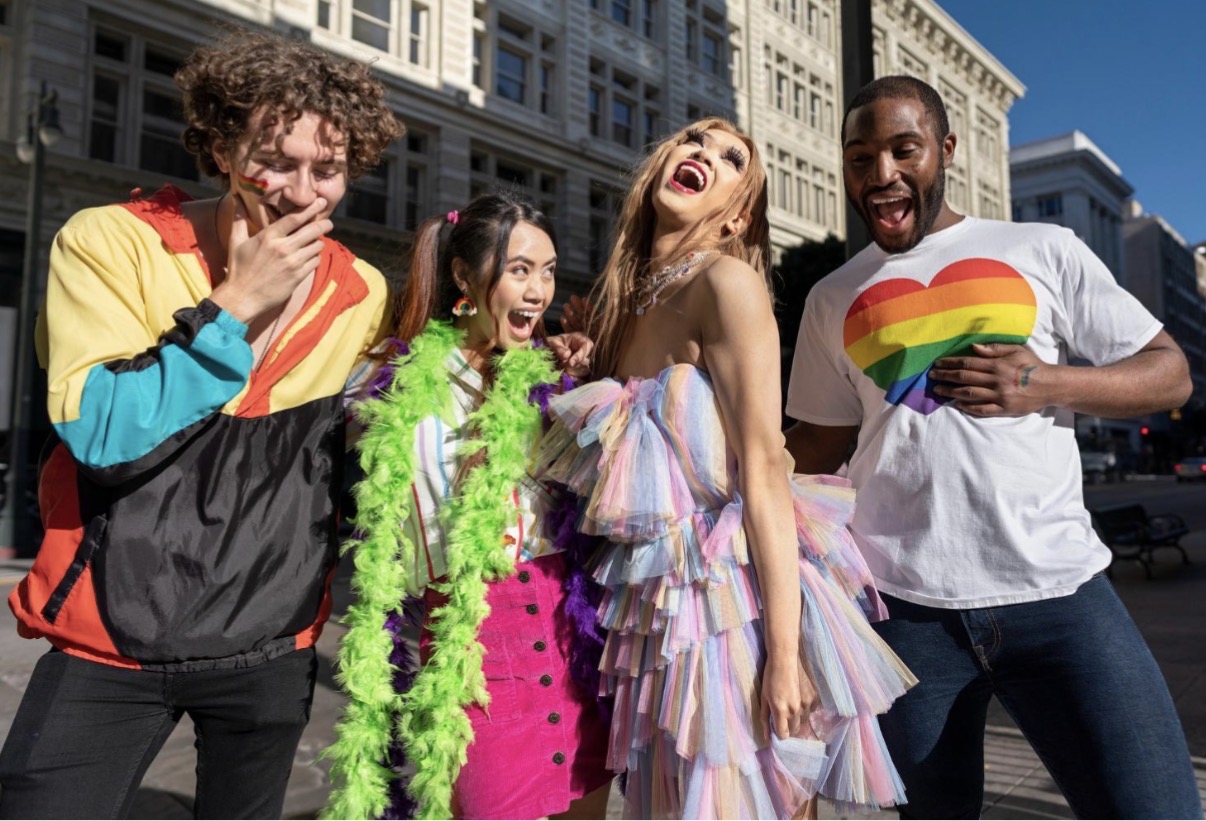
What gives Pride its unmistakable look is the crowd’s commitment to being seen. This is not an event people attend in muted tones. Much of the visual energy radiates outward from the participants themselves, where a single rack of Pride Costumes can turn an otherwise quiet side street into a procession of feathers, flags, and rainbow brights well before anyone reaches the main route.
That collective effort produces something no single organiser could choreograph. Thousands of individual choices, each person deciding how loudly to dress, somehow resolve into a coherent sea of colour when viewed from a distance. The rainbow recurs everywhere, on capes and wigs and painted faces, but so does pure invention, the homemade and the elaborate jostling alongside the bought and the borrowed. The result is a kind of crowdsourced pageantry that feels spontaneous precisely because it is.
The variety is a large part of the appeal. Walk the length of the route and the styles shift constantly, from the sleek and minimal to the gloriously excessive, from sharp tailoring in a single block colour to confections of tulle and feathers that must have taken days to assemble. No two stretches of the crowd look quite alike, and that restlessness, the refusal to settle into any single uniform, is exactly what keeps the spectacle from feeling stage-managed. It is a parade with no costume department, and it shows in the best possible way.
For the city’s photographers, both professional and amateur, it is one of the richest days of the year. For everyone else, it is simply impossible to look away from.
Colour with a long memory
It would be a mistake to read all this brightness as mere decoration. The celebration carries a weight of history that the carnival atmosphere honours rather than obscures. Pride exists because visibility was once dangerous and hard-won, and the loud, unapologetic display of identity that defines the modern event is a direct descendant of that struggle.
Organisations that have shaped that history are woven through the day. The charity Stonewall, named after the events widely regarded as a turning point for the movement, has spent decades campaigning on the issues the celebration ultimately stands for, and its presence is a reminder that the party has roots. The colour, in other words, is not just aesthetic. It is a statement with a lineage, and the people dressing boldly are taking part in something that stretches back far further than any single summer.
Even the rainbow itself carries this history. The flag that has become global shorthand for the movement was designed in the late 1970s as a deliberate symbol of diversity and pride, and its journey from a hand-dyed banner to an instantly recognisable emblem mirrors the wider arc of the cause. Every rainbow cape in the London crowd is, knowingly or not, flying a piece of that story.
Threaded through the celebration, too, are the campaigning groups, community organisations, and grassroots collectives whose year-round work the single day represents. Their banners and blocs move through the crowd alongside the floats, a reminder that the festivity is the visible surface of something that continues long after the streets are swept and the barriers come down. The colour draws the eye first, but the substance is always there beneath it for anyone who cares to look.
What the spectacle says about the city
Pride has also become a kind of annual self-portrait for London, a day when the capital shows itself something about who it is. A city of extraordinary diversity, often dispersed across separate communities and neighbourhoods, gathers in one place and looks, for a few hours, like a single thing. That image of unity is partly an illusion of the occasion, but it is a powerful and welcome one, and the visual exuberance is the medium through which it is expressed.
The economic and cultural ripple is real too. The celebration draws visitors from across the country and beyond, fills the city’s venues, and reinforces London’s standing as a place that takes diversity as a point of pride rather than mere tolerance. The colour on the streets translates, in its way, into something the city values year-round.
There is something quietly moving in watching a city this large make room for a celebration this open. London spends most of the year in motion, heads down, hurrying between obligations and rarely meeting a stranger’s eye. For this one day it slows, looks up, and lets itself be delighted by the sheer range of the people who call it home. That change of register, more than any single float or performance, is what tends to linger once the weekend is over.
For anyone yet to experience it, the advice is simply to go and to go prepared to be part of it rather than just a witness to it. Wear something that says you turned up to celebrate, find a spot where the energy is highest, and let the day do the rest. London does not look like this on any other weekend. The streets return to grey soon enough, the roads reopen, and the ordinary rhythm resumes. But for that one shining stretch, the capital becomes a canvas, and everyone who shows up in colour gets to be part of the picture.
That, more than the music or the floats or the speeches, is what people carry home: the memory of a city that briefly, brilliantly, painted itself every colour at once.