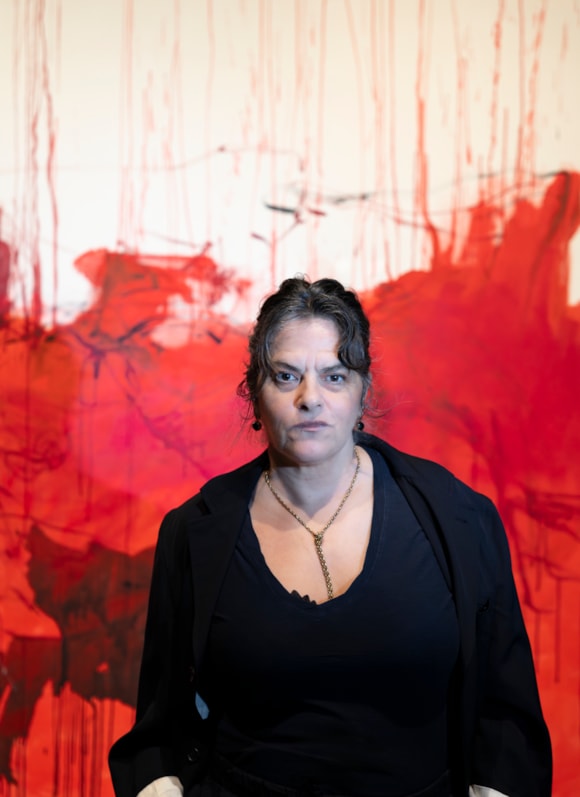
Transport for London (TfL) is marking its annual Priority Seating Week (11-17 May) with announcements by the acclaimed artist Dame Tracey Emin, as it raises awareness of non-visible disabilities and health conditions that can often mean that people need a seat on public transport.
With more than 13 per cent of Londoners identifying as disabled1, it is vital that the capital’s transport network is as fair, accessible and inclusive as possible. TfL’s annual Priority Seating Week sets to raise awareness of priority seating on its network and how many conditions, both visible and non-visible, that may mean a customer needs a seat.
This year the acclaimed artist Tracey Emin, who currently has an exhibition at Tate Modern centring her experiences of cancer and disability, has recorded a station announcement that echoes TfL’s ongoing ask for people to look up and see if anyone needs a seat more than them, and a reminder that not all health conditions are visible. The announcement will be played at 10 central London Underground stations including Bank, Canary Wharf and Liverpool Street, as well as at several bus stations, for the duration of Priority Seating Week.
Throughout Priority Seating week, staff will be at Ealing Broadway, Ilford, Paddington, Romford and Woolwich Elizabeth line stations, giving out ‘Please Offer Me A Seat’ and ‘Baby on Board’ or ‘Babies on Board’ badges to customers who need them, with staff also on hand at Norwood Junction and Walthamstow Central London Overground stations.
KeolisAmey Docklands Image – DLR train showing customers on the platform where to find the space for wheelchairs, buggies and other large items
Download
Last year, TfL introduced a new priority seating design on the Elizabeth line, with higher contrasting colours and the words ‘This is a priority seat.’ This design now applies to all new priority seats on the TfL network, with it featuring on Central line and new DLR trains and on the upcoming new Piccadilly and improved Waterloo & City line trains. Large, eye-catching blue signs have been installed on the doors of many DLR exteriors to show customers on the platform where to find the space for wheelchairs, buggies and other large items. This gives customers who will benefit from these spaces a few extra moments to locate and reach them before the doors open.
Many non-visible conditions can make it more difficult for people to stand when they use public transport and getting a seat can make a huge difference to their day. These can include physical conditions, mental health conditions and forms of neurodivergence. TfL offers a free ‘Please Offer Me a Seat’ badge and card to anyone who needs one, which can be ordered online or over the phone.
TfL Image – Please Offer Me a Seat badge
Download
Artist Tracey Emin said: “Through my own experiences of cancer, which led me to having a stoma, I know just how much of an impact a health condition or disability can have on something like standing on a train. Any one of us can have a health condition or disability, and because many of these don’t have outward cues, that might mean people miss out on things that would really help them like getting a seat on public transport. If you’re out and about in London, please do offer your seat if you don’t need it yourself – you never know what a difference you could make.”
Deputy Mayor for Communities and Social Justice, Dr Debbie Weekes-Bernard, said: “Living with a disability or long-term health issue can make travelling a challenging experience, which is why the Mayor is committed to ensuring the capital’s transport network is as accessible as possible. Dame Tracey Emin’s station announcements will raise awareness that not all disabilities are visible and encourage Londoners to offer their seat to someone who may need it, if they are able to. We are proud to support TfL’s Priority Seating Week, as we build a better, fairer and more inclusive London for all.”
Emma Strain, TfL’s Customer Director, said: “Londoners are kind and compassionate and will so often give up their seats for others, but we can always be more mindful of people when we travel. Disabilities and health conditions can affect anyone and vary from person to person, impacting people in ways we might not expect – and in many cases you simply can’t tell someone has one just from their appearance. Tracey Emin’s art has spoken to many of us over the years, and we hope her announcements this week encourage us all to look up when we’re travelling and, if we feel able to, give our seat to someone with a badge or anyone who asks or needs to sit down.”
Giovanni Cinque, Campaigns Manager at Colostomy UK, said: “For many people living with a stoma, the challenges of using public transport are not always visible, but they are very real. Fatigue, pain, anxiety about leaks, or managing their stoma can make standing for long periods difficult or distressing. Having access to a seat can make a huge difference to someone’s confidence and ability to travel independently. Campaigns like Priority Seating Week are vital in helping people understand that not all disabilities are visible, and that a small act of kindness like offering a seat, can have a significant impact.”
Around 170,000 ‘Please Offer Me A Seat’ badges have been issued to customers since they were introduced 2017, with one now on display in the Victoria & Albert Museum in the Design, Architecture and Digital Department collection. In March TfL also introduced a ‘Babies on Board’ badge for parents expecting multiples and to mark the 20th anniversary of the ‘Baby on Board’ badge.
TfL continues to make strides with Equity in Motion, its long-term strategy to make the transport network as fair, accessible and inclusive as possible and which committed to more than 80 actions. Since its launch in 2024, the plan has continued to grow through research, reviews and feedback and now comprises 108 actions. So far, more than 50 actions have been completed, including the introduction of New Disability Equality Training for frontline London Underground staff, and Access DLR, a free travel assistance service for anyone aged 18 or older, becoming permanent.