
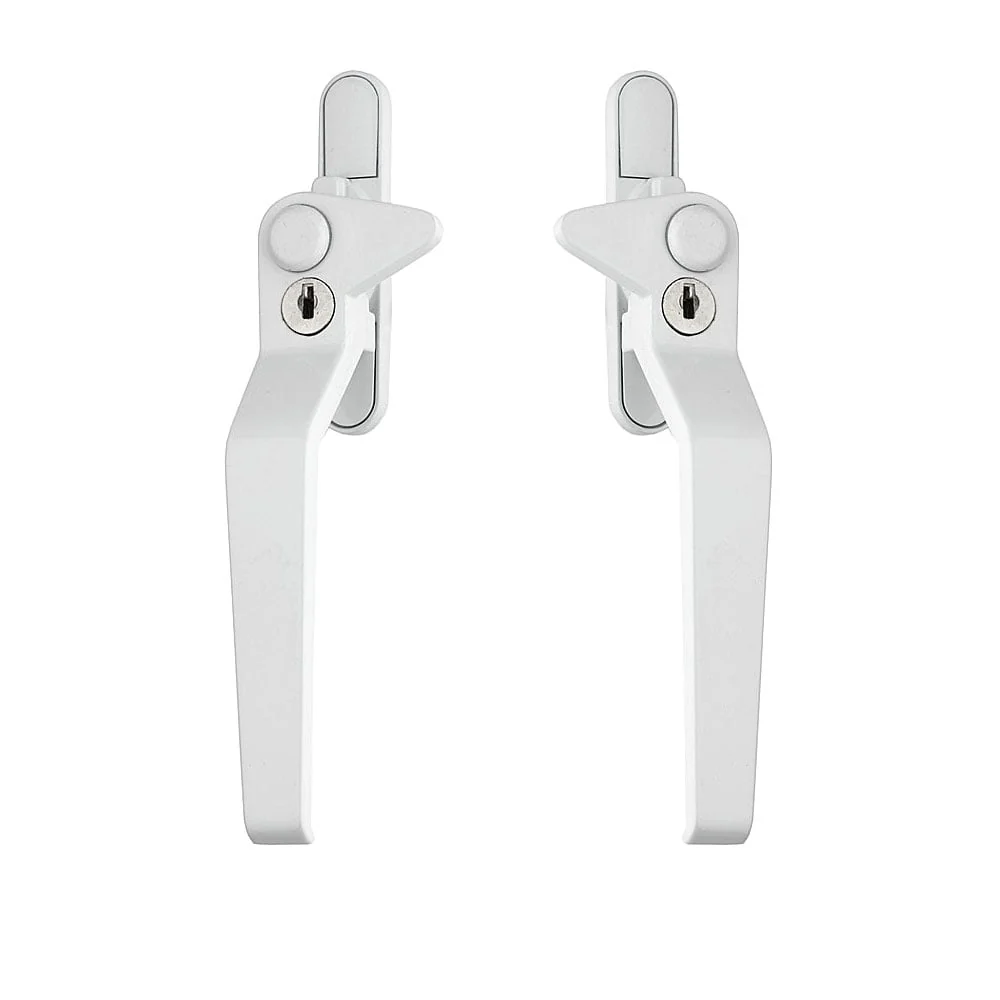
Londoners think about front doors. Decades of insurance advice, police campaigns and landlord checklists have made the capital fluent in deadlocks, cylinder ratings and video doorbells. But walk down any street of Victorian terraces, interwar semis or 1980s conversions and look up: the windows tell a different story. Much of London’s housing stock is decades old, and a striking amount of it is still secured — or not — by the original window hardware it was fitted with.
Security professionals have long pointed out that after the front door, accessible windows are the most common way into a home: ground floors, basement flats, windows above flat roofs and beside external pipework. In a city where so much living happens in converted terraces with easily reached rear windows, that makes window hardware a genuinely London problem — and one that gets far less attention than it deserves.
The age problem
Window hardware has a working life. The handles on a uPVC window fitted in the 1990s or 2000s — the great double-glazing decades for much of outer London — are now twenty to thirty years old. The internal gearing wears, locking points stop engaging fully, and key-locking handles gradually part company with their keys as tenancies and owners change. The result is a window that looks secured but is held shut by little more than habit.
The tell-tale signs are familiar to anyone who has lived in an older London flat: a handle that turns without a key because the key is long gone; a handle that lifts with a wobble; a sash that rattles in wind because the mechanism no longer pulls it tight. Each is a comfort annoyance and a security gap in the same component.
The renter’s dilemma
For the roughly half of Londoners who rent, window security sits in an awkward gap. Structural work is the landlord’s territory, but the small hardware — handles, restrictors, catches — often goes unexamined by either party for the length of several tenancies. Renters assume they can’t change anything; landlords assume everything is fine because nobody has said otherwise.
In practice, the small fixes are exactly the ones worth raising. Replacing a worn or keyless window handle with a key-locking version is a ten-minute, like-for-like swap that most landlords will approve readily — it improves their asset and their insurance position at the cost of a few pounds. Tenants in ground-floor and basement flats have the strongest case of all: many insurers expect key-locking windows on accessible openings, and a landlord’s buildings policy benefits from the same compliance the tenant’s contents policy does. Put the request in writing, offer to have it done at the next visit, and it rarely meets resistance.
What a window check actually involves
The audit takes an evening. Every openable window gets three questions: does the handle lock with a key, does the key exist, and does the window pull firmly shut when locked? Anything failing any of the three goes on the list. Ground-floor, basement and flat-roof-accessible windows come first; upper floors follow, where locking handles do double duty as child safety measures in family homes.
Replacement is less complicated than most Londoners expect. Modern uPVC window handles are heavily standardised — most fit the same screw spacing, with a square spindle in a handful of common lengths — so like-for-like swaps rarely require anything beyond a screwdriver and a correct measurement. Specialist security retailers such as Home Secure supply key-locking replacements for older uPVC, aluminium and timber windows for less than the cost of a Zone 1 travelcard, which puts a full flat’s worth of window security within most budgets.
A cheap fix in an expensive city
London home security conversation tends to gravitate to the expensive end: alarm systems, cameras, smart locks. There is a place for all of it. But the unglamorous truth is that in a city of ageing windows, some of the most cost-effective security money a household can spend is on hardware that costs less than dinner and fits in a coat pocket. The capital’s doors have never been better protected. Its windows are still waiting for the same attention.