In the high-stakes environment of Quick Service Restaurants (QSR), the digital transformation race is on. While expanding into self-service kiosks, branded mobile apps, web ordering, and third-party delivery marketplaces increases market reach, it frequently introduces operational friction. Restaurant chains routinely find themselves managing isolated data siloses, where a single menu change requires manual updates across multiple platforms, and incoming orders from delivery apps disrupt back-of-house workflows. Ordering Stack is the enterprise solution designed to solve this complexity.
Operating as a cloud software platform, Ordering Stack bridges front-of-house guest convenience with back-of-house kitchen efficiency. Rather than forcing brands to undergo a costly and disruptive overhaul of their core IT infrastructure, it functions as an intelligent, comprehensive software layer that integrates directly with existing tier-one POS systems like Oracle Simphony, LS Retail, and NCR Aloha.
It’s not only the restaurant kiosk software. The platform’s architecture is built on a clear, three-tier hierarchy — Solution, Module, and Functionality — that bridges the traditional gap between transaction processing and customer retention. Today, Ordering Stack serves as the battle-tested digital backbone powering the daily operations of world-class QSR brands such as Burger King, KFC, Popeyes, Pasibus, and Berlin Döner Kebap. The platform’s scalability is reflected in its growth trajectory, processing an impressive volume of over 22 million annual orders across dozens of restaurants and hundreds of self-ordering kiosks in six countries (Poland, Czechia, Bulgaria, Romania, Germany, and Algeria). These numbers continue to grow as new locations connect to the Ordering Stack ecosystem every month.
The Shared Core: Centralized Menu Control and POS Synergy
At the center of Ordering Stack’s philosophy is the elimination of operational chaos through total data synchronization. The platform’s POS Integrator Module connects central restaurant software to every outward-facing channel, ensuring that all consumer touchpoints operate under identical, shared business rules.
This synchronization is governed by a QSR-ready Menu Management engine equipped with built-in Product Information Management (PIM). Instead of configuring separate databases for in-store kiosks, web delivery networks, and third-party aggregators, managers control a single repository of data. The PIM effortlessly handles complex menu hierarchies, modifier groups, combo definitions, and bundled offers. Furthermore, it enables real-time adjustments for location-specific pricing and daypart availability rules, ensuring that lunch promotions or regional price adjustments update globally and instantaneously. When an order is placed anywhere in the ecosystem, it flows into the central POS as seamlessly as if it were entered directly by restaurant staff.
Maximizing the Transaction: Self-Service and the Sales Enhancement Engine
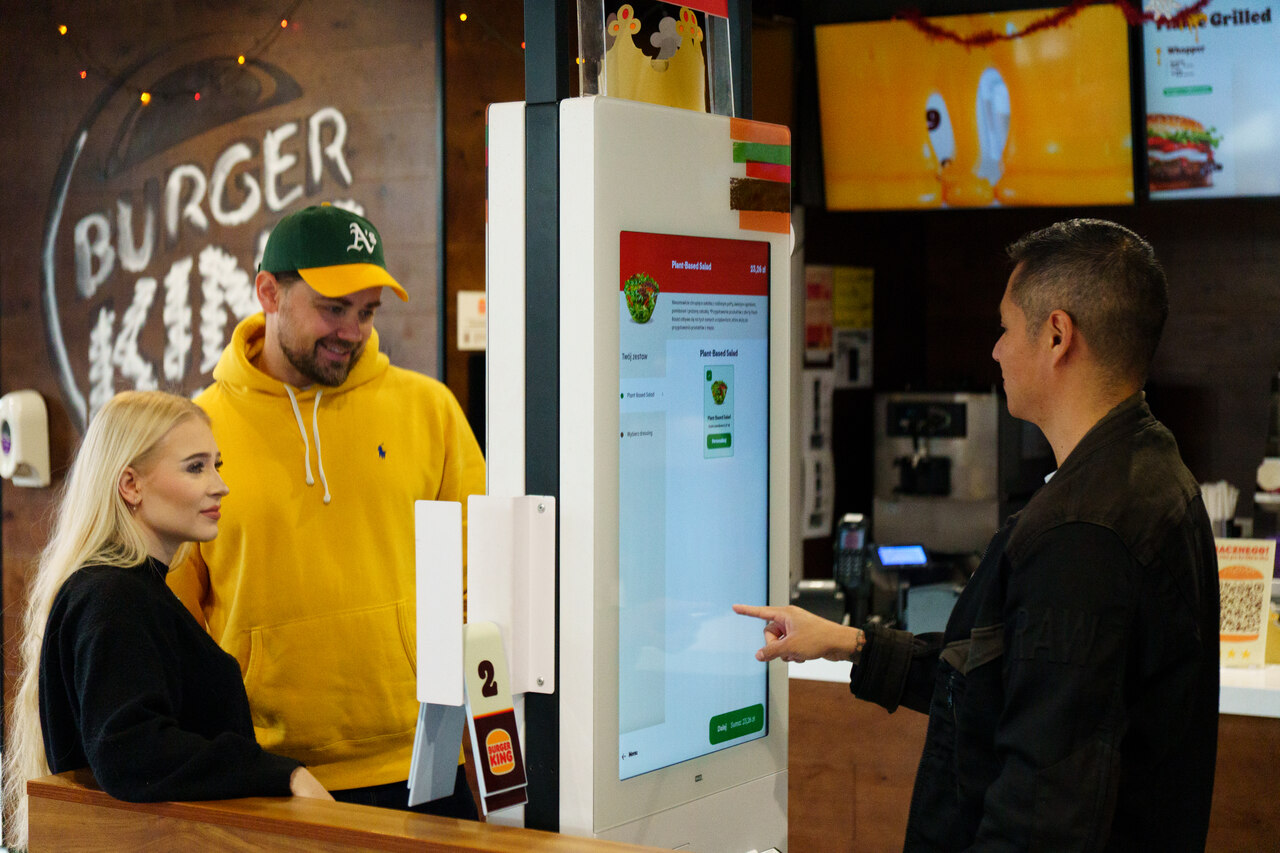
On the frontend, Ordering Stack provides an advanced omnichannel ordering layer designed to capture demand wherever the customer is. A core element of this strategy is a hardware-independent solution for self-service kiosks. From tailor-made UX/UI that reflects a brand’s visual identity to dependable Electronic Cash Register (ECR) payment terminal integration, the platform converts basic ordering terminals into highly efficient revenue assets.
This capability extends smoothly into custom-branded web interfaces, mobile ordering setups, and dedicated Drive Thru streams that accelerate order-taking during peak operational hours. It also natively reconciles third-party delivery marketplaces — such as Uber Eats, Glovo, Wolt, Bolt Food, and Lieferando — into the same unified stream.
What sets the platform apart is its ability to actively optimize revenue during the checkout process via its Sales Enhancement Engine (SEE). Rather than relying on passive menus, the platform deploys a real-time, data-driven optimization layer across digital channels. It utilizes context-aware upselling mechanics to automatically trigger upsize or cross-sell prompts at the cart summary screen based on basket contents and real-time ingredient availability. To refine these strategies, the platform features a continuous A/B testing framework, allowing operators to experiment with menu layouts, pricing logic, recommendation algorithms, and bundle placements to predictably drive up Average Order Value (AOV).
Turning Transactions into Relationships: Loyalty and Retention
A common failure point in restaurant tech is treating the ordering process and customer marketing as separate silos. Ordering Stack intentionally fuses these elements, enabling a customer to scan a promotional QR code directly at a physical kiosk to redeem an offer, instantly tying a physical interaction to a digital marketing workflow.
The customer relationship is nurtured through a comprehensive suite that splits customer retention into dedicated software modules. The Loyalty Mobile Application Module serves as the direct-to-consumer hub, providing hassle-free registration, access to custom rewards, and order histories. Behind this frontend experience sits an internal engine capable of managing points-based programs with customizable earning and redemption metrics, single- or multi-use conditional coupons, and automated reward triggers. When the system detects a milestone or a shift in buying behavior, it utilizes integrated push notifications and localized marketing communication loops to send targeted incentives directly to smartphones, effectively turning anonymous, one-time visitors into long-term loyal guests.
Operational Harmony from Kitchen to Courier
An influx of digital orders is only beneficial if the kitchen can fulfill them accurately and efficiently. Ordering Stack unifies front-of-house demand with back-of-house logistics by digitizing the entire fulfillment workflow, giving operators a single line of sight from the moment of purchase to final collection.
Inside the kitchen, the paperless Kitchen Display System (KDS) manages orders filtered by sales channel. Simultaneously, customer-facing Order Ready Screens (ORS) keep guests and delivery couriers informed of their pickup status, minimizing counter congestion and streamlining the handoff process.
For off-premise orders, the system introduces a unified Delivery Panel interface. This environment aggregates incoming delivery requests across multiple storefronts, combining smart courier routing, real-time dispatch tracking, and seamless handoffs with external delivery networks into one cohesive operational workflow.
Conclusion
Through this modular, cloud ecosystem, Ordering Stack allows enterprise restaurant chains to modernize their digital infrastructure without sacrificing their existing technology investments. By creating a unified flow of data across menus, kiosks, loyalty applications, and kitchen logistics, the platform delivers the operational efficiency and scalable growth required by modern QSR brands.