
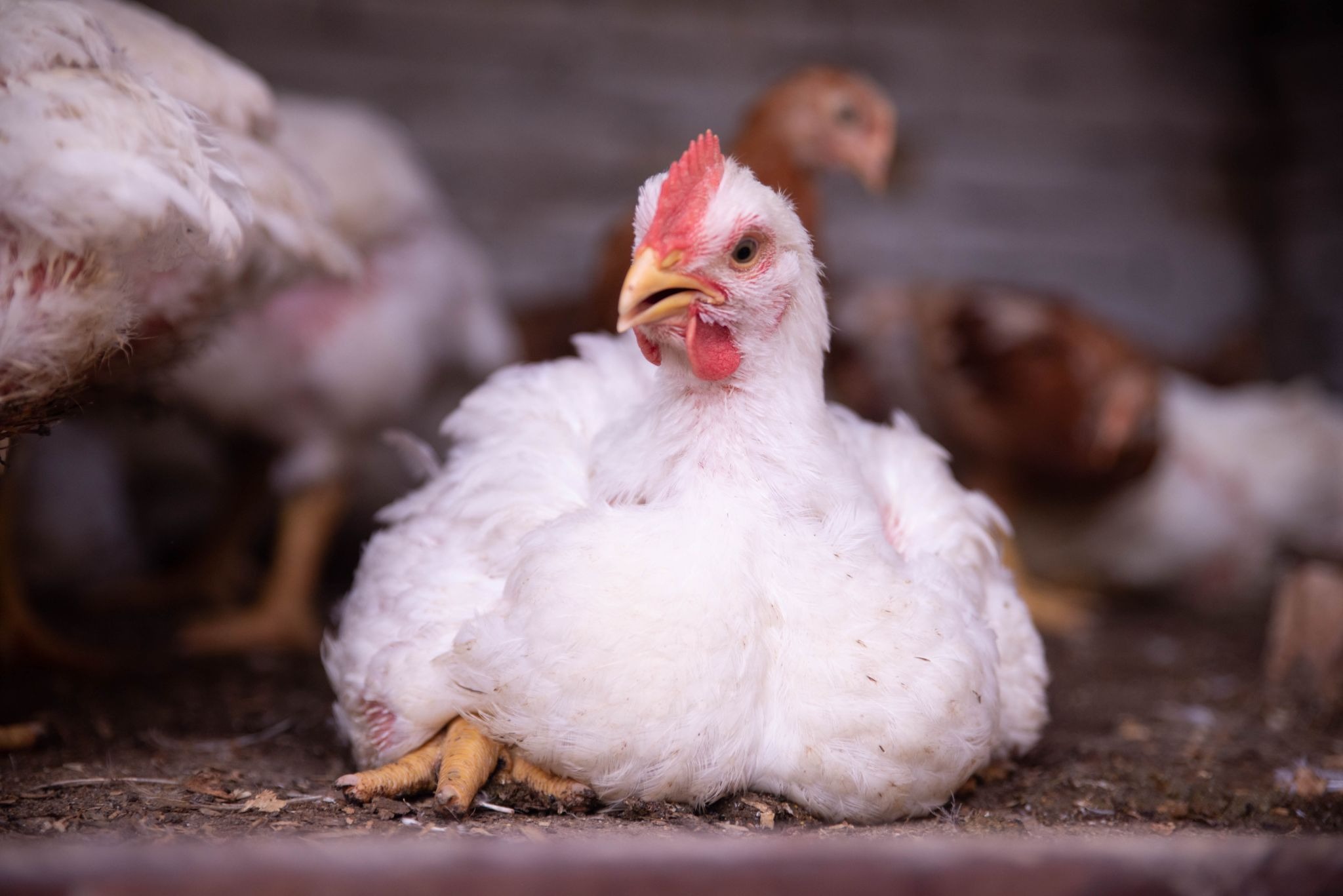
As food safety experts explore new ways to tackle campylobacter contamination, the RSPCA is reminding people in London that a move to higher-welfare chicken produce can help curb the nation’s most widespread cause of food poisoning,
And by choosing better farming standards that reduce bird stress and bacterial risk, alongside a simple individual commitment to reduce meat consumption by just 3%, shoppers can protect public health, ease the strain on the NHS, and make animal welfare a seamless part of everyday choices.
The call comes as new research explores processing methods such as using blue light during meat chicken processing to help eliminate food poisoning risks.
However, the RSPCA stresses that addressing welfare at the farm level offers an effective and proactive long-term solution.
A study earlier this year highlighted fresh concerns about the spread of the bacterium campylobacter – the UK’s most common form of food poisoning – and the role that highly-intensive farming systems play in its spread.
Hygiene and biosecurity have always been key in preventing the spread of campylobacter. But evidence also suggests more welfare-friendly poultry farming could be a secret weapon in efforts to reduce the spread of a bacteria that can be so dangerous to humans.
Slower-growing chickens live longer, experience fewer welfare problems and may also be less susceptible to some of the biological processes that allow campylobacter to spread.
And an urgent switch to slower-growing chicken breeds on farms will not only “drastically improve” animal welfare, but could also offer a vital line of defence for public health and reduce strain on the NHS.
Charlotte Arthur, Senior Scientific Officer for Poultry at the RSPCA said: “By switching to slower-growing chickens, we will not only drastically improve animal welfare standards, but could quite literally keep people safer and healthier.
“While no farming system can eliminate campylobacter, higher-welfare farm systems address many of the same risk factors that are being identified. Animal welfare and public health should be part of the same conversation – and while the benefits to a chicken’s life of better systems should persuade governments to act, we hope the case for better public health and better food safety will also encourage politicians and industry to act.”
Earlier this month, the RSPCA challenged the public to reduce animal product consumption by just three percent each year, which could result in extraordinary global benefits – such as sparing nearly one billion land animals from lower-welfare farming, and lower agricultural greenhouse gas emissions, while also helping to slow the spread of campylobacter.
The charity says creating a kinder world for farm animals “doesn’t require perfection or giving up the foods we love” – and has challenged local shoppers to follow three small steps that could help make a seismic difference.
Charlotte added: “Food choices that help animals don’t require a complete lifestyle overhaul – and many of these small steps can massively help humans too.
“A small reduction in the amount of animal products we buy, combined with choosing higher welfare products, can make a massive difference for countless animals and humans alike.
“And amid the unpalatable threat of Campylobacter, there are even more reasons for people to reduce their consumption of lower welfare chicken meat and make easy swaps in their diet – protecting themselves as well as animals.
Campylobacter is largely harmless to healthy adult chickens, but can be a major infection risk for humans – causing severe stomach cramps, diarrhoea and illness.
Shoppers can take action today by calculating their own, personalised reduction target using the RSPCA’s bespoke online food impact calculator. This free tool helps consumers analyse their current habits, receive a tailored annual roadmap, and track their progress with practical guidance.
Charlotte continued: “Every small swap at the supermarket can make a big difference.
“It can be challenging for people to understand that those small changes to their own routine can make a huge impact. But each of us has the power to drive an extraordinary movement through simple changes. Small reductions in meat and dairy consumption, knowing our labels, and looking out for higher welfare produce can contribute to helping literally billions of animals – and make a big difference for the planet, the NHS and public health too.
“Creating a better world for farm animals doesn’t require perfection or giving up the foods we love: it starts with the power of small swaps to our plate, and will spare millions of farm animals and build a kinder, more sustainable future for us all.
“And as a nation of farmed animal lovers, choosing higher welfare chicken can be a minefield, as there is so much competing information, and confusing terminology like ‘fresh’. But the only way you can be sure of the highest welfare standards is by looking out for the RSPCA Assured logo.”
More information on the RSPCA’s work with farm animal welfare can be found online.
RSPCA Assured is the RSPCA’s ethical food label and farmed animal welfare assurance scheme. Farms on the scheme utilise slower-growing breeds reared at lower stocking densities with environmental enrichment, such as perches and pecking substrates. These higher welfare standards allow birds to exhibit natural behaviours and significantly reduce stress levels.