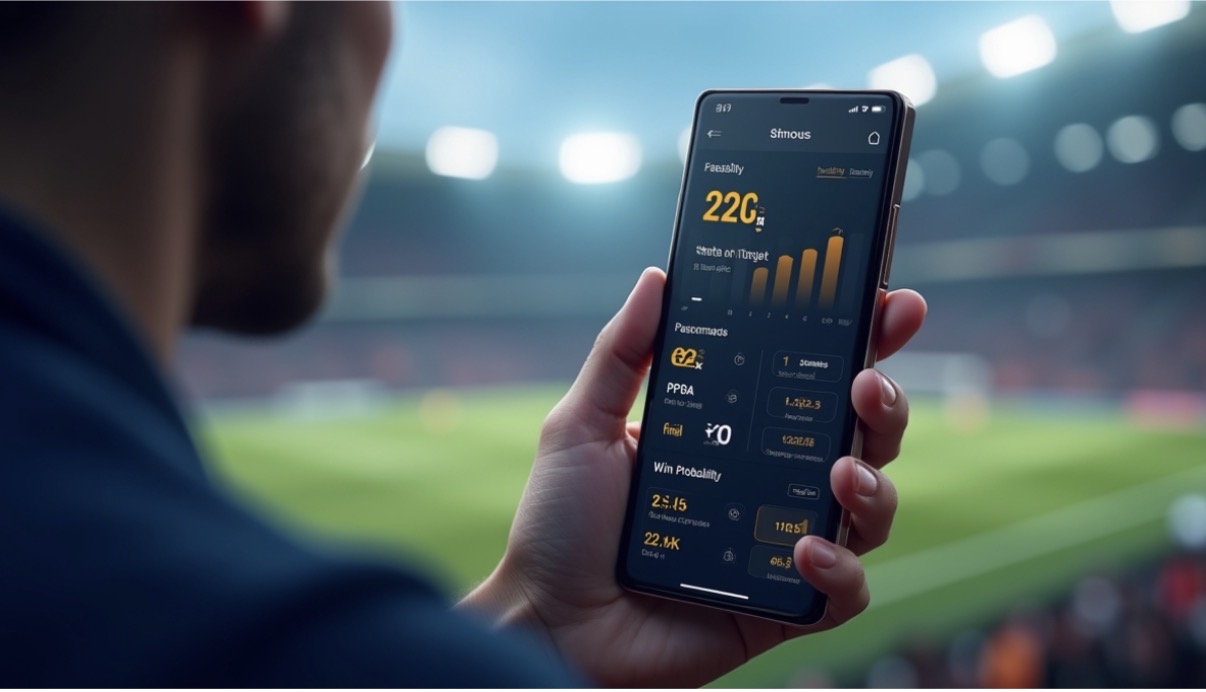
There is a particular rhythm to a British Sunday in football season. Breakfast, the sports pages, a scroll through the fixture list, and — for a significant portion of the population — a quiet few minutes deciding whether Arsenal can hold a lead at home or whether the underdog has any chance at all. The stake is rarely life-changing. The point is something else entirely.
Over the past decade, the sporting forecast quietly left the high street behind. It moved onto the phone — and there it found a different world: online platforms that had long learned to offer far more than match odds. Live dealer tables, slots, bonus mechanics designed to keep a player engaged well past the final whistle. The match-day bet became an entry point into a considerably broader form of entertainment, and British players — largely without noticing — became the largest audience for it in Europe.
A Habit Built Over Generations
Betting on sport in Britain is not a new behaviour dressed up in modern clothing. It has roots that go back to horse racing, to greyhound tracks, to the pools coupon that sat on the kitchen table every Thursday. What changed is not the impulse — it is the infrastructure around it.
The high street bookmaker was, for decades, a specific kind of place. You walked in, you studied the board, you handed over a slip. There was a physical commitment to the act, a deliberateness that made it feel separate from ordinary life. Then the phone arrived, and that distance collapsed completely.
Today the same decision — a pound on the first goalscorer, a fiver on the correct score — takes thirty seconds and happens on the sofa, between the first and second cup of tea. The ritual survived. The friction disappeared.
Why the Small Bet Matters More Than the Big One
The Gambling Commission’s data consistently shows that the majority of people who bet on sport in Britain do so with modest, controlled amounts. The average recreational bettor is not chasing a fortune. They are buying a reason to care about a match they might otherwise watch with half an eye.
This is the part that the cultural conversation around betting tends to miss. A small stake on a Sunday fixture does not transform a passive viewer into a desperate one — it transforms a distant event into a personal one. The match has a new layer. Every pass carries a fraction more weight. The ninety minutes acquire a shape they would not otherwise have.
That shift in attention is genuinely valuable to people, and it explains why the habit has proved so durable across generations and across income levels. It is not about the money. It is about the engagement.
The Platform Changed Everything
When betting moved to mobile, the industry did not simply replicate what bookmakers had done on the high street. It rebuilt the experience from scratch for a different kind of user — someone who might want to place a live bet at half-time, cash out before the final whistle, or split a stake across three different outcomes before kick-off.
The technology made complexity accessible. Accumulators, which once required careful arithmetic and a pen, are now assembled in seconds. Live odds shift in real time as the match develops. The bettor who once committed to a fixed position before the whistle now has continuous choices throughout the ninety minutes.
Platforms that sit at the intersection of sports betting and broader gaming have developed this further still. casino-fambet.com operates across both territories — a sports book alongside a full catalogue of slots, live dealer tables, and Megaways titles — which reflects how the recreational player actually moves. Someone who places a pre-match accumulator on a Saturday afternoon is quite likely to spend part of Sunday evening with a different kind of wager. The platforms that understood this early built products for the whole weekend, not just the ninety minutes.
The Premier League and the Fixture Calendar as a Betting Clock
British football did not create the betting habit, but it gave it a reliable weekly structure that nothing else quite matches. The Gameweek is a shared social calendar. Millions of people follow the same fixtures, discuss the same odds, and experience the same results simultaneously.
FamBet Casino occupies an interesting position within this broader entertainment landscape — a platform where a player can move from watching a match with a live bet running to spinning a reel in the interval without any friction between the two experiences. The welcome package and ongoing promotions are built around the idea that engagement matters as much as the individual transaction. That is a meaningful design choice in a market where the recreational player has dozens of alternatives.
What the Ritual Actually Looks Like
Strip away the technology and the regulation and the industry commentary, and what remains is something quite ordinary. A person on a Sunday morning, looking at a fixture list, making a small decision about who they think will win. Transferring that opinion into a stake that costs less than a pint of lager. Then watching the match with one more reason to stay until the final whistle.
It is not glamorous. It was never meant to be. The British relationship with the small sporting bet has always been less about drama than about participation — a way of being involved in something larger than an afternoon on the sofa.
The platforms changed. The odds moved faster. The slip became a tap on a screen. The Sunday itself stayed exactly the same.