
A SaaS company adds a yearly plan, introduces paid seats, or starts charging customers for API usage. The product team sees a pricing update, but someone in finance now has to explain partial charges, unused credits, and invoices that no longer match the original subscription. Billing software is supposed to handle this work. Stripe Billing, Chargebee, Recurly, and PaymentKit all manage recurring payments, although they approach pricing, integrations, and payment recovery differently. Those differences become much easier to recognize when comparing actual billing situations rather than product descriptions.
Subscription Pricing Is More Complicated Than a Monthly Fee
Charging $30 a month for a subscription is simple enough. Every customer gets the same bill, and there’s little to calculate. Add $10 for each extra user and a fee for exceeding usage limits, and invoices start looking different from one customer to another. Someone might add three seats halfway through the month, while another customer upgrades to a higher plan a week before renewal. The billing system has to calculate those partial charges without billing customers twice or leaving anything out.
The PaymentKit billing platform supports flat, tiered, hybrid, and usage-based pricing, including prorated subscription changes. Stripe Billing handles recurring plans and subscription schedules, while its Metronome product addresses more advanced usage billing. Chargebee supports hybrid pricing, usage tracking, and negotiated contract terms. Recurly offers recurring subscriptions with usage-based add-ons. For a company selling several subscription packages, any of these options deserves consideration, although the implementation requirements differ.
Pricing experiments deserve attention too. Marketing might want to test a discounted annual offer while keeping existing subscribers on their original terms. Finance, meanwhile, needs to know whether a promotional rate expires automatically and how the renewal amount appears on the invoice. These details can turn a seemingly minor campaign into additional development work.
Payment Integrations Affect More Than Checkout
Stripe Billing is closely connected to Stripe’s payments ecosystem, although it also supports transactions processed outside Stripe. Chargebee advertises integrations with more than 40 payment gateways. Recurly’s Starter plan lists over 20 gateways, while PaymentKit supports connections to multiple processors and routing between them. The practical distinction concerns where payment decisions are made and how much freedom a business has to change its processing arrangements.
What Happens When a Company Changes Processors?
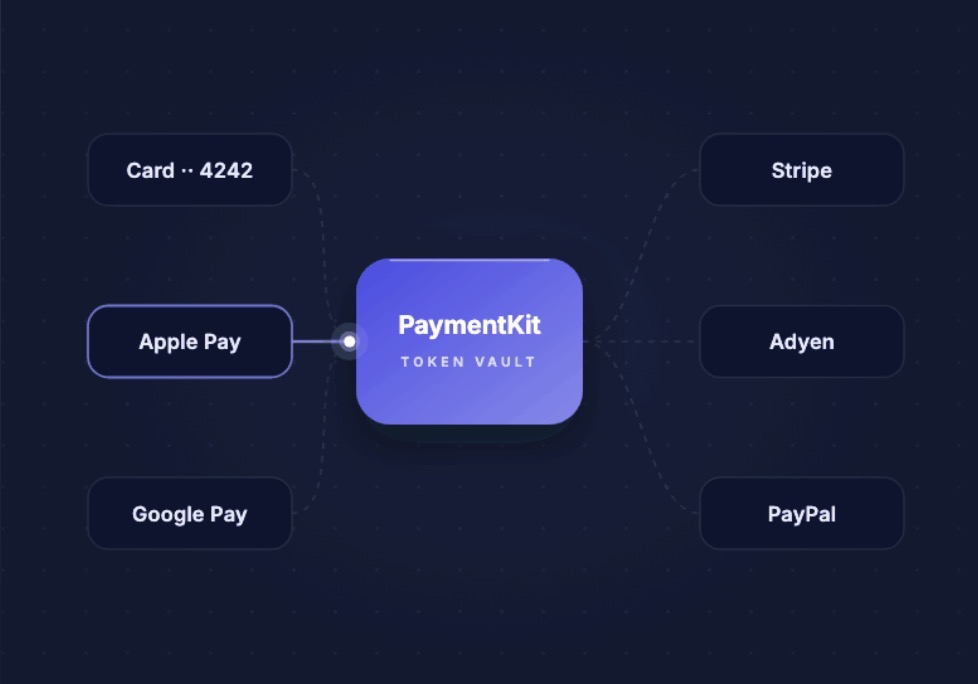
Customer payment information is particularly sensitive during a migration. Saved card details cannot simply be copied into a spreadsheet and uploaded elsewhere. Providers must follow secure procedures for transferring payment credentials, and the available options depend on the existing setup. PaymentKit uses independent token vaulting, allowing payment credentials to remain separate from an individual processor. That arrangement can be relevant to businesses planning to maintain several processing relationships.
Switching billing providers is another matter. Subscription dates, customer balances, discounts, and outstanding invoices must still be accounted for. Even when payment credentials can be transferred, companies need to check how these records will be mapped into the replacement system.
Four Billing Providers Compared
Published pricing gives SaaS businesses a starting point, although percentages alone tell an incomplete story. Each provider defines its charges differently, and payment processing may involve additional fees. The comparison below uses the providers’ published features and US pricing information.
| Provider | Billing and pricing capabilities | Payments and recovery | Published pricing |
| Stripe Billing | Recurring plans, seat-based pricing, usage billing | Stripe payments, third-party processing support, Smart Retries | 0.7% of billing volume on pay-as-you-go |
| Chargebee | Hybrid pricing, usage metering, contract billing | 40+ gateways, automated payment retries | Flow: 0.80%, or $99/month + 0.65% |
| Recurly | Recurring plans, tiered pricing, usage-based add-ons | 20+ gateways on Starter, dunning campaigns | Starter: $249/month + 0.9%, first $40K of monthly billings included |
| PaymentKit | Flat, tiered, hybrid, usage-based billing | Multiple processors, smart retries, cross-processor recovery | $99/month + 0.65% of successfully processed volume |
Recurly’s included billing allowance changes the calculation for smaller businesses. Stripe offers monthly subscription arrangements in addition to its percentage-based pricing, and advanced usage billing through Metronome has its own pricing considerations. Chargebee lists separate enterprise capabilities, while PaymentKit reserves advanced orchestration and custom integrations for its Custom offering. A comparison based on one month’s invoice could therefore miss costs that appear when the business expands.
Failed Renewals and the Cost of Keeping Subscribers
A failed renewal doesn’t always mean a customer is leaving. Sometimes their card has expired. Other times, the bank declines a payment that went through without any trouble the previous month. Stripe uses Smart Retries to decide when to attempt another charge, while Chargebee offers automated dunning to manage failed payments and customer reminders. Recurly includes a dunning campaign in its Starter plan. PaymentKit takes a different approach with cross-processor recovery, allowing eligible payments to be retried through another connected processor when the original attempt fails.
A SaaS Company Choosing Its Next Billing System
A project management SaaS company has 800 paying customers. Most are on monthly plans, but larger clients prefer annual contracts and occasionally add more seats. Payments already run through Stripe, and the company is happy with that arrangement. Stripe Billing makes sense here. If managing custom contracts and tracking usage starts taking up too much time, Chargebee is another option worth examining.
Expansion could change that choice. The company starts selling in new markets, adds another payment processor, and suddenly its existing setup needs a second look. PaymentKit supports billing and payment routing across multiple processors, while Recurly offers gateway integrations and subscription recovery features. Before choosing either, the team could try a few everyday scenarios: adding seats halfway through a billing cycle, changing an annual contract, or dealing with a failed renewal. How much manual work remains after each test would tell them more than another comparison of feature lists.
Consultants advising merchants on these decisions may also partner with PaymentKit through its referral program. PaymentKit handles referred merchant onboarding and ongoing support, with recurring compensation governed by the partner agreement. This arrangement is intended for payment and technology partners rather than ordinary SaaS subscribers.
Conclusion
Subscription software gets tested most seriously when something changes. A customer upgrades halfway through the month, an invoice needs correcting, or a renewal fails despite the subscriber wanting to stay. Stripe Billing, Chargebee, Recurly, and PaymentKit address these situations with different combinations of billing controls, payment connections, and recovery features. A SaaS company with simple recurring charges may find that its existing payment provider already covers the necessary work. Businesses managing variable pricing, multiple processors, or complicated contracts have more to examine. The most useful comparison begins with a few real customer accounts and the transactions that cause the finance team the most trouble.