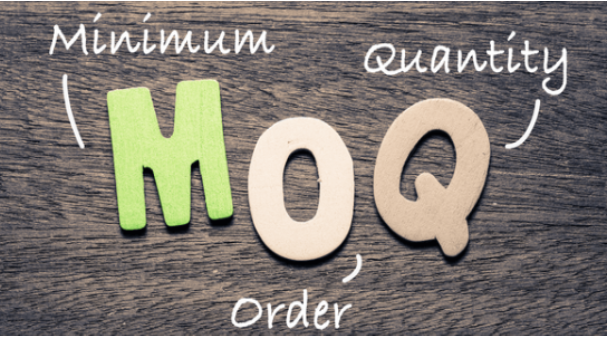
Overstock isn’t a “bad buying decision” in the abstract. It’s usually the outcome of one very specific constraint: minimum order quantities that force a retailer to buy deeper than demand can justify. Big chains absorb that with scale. Smaller retailers just end up warehousing yesterday’s optimism.
This is where low-MOQ sourcing and mixed pallet loading start to look less like a logistics preference and more like a survival tactic. Partners such as OKDExports.com are leaning into that reality by helping small and medium retailers build assortment through smaller commitments, then ship it in a way that still makes operational sense.
MOQ is the silent killer of cash flow
Retail teams can talk for hours about merchandising and pricing, then quietly bleed margin through inventory drag. The pattern is familiar:
- A supplier’s MOQ forces a deep buy on one SKU
- The SKU sells, but not fast enough
- Cash stays trapped in stock instead of funding the next range refresh
- Markdown pressure creeps in, often earlier than planned
- Warehouses fill with “decent product” that’s in the wrong quantity
That last part matters. It’s rarely terrible product. It’s just too much of it.
Low MOQ changes the math. It turns “commit big and hope” into “test, measure, then scale.” That’s how modern retail wants to behave anyway.
The smarter model: buy like a retailer, not a wholesaler
Low MOQ is not only about ordering less. It’s about ordering with intent.
For smaller retailers, the strongest use case is assortment building:
- Test multiple variants rather than going all-in on one
- Introduce niche SKUs without gambling on a full pallet
- Refresh shelves more often, which keeps regular customers interested
- Reduce the need for clearance activity caused by forced bulk
In practice, low MOQ supports tighter open-to-buy control. It also improves decision-making because the feedback loop shortens. Instead of waiting a full season to learn whether something works, the retailer learns within a normal trading cycle.
The catch: low MOQ can create messy shipping if it’s handled badly
Here’s where some retailers get burned. They unlock low MOQ, then end up with a new problem:
- too many small consignments
- fragmented inbound schedules
- poor freight utilisation
- inconsistent paperwork from multiple small orders
Low MOQ is only half the solution. The other half is consolidation, specifically mixed pallet loading.
Mixed pallet loading: the bridge between variety and efficiency
Mixed pallet loading allows multiple SKUs to ship together in one palletised unit. It sounds simple, but it’s one of the most retailer-friendly tools in global sourcing because it matches how retail demand behaves.
A retailer rarely needs a full pallet of one item. They need:
- depth on a few core winners
- light quantities across a broader range
- seasonal and promotional top-ups
- replacement stock without another bulk commitment
Mixed pallets support that mix. They let a shipment carry breadth without turning the warehouse into a storage unit for surplus cartons.
What “good” mixed pallets look like operationally
Mixed pallets only help when they’re controlled. The best programs treat pallet building as a process, not a favour.
Retailers should expect a few non-negotiables:
Pallet-level visibility
Receiving teams should know what’s on a pallet before the wrap comes off. That means a pallet ID and a clear breakdown tied to the packing list.
Carton marking discipline
Cartons need consistent marks: SKU reference, piece counts, and something that matches the PO line structure. If cartons arrive as anonymous brown boxes, mixed pallets become slow pallets.
Document consistency
Commercial invoices, packing lists, and any export paperwork should reconcile cleanly. Mixed pallets amplify small document errors because there are more SKUs, more lines, more chances for mismatches.
Build logic that respects warehouse reality
A mixed pallet shouldn’t be a random pile. Retailers benefit when pallets are built with some logic, for example keeping similar handling requirements together and avoiding fragile/heavy conflict stacking.
Low MOQ also improves supplier management, not just inventory
There’s a subtle benefit that doesn’t show up on spreadsheets immediately: low MOQ improves negotiation quality.
When retailers aren’t forced into bulk, conversations shift from “how do we meet MOQ?” to “how do we keep the flow stable?” That’s a better place to be.
It allows retailers to set expectations around:
- consistent lead times
- packaging standards
- labelling formats
- replenishment cadence
Instead of treating sourcing like occasional big events, it becomes repeatable operations. That’s where smaller retailers start behaving like much larger ones, just without the bulk buys.
How smaller retailers can implement low MOQ without losing control
Low MOQ is powerful, but it still needs structure. Otherwise it turns into endless “small orders” with no rhythm.
A practical setup looks like this:
1) Set a test-and-reorder framework
Define what “test” means internally. That can be units, weeks of cover, or sales velocity targets. The goal is clarity: if the SKU hits the target, it graduates to replenishment.
2) Use simple range tiers
Not everything needs the same depth. A basic tiering model works:
- Core lines: deeper buys, frequent replenishment
- Secondary lines: moderate depth, replenish selectively
- Trial lines: low MOQ, short feedback loop
This stops the common mistake of giving trial products the same stock treatment as proven sellers.
3) Align cartonisation with store operations
Low MOQ doesn’t help if case packs are awkward. Smaller retailers should push for case sizes that suit their replenishment and store delivery model. That’s especially important when stock is split across locations.
4) Don’t ignore “hidden MOQs”
Even when a supplier offers low MOQ, the fine print often includes constraints like master carton multiples or mixed-case restrictions. Those aren’t dealbreakers, but they need to be understood early so the order plan doesn’t collapse later.
Where OKDExports.com fits for SMB retailers
For small and medium retailers trying to source globally without drowning in stock, the value of a partner like OKDExports.com is the combination of two things that usually don’t come together naturally:
- low MOQ access, so assortment can be built without forced bulk
- mixed pallet loading, so shipping remains efficient and warehouse-friendly
That pairing matters. Retailers don’t just want “smaller buys.” They want smaller buys that still arrive in a tidy, receivable form, with documentation that doesn’t create a morning of reconciliation headaches.
When those pieces click, a retailer gets something close to a real supply flow: varied inventory arriving in workable loads, with less cash locked in slow movers.
The global sourcing advantage is speed, not only cost
Smaller retailers are often told they can’t compete globally because they lack volume leverage. That’s only half true. They can’t out-muscle big chains on bulk pricing. But they can out-manoeuvre them on range agility.
Low MOQ plus mixed pallets supports that agility:
- more frequent range updates
- faster response to trend shifts
- reduced markdown exposure
- better cash conversion cycles
In retail, that’s competitive advantage. Not theoretical, operational.
A quick checklist before committing to a low-MOQ model
Before scaling this approach, it’s worth confirming a few fundamentals:
- Are packing lists SKU-level and tied to pallet IDs?
- Are carton marks consistent and scannable?
- Is there a repeatable consolidation schedule and cut-off discipline?
- Can receiving teams process mixed pallets without opening every box?
- Is the replenishment plan defined, so “low MOQ” doesn’t become “random ordering”?
If the answer to most of those is yes, the model tends to run smoothly. And when it runs smoothly, it changes how smaller retailers think: less fear of buying wrong, more confidence in trying new.
Bottom line
Low MOQ isn’t a workaround. It’s a modern retail requirement for anyone without massive distribution muscle. Mixed pallet loading is what makes it operationally viable, keeping variety high without turning inbound logistics into chaos.
For smaller retailers that want global assortment without overstocking, the case for low MOQ is straightforward: it protects cash, reduces risk, and supports faster range decisions. The retailers who embrace it aren’t just buying differently. They’re competing differently.