Notting Hill Carnival may take place in West London, but one of the innovations that transformed its sound was created in South London.
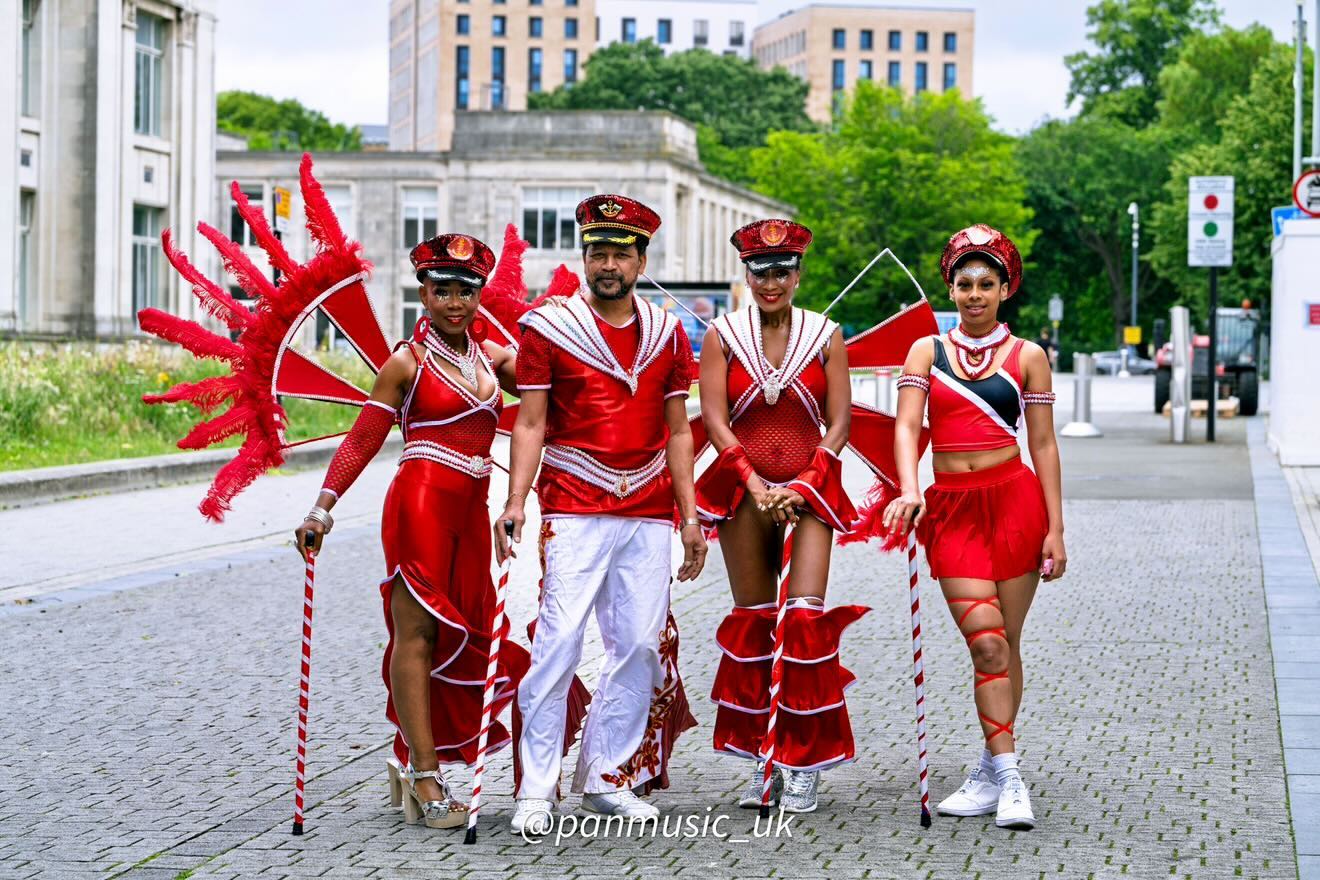
Soca Massive Fancy Sailors is the only traditional Sailor Mas band at Notting Hill Carnival and the only mas band based in South London – and as Carnival marks its 60th anniversary, the organisation is highlighting how Trinidadian masquerade, Jamaican sound-system culture and South London’s Black community infrastructure came together to help shape the modern Carnival.
Band leader Michael Olton grew up on Childeric Road, Deptford, and attended Samuel Pepys School. His cultural roots were in Trinidadian calypso, soca and mas, but the South London environment in which he grew up was also deeply influenced by Jamaican sound-system culture.
At Moonshot Youth and Community Centre in New Cross, Michael learned to build speaker boxes and developed the practical skills that would later change the sound of Carnival. And in 1984, he established Soca Massive Mobile Sound System and became the first person to bring a purpose-built, high-powered mobile soca sound system to the Notting Hill Carnival.
Mounted on a 40-foot truck and carrying a 30,000-watt outdoor PA system, it could be heard long before it came into view. The innovation brought the scale, engineering and physical power of
Jamaican sound-system culture into a Trinidadian soca and mas presentation. Prior to this the mas processions were led by mobile steelpan orchestras. It helped change expectations of what mobile music at Carnival could be.
Michael Olton said: “I am Trinidadian, but I grew up in South London surrounded by Jamaican sound-system culture. We took the knowledge of building speaker boxes, the power of the bass and the ability to move a crowd and put it behind soca and mas.
“That combination changed the sound of the road. It also shows what London Carnival does at its best: Caribbean cultures meet, influence each other and create something new.”
Michael later worked with leading Carnival bands including Genesis, Cocoyea, Rough Diamonds, Dragons and 1st Century before establishing Soca Massive Fancy Sailors in 2006. The band made its Notting Hill Carnival debut in 2007 and continues to safeguard Fancy Sailor Mas, one of Trinidad and Tobago Carnival’s oldest traditional characters.
A Pan-Caribbean London story
Soca Massive’s history challenges the idea that Notting Hill Carnival belongs to one island, one community or one area of London. Its masquerade and steelpan traditions are rooted deeply in Trinidad and Tobago. Jamaican sound-system culture transformed the scale and texture of Carnival music. Caribbean communities from across the region contributed their own rhythms, food, performance, labour and organising traditions.
Soca Massive brings those influences together: Trinidadian Fancy Sailor Mas, Jamaican-influenced mobile sound and a South London community carrying both traditions onto the streets of West London.
Nadine Drummond, communication and strategic director/lead, Soca Massive Fancy Sailors, said: “Michael and I came from the same road in Deptford. What we are telling for NHC60 is an overlooked South London story. Carnival takes place in West London, but the knowledge, labour, sound and creativity that make it possible come from communities across the capital.
“Soca Massive is Trinidadian in its mas tradition, Jamaican in much of its sound-system influence and unmistakably South London in the way those cultures came together. That is the beauty of Notting Hill Carnival. It is a Pan-Caribbean event created in London.”
From Moonshot to the Carnival
Michael’s sound system did not emerge from a major cultural institution or commercial recording studio. It grew from community knowledge, youth provision and the opportunity to experiment. Moonshot Youth and Community Centre provided young Black people with space to develop practical skills, creativity, leadership and cultural confidence during a period of deprivation and racial tension in inner-city London.
The sound system Michael later took to Notting Hill Carnival demonstrates what can happen when young people are given access to community spaces in which their cultural knowledge is treated as valuable.
Nadine Drummond added: “This is also a story about the importance of Black community infrastructure. A young man learned to build speaker boxes in a South London youth centre and used that knowledge to help revolutionise the sound of Europe’s biggest street festival.
When we invest in young people and give them somewhere to create, we do not always know how far that influence will travel.”
Simply Red at NHC60
For Notting Hill Carnival’s 60th anniversary, Soca Massive will present Simply Red, a tribute to courage, sacrifice, resilience and the Caribbean people who travelled to Britain, put down roots and helped shape the country.
The presentation combines traditional Fancy Sailor Mas with contemporary costume design, sound, and participation across generations. Its sections, Red Alert, Scarlet Sail, Crimson Tide, Vanguard and Ensign, explore vigilance, migration, memory, collective strength and the generations carrying Carnival culture forward.
The band describes the presentation as joyful resistance and freedom on the road: the freedom to move, make noise, occupy public space, practise culture, remember and belong. For Soca Massive, NHC60 is also an opportunity to make South London’s contribution visible. “Carnival happens in Notting Hill, but South London helped build its sound.”