
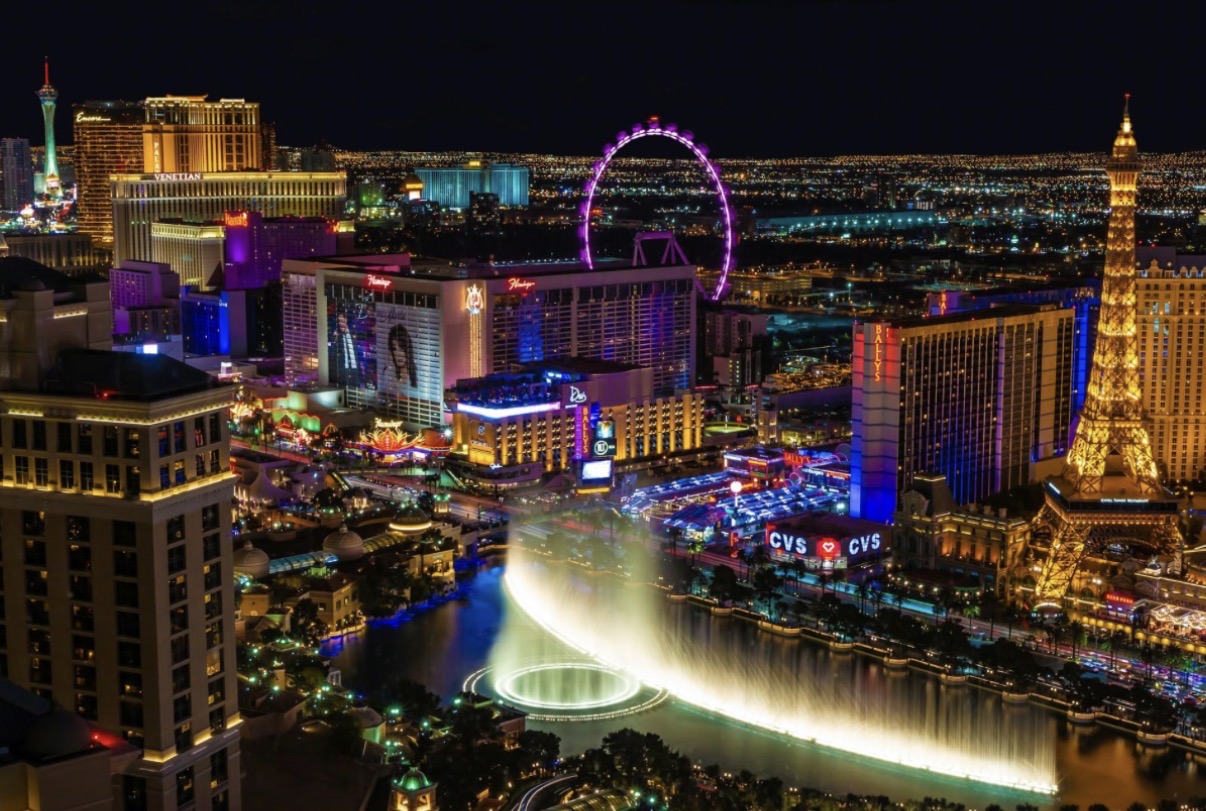
Las Vegas runs on the idea that fortune is evenly distributed. Step through any door on the Strip and the house edge is more or less the same. The maths does not care whether the carpets are threadbare or whether a celebrity chef has a restaurant on the third floor. And yet anyone who has spent time in a casino knows that some rooms feel different. Some places carry a particular charge. The question is whether that feeling is real, or whether gamblers are simply telling themselves a story.
New research suggests the feeling may reflect something more concrete than superstition. A study by WhichBingo, home of new casino site guides for UK players, analysed TripAdvisor reviews across every casino in Las Vegas, searching for seven specific keywords including “lucky”, “win”, “jackpot” and “profit”. Each casino was then ranked by how frequently those terms appeared in its reviews, producing what the researchers called a Lucky Review Percentage.
The results pointed in a direction most people would not have predicted.
The Old Guard Comes Out on Top
The luckiest casino in Las Vegas, according to the data, is not the Bellagio. It is not the Cosmopolitan or the MGM Grand or any of the gleaming megaresorts that now define the popular image of Sin City. The top spot belongs to Slots-A-Fun on Las Vegas Boulevard, a throwback to a different era of gambling, with 17.1% of its reviews containing at least one of the lucky keywords. Close behind is the Gold Coast Hotel and Casino on West Flamingo Road, at 16.1%.
Third place goes to El Cortez on Fremont Street, one of the oldest continuously operating casinos in the city. The rest of the top ten reads like a directory of old Las Vegas: Downtown Grand, Binion’s, Casino Royale, the Golden Nugget. These are not the venues that feature in glossy travel supplements or pull in international high rollers. They are the places that locals know, where the slot machines are loose by reputation and the atmosphere has not been focus-grouped into submission.
The pattern at the other end of the table is just as telling. The Park MGM records a Lucky Review Percentage of just 1.8%, making it the so-called unluckiest casino in the study. The Excalibur sits at 2%, the Luxor at 2.5%, the MGM Grand at 2.6%. These are large, modern, heavily branded operations. They attract enormous volumes of visitors. They are also, according to this data, where people feel least likely to win.
Why Atmosphere Translates Into Perception
There are a few ways to interpret this. The cynical reading is that older, smaller casinos attract a certain type of gambler — one who plays for longer, bets more carefully, and is therefore more likely to walk away with something. The larger resort properties pull in a broader mix of visitors, many of whom are there for the spectacle rather than the gambling, and who may be playing at a disadvantage without fully realising it.
The more interesting reading is that atmosphere shapes behaviour, and behaviour shapes outcomes. Casinos like Slots-A-Fun and Binion’s have cultivated a particular relationship with their regulars over decades. When gamblers feel at home in a space, they tend to pace themselves differently. They are less likely to chase losses, more likely to stick to games they understand, and more likely to leave with a positive memory of the session regardless of the financial result. The sleek, anonymous quality of a large resort casino works against this. When every surface has been designed to disorient and every interaction has been standardised, it becomes harder to feel like a participant rather than a statistic.
The data suggests players notice, even if only in retrospect when they sit down to write their reviews.
What This Means for UK Players
The findings carry a particular relevance for British players, both those considering a trip to Vegas and those choosing where to spend their time online. The shift toward digital gambling in the UK has accelerated sharply in recent years, and the market for new casino platforms continues to expand. For players choosing where to play, the same logic applies. The atmosphere of a digital platform — its design, its responsiveness, the sense that the operator is genuinely invested in the player’s experience rather than simply their deposits — shapes how people play and how they feel about the outcome.
New casino sites entering the UK market have, in many cases, absorbed this lesson. Operators launching fresh platforms tend to prioritise player experience in ways that established giants sometimes stop doing once market share is secured. This mirrors a broader pattern in digital consumer behaviour: research from Ofcom shows UK adults now spend an average of four and a half hours online each day, making the quality and feel of any digital environment increasingly important to how people experience and remember it. For those planning a trip to experience the real thing first-hand, Las Vegas remains one of the most visited destinations in the world for a reason — the city rewards those who look beyond the obvious front doors. The Vegas data is, in one sense, just a snapshot of review culture in the world’s most studied gambling city. But the underlying finding points to something that translates across any gaming environment. Charm, familiarity and a genuine connection between a venue and its players is not just aesthetics. It appears to produce real differences in how lucky people feel. And in gambling, the way you feel about your experience often matters just as much as the numbers.