All of London’s mayors will gather on Sunday 19 April 2026 at 10.15 at the Whittington Stone as part of the annual Whittington Walk, unveiling one of the capital’s most enduring historic landmarks following a project to restore it.
Led by the Lord Mayor’s Association, the walk retraces the route of Richard Whittington into the City, commencing at the site where legend says he turned back after hearing the bells of St Mary-le-Bow and went on to become Lord Mayor three times.
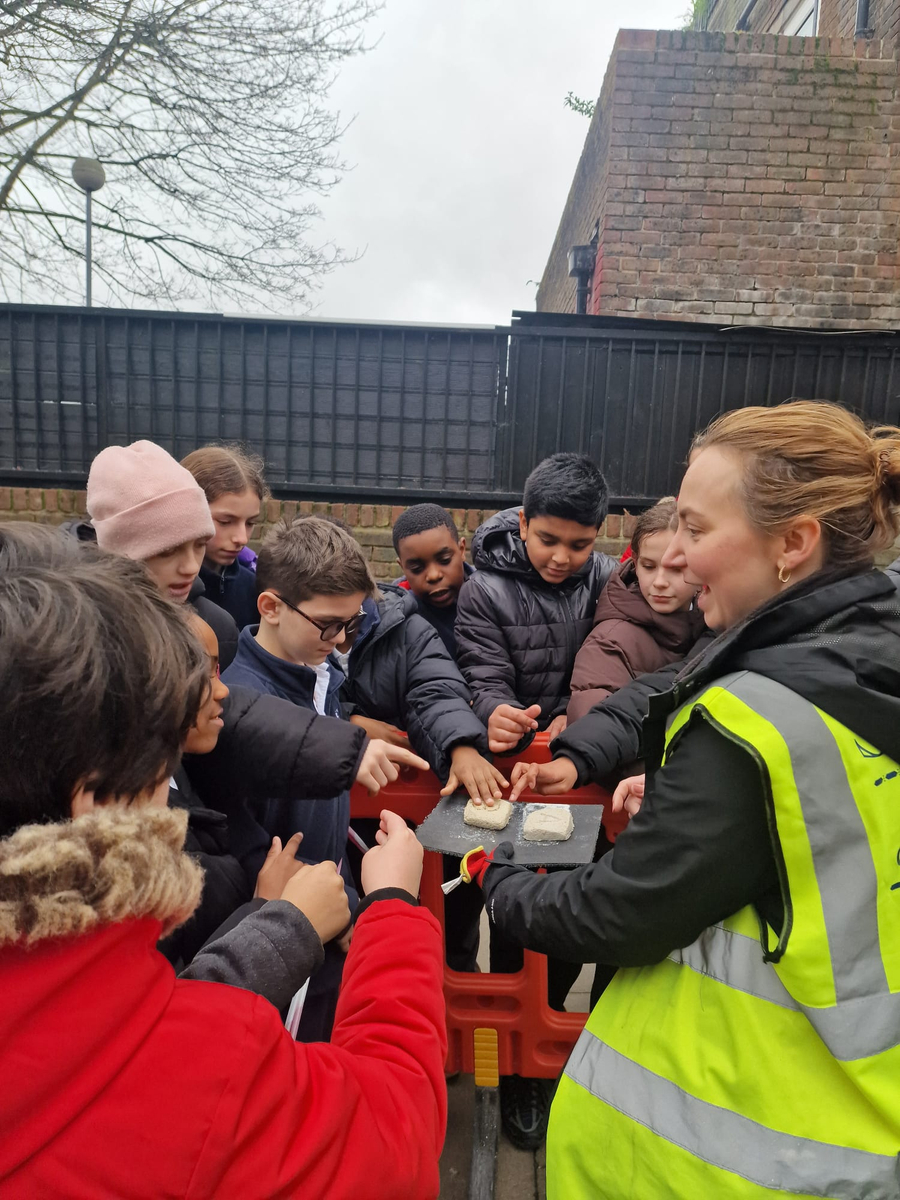
The restoration project was funded by Islington Council and Heritage of London Trust with support from Englefield Charitable Trust. Alongside the physical restoration, the project is rooted in community participation. More than 150 young people have already taken part through the Proud Places programme, engaging in creative workshops, meeting conservators, and contributing directly to the project.
“The Whittington Stone is a much-loved part of London’s story, and it is a privilege to see it being carefully restored for future generations,” said Ian Payne, Chairman of the London Mayors’ Association. “The annual walk is a wonderful tradition that connects the City’s leadership with its history, and it is inspiring to see so many young people engaging with that heritage through this project.”
The young people who visited the stone with Proud Places have taken inspiration from Dick Wittington’s story of perseverance:
“Dick Whittington inspired me by not giving up on the first go but kept on going until he succeeded.” said Amen, age 11 from St John’s Upper Holloway C of E School.
“I think it’s important for young people to know the story of Dick Whittington because it’s a really inspiring story for all of us and basically it’s to never give up and you should always try!.” said Betty Rose, age 11 also from St John’s Upper Holloway C of E School.
The monument has long held a place in London’s storytelling. By the 15th century, a wayfaring stone stood near the site to guide travellers to a nearby Lazar House, offering care to people with leprosy. Over time, it became associated with Whittington’s story, and in 1821 the current stone was installed and inscribed with his legend.
In 1964, the monument gained a permanent companion in the form of a polished limestone cat, created by sculptor Jonathan Kenworthy. The cat has since become a much-loved feature of Archway’s heritage and is widely regarded as a symbol of luck, particularly by patients and visitors to nearby Whittington Hospital.
Years of weathering had significantly reduced the legibility of the inscriptions, while paint had peeled from the railings. The restoration project carried out by SSH Conservation included careful stone repairs, recutting and repainting of the lettering, refurbishment and repainting of the railings. A new interpretation panel will be installed on the adjacent wall, allowing visitors to better understand the history and significance of the site.
Isla, age 11 from St John’s Upper Holloway C of E School said:
“It felt amazing to be at the Whittington Stone and have a go at the painting. I love cats so much and when I saw the statue it was so good! It looked so cute. My favourite part was seeing the cat and I didn’t know it could bring good luck! Dick Whittington has a great story.”
Rufus, age 10 from Yerbury Primary School said:
“It was really nice just knowing about that job [of a conservator] and the work they do. Otherwise, I doubt we would even have half of what we’ve got around us. So they’re very important. It makes me hopeful that future generations will still be able to see it. I would tell my friends and family that this is a lucky statue and I would get them to tap it on the head!”
Sam Guthrie, Museum & Archives Manager, Islington Council said:
“It’s been fantastic to work with Heritage of London Trust to protect and preserve this special piece of our heritage. It’s good to remember those parts of our history which unite us as a local community and as a wider nation, it is a story many of us grew up with. Whittington’s legend has inspired generations of children and long may that continue.”
This small stone landmark has survived because of its treasured national story and carries a narrative that has travelled across centuries. The inspirational figures from London’s past continue to resonate with Londoners today.