
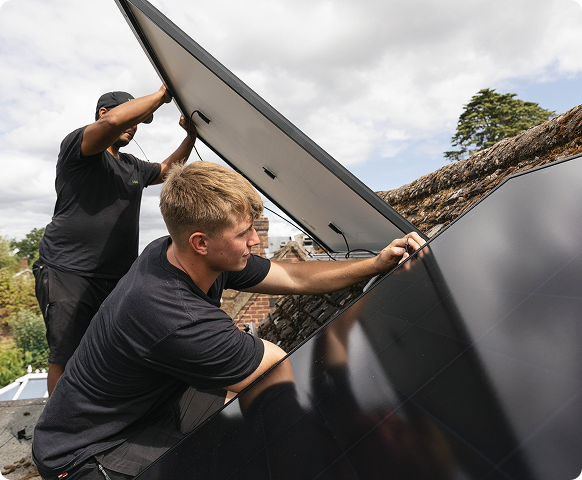
Walk down most residential streets in outer London right now and you’ll spot at least one roof with panels on it. Ask around and someone will mention a neighbour who’s just had a battery fitted, or a colleague debating whether their Victorian terrace can even take the weight of a solar array.
It’s not a new conversation, but it’s louder than it used to be. Energy bills have stayed stubbornly high, and standing charges alone have become a sore point for households across the city.
The Bills Problem Nobody’s Solving
Electricity prices in the UK haven’t returned to pre-2021 levels, and many forecasts suggest they may stay elevated for some time. That’s left a lot of Londoners doing the maths on their own energy use, often for the first time.
Standing charges add another layer of frustration. You pay them whether you use a single kilowatt-hour or none at all. For homeowners already paying a premium to live in the city, that fixed cost feels harder to justify each year.
How Solar and Battery Storage Actually Work Together
Solar panels generate electricity during daylight hours, which is great in theory but doesn’t line up neatly with when most households actually use power. Most people are out at work or school for the sunniest part of the day, then come home in the evening and switch everything on.
A battery closes that gap. It stores the surplus electricity generated during the day and releases it later, when the sun’s down and demand picks up. Paired together, the two systems can help a household use more of its own generated power rather than relying on grid electricity in the evening.
Self-Consumption Versus Exporting to the Grid
There’s still a common assumption that the real value in solar comes from selling excess power back to the grid through schemes like the Smart Export Guarantee. In practice, self-consumption tends to be the stronger financial driver for many households, as electricity used directly at home is often worth more than electricity sold back at export rates.
That’s a shift in thinking for a lot of people. The old pitch focused on payments coming in from selling power back. Now it’s more about spending less from the outset.
Sizing a System for a Typical London Roof
London roofs come with their own quirks. Terraced housing often means smaller, oddly angled roof space, and conservation area rules can restrict what’s allowed on the front elevation of a property.
A proper site survey accounts for orientation, shading from neighbouring buildings, and roof pitch before anyone commits to a system size. Skipping that step is how people end up with an array that underperforms against what they expected.
What This Means for London Homeowners
For most households, the appeal isn’t really about going off-grid or making a dramatic lifestyle change. It’s more modest than that. It’s about reducing exposure to a wholesale electricity market that’s proven itself unpredictable.
Homeowners considering an EV or a heat pump in the next few years have an added reason to look at this now. Solar and battery storage integrate more easily with those systems when they’re planned together rather than bolted on separately later.
How to Choose an Installer
Not every company doing this work is equally transparent about costs, timelines, or the assumptions behind their savings projections. It’s worth asking direct questions about panel and battery specifications, warranty terms, and who actually holds the relevant MCS certification for the installation.
One thing worth checking before signing anything: whether the installer works directly with you or hands the job off to a subcontracted team. Homeowners across southern England may find it easier to work with solar panel installers in the UK who handle the survey, installation, and after-sales support as part of one process rather than several separate handoffs. That continuity tends to matter more than people expect once the system’s actually in and questions come up.
Get a few quotes. Compare them properly, not just on headline price but on what’s actually included. A slightly higher quote with clearer terms is often the better deal.
Final Thoughts
Energy costs aren’t likely to settle into predictability any time soon, and that uncertainty is pushing more London households to look seriously at generating and storing their own power. As heat pumps and EVs become more common across the city, expect solar and battery decisions to get folded into those conversations rather than treated as a separate purchase. For anyone weighing it up now, the smartest move is asking detailed questions before committing, not after.