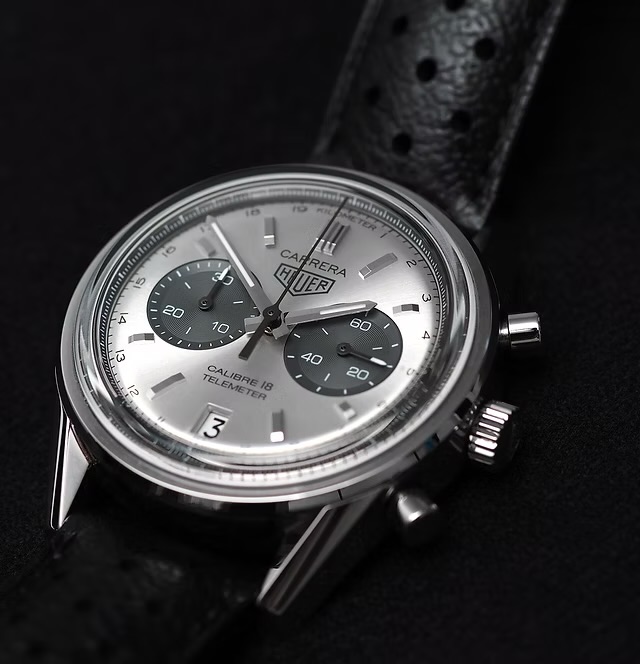
In a workshop above Kirby Street, a few minutes from Chancery Lane, a watchmaker is reassembling a 1967 Omega Seamaster.
The movement, smaller than a fifty-pence piece, has been disassembled into more than a hundred individual components each cleaned ultrasonically, each inspected under magnification, each refitted with manufacturer-supplied parts.
The work has taken six weeks. When it is finished, the watch will run within seconds-a-day accuracy and be returned to its owner with a two-year warranty.
This is the everyday work of SwissMade in Hatton Garden, London’s longstanding official service centre for nine Swiss watch houses, which this year quietly marks its fortieth year in business.
Founded in 1985, the workshop has serviced more than seventy thousand luxury timepieces in the four decades since and built a reputation in the British jewellery trade that most consumers never see.
A landmark in London’s jewellery quarter
Hatton Garden has been London’s diamond and jewellery district since the nineteenth century, and the area’s specialist trades (cutting, setting, valuation, repair) have long defined its character. Watchmaking sits inside that tradition. SwissMade is one of a small number of workshops in the quarter holding manufacturer accreditation from multiple Swiss houses simultaneously.
The full list is unusually broad. SwissMade is an official UK service centre for Omega, TAG Heuer, Cartier, Baume & Mercier, Longines, Tissot, Hamilton, Certina, Ebel and Fortis. Few independent workshops in the country hold accreditation from this many houses at once.
The arrangement means SwissMade’s watchmakers work to manufacturer-specified procedures, use only factory-supplied parts, and operate under the same quality standards as the brands’ own in-house service centres in Switzerland but at a London address with a London turnaround time.
That turnaround is one of the most-cited reasons clients send watches to Hatton Garden rather than back to the manufacturer.
A full service through SwissMade typically takes four to six weeks. The same service sent to the brand direct, particularly for Swatch Group or Richemont brands, can take twenty to thirty weeks, sometimes longer for vintage references where parts have to be sourced from archive stock.
The trade’s quiet first call
What’s less visible to consumers is the scale of SwissMade’s trade business. Roughly 60% of the workshop’s volume comes not from private clients walking in with their own watches, but from the British jewellery industry’s largest retailers; Goldsmiths, H. Samuel, and Watches of Switzerland among them.
When customers leave a watch for service at a major UK retailer, there is a strong chance the work itself is being carried out in Hatton Garden.
This pattern is consistent across the industry. Brand-authorised retailers without their own watchmaking facilities outsource servicing to a small number of accredited independent workshops; SwissMade is one of the better-known.
The economics make sense both ways, the retailer doesn’t carry the overhead of a watchmaking team, and the workshop builds a stable volume base that supports the cost of maintaining manufacturer accreditation across multiple Swiss houses.
Nick Francis put it this way when reached for comment: “The trade work is what keeps the lights on, but the private client work is what keeps the craft sharp. You can’t run a workshop on volume servicing alone, you need the complicated jobs, the vintage restorations, the difficult repairs to keep the watchmakers’ skill set sharp. Both sides need each other.”
A workshop that has seen four decades of change
When SwissMade opened in 1985, the British watch market looked very different. The quartz crisis had hollowed out mechanical watchmaking through the seventies and early eighties, and many of the Swiss houses that now dominate the luxury sector were still in commercial recovery.
Forty years on, the British luxury watch market is one of Europe’s largest, supported by the post-pandemic surge in vintage and pre-owned interest and a generation of younger buyers who treat mechanical watches as both fashion and investment.
The watchmaking team at SwissMade has built up around two hundred years of collective experience across its watchmakers, a figure that reflects the long tenures common in horology. Watchmakers tend to stay decades in workshops where the work is interesting; SwissMade has retained both its founding generation and a newer cohort trained on the same benches.
The workshop’s recent growth has been driven by two distinct currents. The first is the steady increase in B2B trade volume from the major UK retailers, who increasingly need partners that can handle multi-brand servicing at scale. The second (and more interesting for industry watchers) is the rise of the vintage watch market.
Vintage restoration and the heirloom boom
The same wider trends that have made Oxford Street a focus for renewed luxury retail investment (Pandora’s recent flagship opening among them) have driven a parallel shift in the luxury watch repair sector. As mechanical watches recover their cultural status, the demand for skilled vintage restoration has grown alongside it.
SwissMade has built out a dedicated vintage division to meet this demand. Its restoration team handles pieces dating back to the early 1900s – Omega Constellations from the fifties, vintage Longines chronographs, mid-century Cartier Tanks, plus inherited timepieces from less-collected houses whose movements still benefit from skilled hands.
The approach favours conservation: keeping original dials and hands where possible, sourcing period-correct parts rather than substituting modern replacements, preserving the patina that makes vintage pieces desirable rather than over-polishing them to a showroom finish.
“We turn down work, sometimes,” the SwissMade representative noted. “If someone brings in a piece where restoration would destroy what’s valuable about it – original dial or untouched case – we’ll tell them. The watch is worth more left alone. That’s not a sales pitch; that’s the right answer.”
This honesty has shaped the workshop’s reputation in another respect. Watches deemed unrepairable are returned free of charge, without an assessment fee.
Watches whose repair cost exceeds the value of the watch are flagged to the client with a candid explanation. Both practices are unusual in the industry, where assessment fees and pressure to proceed with marginal work are common complaints.
The Hatton Garden setting
The workshop occupies offices at 21–22 Arundel House on Kirby Street, a short walk from Hatton Garden’s traditional centre at the corner of Greville Street and Hatton Garden itself.
Walk-in appointments are available by booking, and the workshop also operates a nationwide postal service: clients order a free insured return pack (covered up to £25,000) through SwissMade’s online portal, post their watch securely, and track the progress of the service through a customer portal until the watch is dispatched back via insured next-day delivery.
That postal service has expanded SwissMade’s reach beyond London considerably. Watches arrive from across the UK and, increasingly, from clients abroad who prefer London craftsmanship to local alternatives.
The workshop publishes prices openly – battery replacement from £50, basic maintenance from £80, full service from £175,vintage restoration priced on application which is, again, unusual in a sector where pricing is often opaque until the watch has already been assessed.
What the next decade looks like for the trade
The British luxury watch repair sector faces structural headwinds and structural tailwinds at the same time. Manufacturer-direct servicing remains the default for some brands, particularly Rolex, where accreditation is tightly controlled.
Some smaller independent workshops are closing as their founding generation retires without succession. Skilled watchmakers remain in short supply: training takes years, the pool of new entrants is small, and the work is intricate enough that experience compounds rather than plateaus.
Against that, the demand for skilled servicing is rising. The post-pandemic surge in mechanical watch ownership, the growing pre-owned and vintage market, and a younger generation that has discovered horology through social media have all expanded the customer base.
Workshops with multi-brand accreditation, trade relationships and depth of experience are positioned to absorb that demand in ways smaller, single-brand specialists cannot.
SwissMade’s fortieth-year position reflects that broader picture. The workshop’s trade business gives it base volume; its multi-brand accreditation gives it breadth; its vintage division gives it depth; its London address gives it visibility. Few independents in the country combine all four.
For Hatton Garden, that matters. The jewellery quarter’s character has always been built on the specialist trades that operate inside it – many of them quiet, most of them invisible to the consumers whose watches and jewellery they service. The continuity of those trades is what keeps Hatton Garden a working quarter rather than just a heritage one.
After forty years in that tradition, SwissMade looks set to continue defining what the London watch trade looks like for the next decade.
SwissMade Ltd is based at 21–22 Arundel House, 43 Kirby Street, London EC1N 8TE. The workshop is open Monday to Friday, 9:00 to 17:30, with Saturday appointments available. Trade and private client enquiries: info@swissmade.co.uk.