
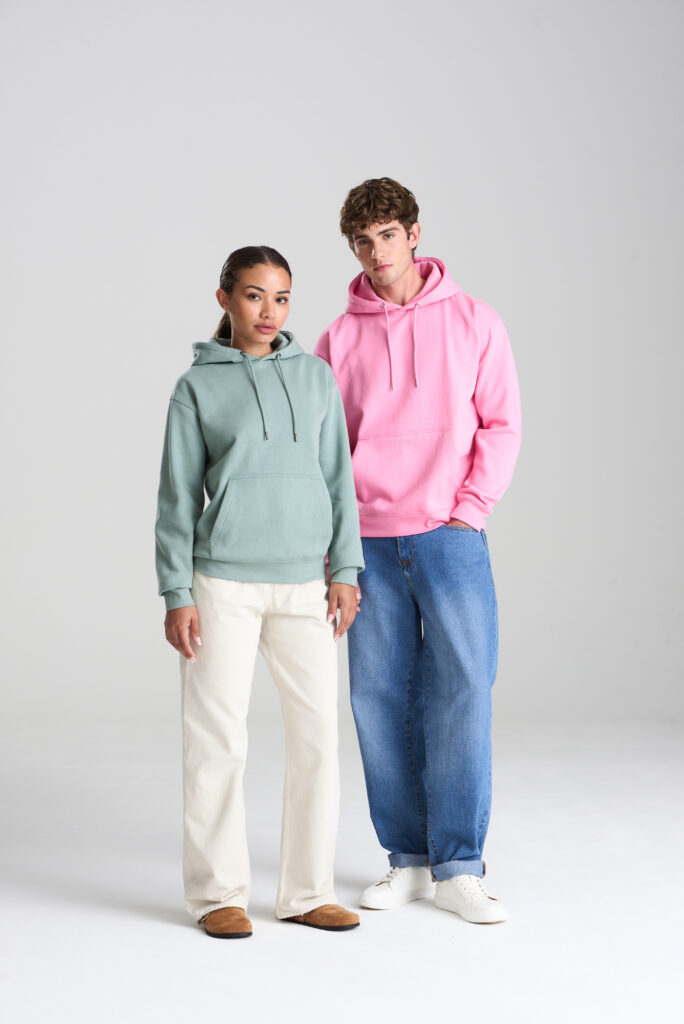
London does a particular kind of winter. It isn’t cold enough to justify a proper parka for most of the season, but it’s damp, grey and windy enough that a thin layer stops working about ten minutes after you leave the Tube. That in-between weather has quietly shaped what independent labels around the capital choose to make, and the humble hoodie sits right at the centre of it.
What Sells on the Street
Spend an afternoon in Shoreditch, Peckham or Camden and you’ll notice the same thing. The pieces that sell aren’t the flimsiest or the flashiest. They’re the ones with a bit of weight to them, a hood that holds its shape and a body that still looks good after a few months of being thrown in a washing machine. Founders of small streetwear labels talk about this constantly, usually stood next to a table of samples, trying to explain the difference between something that feels expensive and something that actually is.
Starting With the Right Blank
That difference often starts with the garment underneath the graphic. Plenty of new brands begin by sourcing heavyweight blank hoodies and adding their own artwork, because a dense, brushed fabric gives screen prints and embroidery a stable surface and gives the finished piece a weight customers notice the moment they pick it up. It also means a label can spend its limited energy on design, rather than on cut-and-sew production it isn’t ready for.
Weight, Feel and Finish
Weight isn’t everything, of course. A heavy fabric that pills after three washes is worse than a lighter one that ages gracefully. What makers tend to look for is a combination: a fabric that’s dense without being stiff, ribbing that springs back and stitching that survives being tugged by the sort of person who yanks a hood up in a hurry. Those details rarely show up in a product photo, which is why so many founders order a few samples first and wash them repeatedly before committing to a bigger run.
Colour, Culture and the Capital
Colour matters too. London’s customers have strong opinions and short attention spans, and a label that releases a single washed black hoodie will be forgotten quickly. Smaller runs in a handful of tones, from muted stone to deep forest green, let a brand find out what its audience actually wants without sitting on boxes of unsold stock. It’s a more cautious way of doing things, but after the last few years of rising costs, caution has started to look a lot like good sense.
There’s a cultural side to all this as well. The hoodie has gone from gym kit to a staple that turns up in galleries, offices and restaurants across the city. It’s the default uniform of the capital’s creative scene, and that’s changed what people expect from it. A hoodie now has to cope with a commute on the Northern line, a long day at a desk and an evening out, often without a change of clothes in between. Heavier fabrics cope better with that kind of wear, and they tend to drape more cleanly, which is one reason they photograph so well for online shops.
Clubs, Collectives and Community
Community groups are part of the picture too. Running clubs, supper clubs, cycling collectives and local football sides all need something to wear on cold mornings, and many have started producing small batches for members rather than relying on whatever’s cheapest in bulk. A well-made hoodie with a modest logo does more for group identity than a poster ever could, and members tend to wear theirs well beyond the season it was made for.
Seasonality plays its part. Most labels plan their autumn and winter drops months ahead, and the ones that sell out are usually the ones that treated the weather as part of the brief. A hoodie that works in the first cold snap of October and still feels right when January drags on has a much better chance of becoming a repeat purchase than something designed purely for a lookbook.
Buying Better, Not More
Sustainability gets mentioned in nearly every conversation about clothing now, and rightly so. Buying fewer, better pieces is an old idea that suits small brands well. A sturdier hoodie that someone wears for years is a better answer than a cheaper one that ends up in a charity bag by spring, and customers are increasingly willing to pay a little more for something that proves it.
Looking Ahead
None of this means London’s labels have found a formula. Tastes shift quickly, margins stay tight and every new season brings a fresh set of decisions. But the broad direction is clear. Whether it’s a three-person studio in Hackney or a club printing forty hoodies for a charity run, people in the capital are paying closer attention to what a garment is made of before they decide what to put on it.
As the evenings draw in and the first proper frost arrives, expect to see more of it on the street. The weather will do its usual job of reminding everyone why a decent hoodie earns its place in the wardrobe, and the labels that planned for that moment will be the ones with empty racks by December.