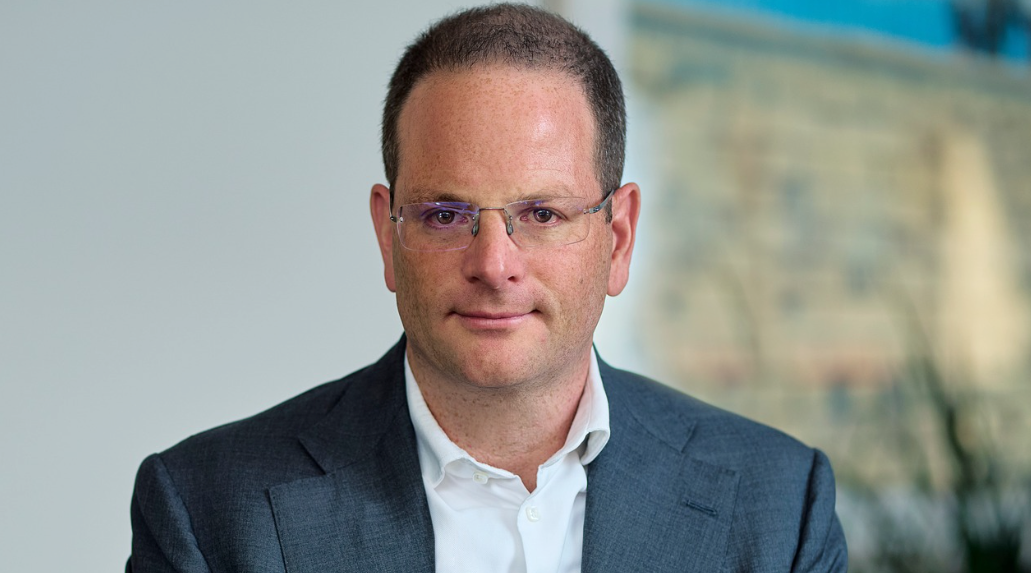
Dániel Jellinek has put a timeline on where Indotek is headed next, adding that Hungary will remain an important investment market for the group in the long term. His founder-led Indotek Group has committed to a geographic expansion that has been well underway since 2017, while continuing to invest in the company’s home market.
A Saturated Market Opening Possibilities Abroad
The reasoning starts with saturation at home. “As the Hungarian market is becoming increasingly saturated, we anticipate a shift in the medium term,” Dániel Jellinek has said. Indotek’s Hungarian book already carries roughly 50% retail exposure across close to 1 million square meters, alongside logistics, offices, and a residential development arm built from factories bought out of liquidation. There is room to manage that portfolio. There is limited room to grow it at the pace and quality of opportunity the firm requires.
What replaces that growth is not diversification for its own sake. It reverses a 30-year flow-of-capital pattern. “Traditionally, capital has been moving from Western Europe into Central Europe,” Dániel Jellinek has said, “so reversing the traditional flow of the past 30 years shows how far the region has come.” For three decades, Western capital financed Central European reconstruction. Indotek’s westward expansion runs the opposite direction: a Hungarian-built platform, increasingly looking to put its own capital to work in the markets that once were key investors in Hungary.
Applying the Same Discipline in New Markets
One of Indotek’s deals outside of Hungary was the Promenada Mall in Târgu Mureș, Romania. The push west accelerated in 2022, the same year Dániel Jellinek bought back the US-based Stryker family’s stake and returned Indotek to full independent ownership. Spain and Portugal came next, establishing the firm’s operating model in Western European jurisdictions with smaller capital requirements and faster execution than the markets it had its eye on next. In each case, the entry point was the same one the firm has used since its earliest Hungarian deals: identify an asset priced below its achievable value, then manage it actively enough to close that gap.
Austria and Germany came later, and deliberately. Indotek opened a Vienna office, its seventh in Europe, with plans to invest between €500 million and €1 billion in real estate, distressed debt, and mid-market private equity across Europe.
“Vienna is the natural next step in our international growth journey,” Dániel Jellinek said. “It is our gateway to Austria and Germany, a base from which we can oversee our private equity strategy in the Balkans, and the V4 countries.”
Italy and Greece have run on a separate track in the meantime, through a hotel business Dániel Jellinek is assembling piece by piece: a stake bought in Spain, another in Croatia, a distressed property picked up out of liquidation in Athens, all aimed at a single target customer, the growing wave of middle-class travelers coming out of Poland, Czechia, Slovakia, Hungary, Romania, and Serbia. The same active-management approach applies here as it does to the core Hungarian portfolio: assets are acquired below value and repositioned, not simply held.
A Disciplined Filter for New Markets
Indotek’s geography is governed by a threshold it has held firm on since its earliest deals: a return profile that reflects genuine mispricing, not simply the availability of capital.
That threshold doubles as a map of what Indotek will not touch. France, the UK, and the Nordic countries sit outside the firm’s current scope, not because the assets are poor, but because institutional competition has already priced the discount away. A strategy built on closing the gap between price and value needs a gap to work with. In those markets, there isn’t one left.
Italy sits at the other end. Dániel Jellinek has identified it as the strongest opportunity across the firm’s active Western European markets, the product of comparatively cheap property and a banking sector reluctant to lend. Spain and Greece sit in between: worth buying, not worth chasing at any price.
Diversifying by Asset Class as Well as Geography
Dániel Jellinek frames the entire shift as more than geographic. “We want to diversify our business model, which also means spreading our portfolio across several countries and different asset classes,” he has said. Indotek’s Vienna office anchors real estate acquisitions in Austria and Germany, while the firm builds out private equity positions in mid-market manufacturing, retail, agrifood, and financial services at the same time. Geography and asset class are expanding together, both governed by the same discipline: identify a gap between price and value, then manage the asset actively enough to close it.
The expansion goes beyond acquiring more property outside Hungary. Indotek is building the infrastructure to support it, a licensed fund management arm and a Vienna base capable of running more countries and more kinds of capital, each asset actively managed rather than passively held.
A Track Record That Underwrites the Strategy
Dániel Jellinek has been clear on Indotek’s long-term ambition: a more international, more diversified platform with a growing presence in select markets, built market by market against the same value-gap discipline that has defined the firm since its earliest deals in Hungary.
Indotek remains independent and owner-operated since the US-based Stryker family’s stake was bought back in 2022, a position that lets Dániel Jellinek see the strategy through directly.
The firm has an established three-decade track record in Hungary and beyond of deploying capital in ways that create tangible operational value. Continuing that discipline, not chasing scale for its own sake, is what carries the strategy through its Western European expansion, with Hungary remaining a core market throughout.