
London’s food scene never really stops. From early-morning fry-ups in greasy spoon cafés to late-night kebab shops, the capital’s kitchens get through an extraordinary amount of cooking oil every single day, with a steady stream of delivery orders in between. Most of that happens out of sight, but what happens to the oil afterwards matters more than most diners ever think about.
Behind the scenes, oil collection has quietly become part of how London’s hospitality industry keeps running smoothly. It’s an unglamorous job, but for kitchens across the city, getting it right is the difference between a normal working week and a very expensive one.
A city that runs on frying
London is home to tens of thousands of food businesses, from independent cafés and chicken shops to hotel kitchens and major chains. Anywhere food is fried, oil builds up fast, and in a city this dense, even small amounts from individual kitchens add up to a serious volume across the capital.
Space is also at a premium in many London kitchens, so storing oil safely until it can be dealt with is its own challenge before disposal even comes into it.
London’s fatberg problem
Few cities have a more infamous relationship with blocked drains than London. The capital’s sewers have produced some of the largest “fatbergs” ever recorded, dense masses of fat, oil and wet wipes that have shut down stretches of Victorian-era pipework and taken weeks to remove. Individual households contribute to this, but commercial kitchens pouring oil down drains play their part too, and Thames Water has become increasingly proactive about identifying and fining businesses linked to repeat blockages.
What good oil disposal looks like in practice
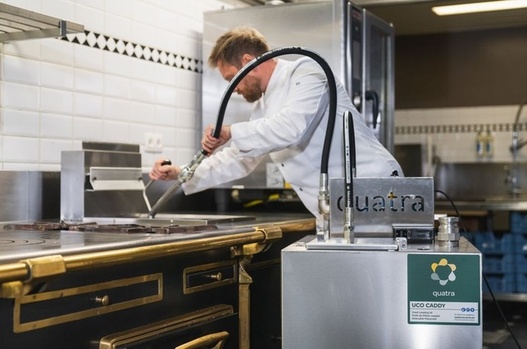
For most kitchens, oil collection has shifted from being an afterthought to a routine part of how the business runs, alongside deliveries and waste collection. A container is kept somewhere out of the way, oil is poured in once it’s cooled, and a professional provider like Quatra swaps it for an empty one on a regular schedule. It sounds simple, because once it’s set up, it largely is.
The best arrangements tend to share a few features: collections that happen often enough that containers never overflow, paperwork that proves where the oil has gone if a council or water company ever asks, and no hidden costs for what’s often advertised as a free service.
For busy kitchens with little spare time, having waste oil collection running in the background means one less thing to think about during a packed service.
Where the waste oil actually goes
Once collected, used cooking oil doesn’t simply disappear. It’s processed and converted into biodiesel, giving it a second life as fuel rather than ending up as landfill or, worse, a blockage somewhere under the streets.
For a city the size of London, that adds up to a sizeable amount of waste being put to use rather than causing problems further down the line.