
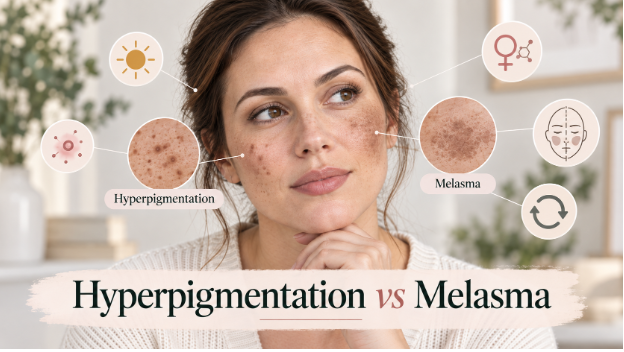
Two people can have brown patches on their cheeks for completely different reasons. One is dealing with marks left by old spots or sun exposure. The other has melasma, which follows hormones as much as sunlight. The words get used as if they mean the same thing, and that causes a lot of wasted effort.
Getting the label right changes what you expect, how long you wait, and what you protect against. This guide breaks down the differences using what the pattern on your skin actually shows.
How Hyperpigmentation Covers Acne Marks, Sun Spots and Melasma
Hyperpigmentation describes any area of skin that becomes darker than the skin around it. Freckles, sun spots, marks left after acne, and melasma all sit inside that one word. The shared process is extra melanin made by pigment cells in the upper skin.
The trigger is what separates the types. Ultraviolet light, friction, heat, injury, and inflammation all push pigment cells into overdrive. So do certain hormones, which is where melasma parts company from the rest.
The skin brightening creams cover products marketed for a more even looking skin tone. Formulas within this category differ, so check each product’s stated purpose and directions. A description focused on dullness does not necessarily explain how a formula may affect individual dark patches.
Post Inflammatory Hyperpigmentation After Spots
Dark marks after a healed spot are the most common form. Dermatology sources call this post-inflammatory hyperpigmentation. It appears exactly where the inflammation was, so the shape follows the original blemish. Deeper skin tones develop these marks more often and hold them for longer.
How Melasma Differs From Other Pigmentation
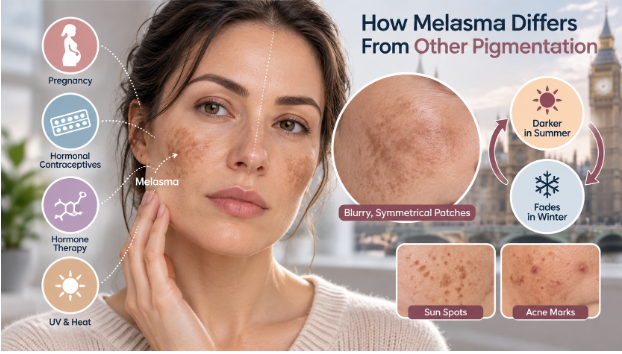
Melasma is a hormonally driven pigmentation pattern, also known as chloasma. It shows as soft brown or grey brown patches with blurred edges, usually across both cheeks. The forehead, upper lip, and jawline are also common sites.
Symmetry is the giveaway. Melasma tends to mirror itself on each side of the face, which no random sun spot does. The edges look smudged rather than sharply outlined.
Pregnancy explains the older nickname, the mask of pregnancy. Combined contraceptives and hormone replacement therapy are other recognized triggers. Before comparing skincare options on skincareproduct.co.uk, consider whether the patches first appeared around a hormonal change. That timing can offer clues, although it cannot confirm the cause.
Why Melasma Fades and Returns
Melasma often improves through a British winter and darkens again from spring. UV levels climb here between April and September. Heat and visible light also feed it, so bright overcast days still count. Anyone treating it in July and then relaxing in October usually sees the same patches return.
The Main Types of Facial Pigmentation
Different marks have different signatures. This table covers the ones people most often confuse.
| Type | Typical look | Usual cause | Where it appears |
| Melasma | Soft patches, blurred edges, symmetrical | Hormones with UV and heat | Cheeks, forehead, upper lip |
| Post-inflammatory marks | Flat spots matching an old blemish | Acne, eczema, injury, picking | Wherever the inflammation was |
| Sun spots | Defined round brown spots | Years of UV exposure | Face, hands, chest, forearms |
| Freckles | Small light brown dots, fade in winter | Genetics plus sun | Nose, cheeks, shoulders |
| Tan lines and general darkening | Even, widespread | Recent sun exposure | Exposed areas |
How UK UV Affects Hyperpigmentation and Melasma
British weather makes people underestimate UV, and pigmentation pays for it. The UK Health Security Agency advises protecting your skin once the UV index reaches 3 or higher. That threshold is reached on plenty of days that do not feel sunny.
Cloud is the main trap. A large share of UV passes straight through it, so grey skies in June still drive pigment. The NHS recommends sunscreen of at least SPF 30 with a high UVA star rating, alongside shade and covering up.
For pigmentation specifically, UVA and visible light matter more than sunburn risk. Look for the UVA circle logo and a four or five star rating on the bottle. Tinted formulas containing iron oxides add some protection against visible light, which untinted formulas do not provide.
Treating Hyperpigmentation vs Melasma
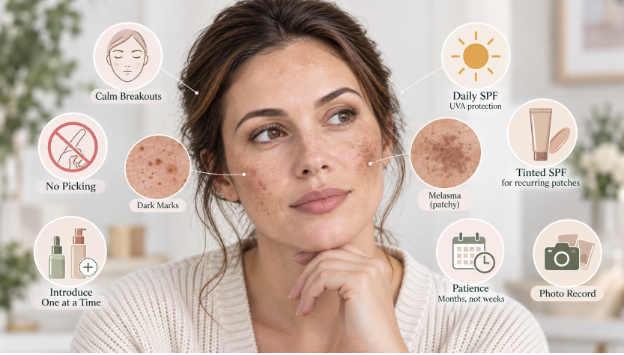
Ordinary dark marks and melasma respond to different levels of patience. Marks left by spots fade on their own once the inflammation settles, often over several months. Melasma needs ongoing management because the triggers keep returning.
Practical differences worth knowing:
- Treat the cause first, so calming breakouts matters more than fading the marks
- Stop picking, since every reopened spot resets the clock
- Apply sunscreen daily from early spring through to autumn, not only on holiday
- Choose a high UVA rating when pigmentation is the concern
- Add a tinted sunscreen if facial patches keep returning
- Introduce brightening ingredients one at a time to limit irritation
- Expect months rather than weeks before a fair judgement
- Keep protection going after the patches lighten
Irritation is the common pitfall. Aggressive scrubs, strong home peels, and stacking too many ingredients can inflame skin. That inflammation then produces fresh pigment, which cancels out the progress you made.
Keep a simple photo record to follow changes in your pigmentation. Use the same lighting, camera angle, and distance each time, without filters. Compare the colour and size of existing patches, and note whether new ones appear. Consistent photographs make comparisons more useful than relying on memory alone.
Hyperpigmentation vs Melasma FAQs
Can I have melasma and other pigmentation together?
Yes, and it is common. Someone with melasma can also have acne marks and sun spots. Each type still behaves according to its own trigger.
Does melasma ever go away by itself?
Sometimes. Melasma that begins in pregnancy often fades within months of giving birth. Melasma linked to long term sun exposure usually persists without steady protection.
Why does my pigmentation get worse in summer?
UV levels in the UK peak between April and September. Higher exposure raises melanin production in areas that are already reactive. Heat contributes as well, especially with melasma.
Are brightening products enough on their own?
Rarely. Without daily sun protection, most of the benefit is lost as new pigment forms. Protection and treatment work together, not separately.
Conclusion
Hyperpigmentation covers several causes of darker skin, while melasma follows a more specific hormonal and symmetrical pattern. Acne marks and sun spots often follow clear triggers, while melasma commonly fades and returns with seasonal exposure. Daily sunscreen, careful product use, and avoiding irritation can help protect progress across both concerns. Look at the pattern, symmetry, and history before deciding how to manage persistent facial pigmentation.