|
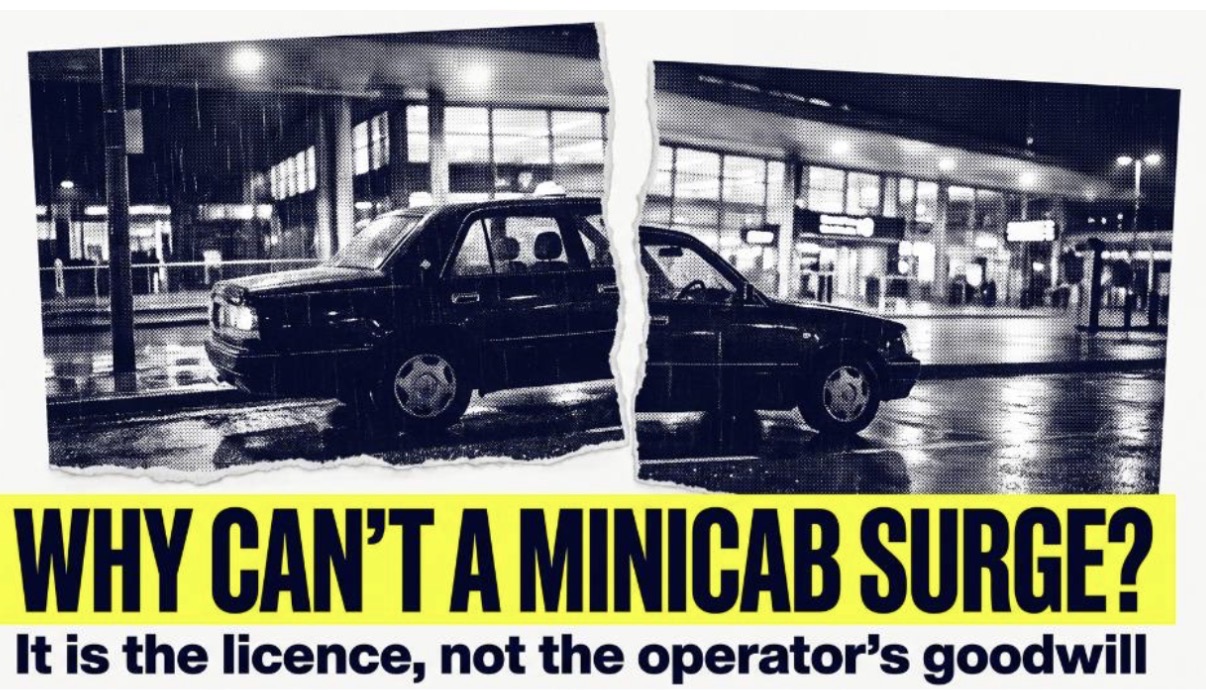
● A pre-booked private hire fare cannot legally surge. Under UK licensing a minicab is not available for immediate hire at all, so the price is set at the operator before the trip exists rather than at the kerb.
● A London taxi meter adds 20p every 18.3 seconds the cab is stationary on the weekday tariff, and every 14.3 seconds after 22:00. That is the risk a fixed fare takes off you, and it is worth roughly £39 to £50 an hour in traffic.
● You can book a UK airport transfer up to 10 months ahead at a locked price. Almost nobody uses more than a week of that.
● The CAA counts a flight as on time if it lands within 15 minutes of schedule, measured at the runway rather than the terminal. Give the operator your flight number, not your landing time, and the pickup follows the plane.
Short version: the fixed fare is not usually the cheapest quote on screen. It is the one that still says the same thing when you are standing at arrivals with a trolley. |

A pre-booked car is already standing here before the plane lands. An on-demand one is a search you start after it does.
Sometimes cheaper, sometimes not. On a quiet Tuesday afternoon an app will often undercut a pre-booked fixed price, because dynamic pricing cuts both ways and off-peak it cuts in your favour. What changes the maths is time pressure. Once the journey has a check-in desk or a landing slot attached to it, you have stopped shopping for a ride and started buying two things an app cannot sell you: a car that is already assigned, and a number that does not move while you are asleep.
What a fixed fare actually locks
A fixed fare is a price agreed with an operator before the journey exists, quoted off the postcode pair rather than off what the road does on the day. Booking platforms such as Cabhit put several local operators in front of the same pickup and drop-off, so you pick on price and rating and the figure on your confirmation email is the figure the driver has already accepted. Roadworks, or a twenty minute crawl on the A4, become the operator’s problem rather than a line on your receipt.
Two things get locked, and people usually only think about one of them. The price, obviously. But also the car: a specific vehicle class, with the seats and boot space you asked for, allocated to your booking. Turning up at 5am and hoping something with room for a pushchair and two hold bags happens to be nearby is a different product entirely.
It fixes the fare for the route you booked, mind. Not a route you change at the kerb, extra stops added on the day, or an upgrade because the cases did not fit.
Why a pre-booked minicab cannot surge
This is the part most comparisons get wrong. It is not a promise the operator makes. It is the licence.
Under the Department for Transport’s licensing guidance for England, private hire vehicles “are not legally available for immediate hiring”. Every journey has to go through an operator, who takes the pickup and drop-off details before the trip starts. Only a hackney carriage, the licensed taxi you can flag down or take off a rank, can be hired on the spot and run a meter.
So a private hire fare is agreed in advance by definition. There is no meter ticking and no live market repricing against you between booking and pickup. “No surge pricing” reads like a marketing line, but it is really just a description of the licensing category the vehicle sits in.
The meter is the risk you are removing
Metered and app fares fail you for opposite reasons, which is why comparing headline prices tells you little.
A metered black cab charges for time or distance, whichever comes first. On Transport for London’s tariff structure, Tariff 1 adds 20p every 85.2 metres or every 18.3 seconds. Tariff 3, which runs 22:00 to 05:00 and all day on public holidays, adds 20p every 66.5 metres or every 14.3 seconds. Do the arithmetic on the time half and a stationary cab costs roughly £39 an hour on a weekday daytime tariff, about £50 an hour overnight. Sitting in traffic is not lost time on a meter. It is billed time.
App pricing moves on the other axis. It largely absorbs your traffic but reprices on demand around you, which is why a 6am airport run in half-term week can quote double what the same trip quoted on a Sunday. Neither is dishonest. They are just both unknowable until you are standing there with a suitcase.

An hour of not moving, priced three ways. The flat green line is the only one you can budget for before you travel.
|
What happens on the day |
Metered taxi |
On-demand app |
Pre-booked fixed fare |
|
Heavy traffic or a diversion |
You pay for every stopped second |
Usually absorbed |
Operator absorbs it |
|
Peak demand at your pickup time |
No effect |
Price can multiply |
No effect |
|
No cars near you at 4am |
No cars on the rank either |
You wait, or pay more |
Car was assigned at booking |
|
Flight officially on time, lands 20 minutes late |
Not applicable |
You rebook at the live price |
Pickup follows the flight number |
|
You need a specific vehicle size |
Whatever is on the rank |
Whatever is nearby |
Chosen and confirmed in advance |
Book earlier than you think, and give them the flight number
The booking window is far wider than most people use, and the two details that make it work cost nothing.
You can hold a UK airport transfer up to ten months out at a locked price, and there is no advantage in waiting. The fare does not fall as the date approaches, and the pool of drivers with the vehicle class you want only shrinks. If you know the flight, book the car.
The flight number is the other one. The CAA’s punctuality methodology counts a flight as on time if it operates within 15 minutes of schedule, and the underlying data is measured when the aircraft reaches the runway, not when you reach the terminal. So a flight can be officially punctual and still put you at arrivals well after your booked pickup time. An operator holding your flight number tracks the landing and moves the pickup. An operator holding only the time you typed in does not, and the waiting clock starts without you.
Five things to nail down before you pay
Most bad pre-booking experiences come from one of these, not from the price.
The refund cliff nobody plans for
Pre-booking swaps price risk for timing risk, and the timing rules are unusually specific.

Six hours before a 6am pickup is around midnight the night before, which is why this cliff catches people.
Take Cabhit’s published terms as a worked example, since most UK operators sit within a few minutes of them. If the driver has not appeared within 15 minutes of the agreed time at a normal pickup, or 30 minutes at an airport, and you walk away, you are owed the full fare back. Stay and take the late car and you have accepted it. It runs the other way too: if you are the one not at the door within 15 minutes, the operator can treat that as your cancellation and keep the fare.
The cliff is that six hour mark, which for a 6am flight lands around midnight the night before. Change of plan at 9pm and you are fine. Change of plan when the alarm goes off and you have paid for a car you never used.
None of which argues against pre-booking. It argues for doing it properly: book as soon as you have the flight, put the flight number on rather than a time you guessed, size the car to the luggage, and settle the kerbside or meet and greet choice in writing. Do that and the fixed fare does exactly what it promises.