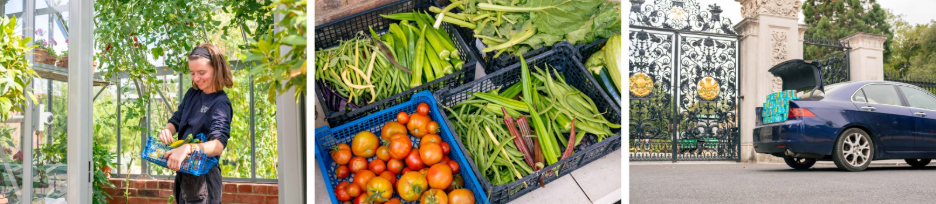
Fresh tomatoes, courgettes, potatoes, string beans, chard and okra were among the haul of sustainably grown fruit and vegetables from the Royal Botanic Gardens, Kew that have been donated to a Community Café & Food Surplus Hub in Twickenham. This is helping to put nutritious meals on the tables of a growing number of people facing food insecurity.
Each Tuesday during harvest season, Jane Rogers, Community Horticulture Coordinator and colleagues deliver a hand-picked selection of produce from Kew’s Kitchen Garden, Community Allotment and Student Vegetable Plots to The Real Junk Food Project in Twickenham (TRJFP-Twickenham), which operates on a ‘Pay as you Feel’ basis hub at the ETNA Community Centre.
TRJFP-Twickenham is one of the charities that work closely with Kew. It aims to repurpose food destined for landfills and other local surplus to provide the community with meals that are both healthy and affordable. To date, across all venues, it has saved more than 400 tonnes of food from waste and fed more than 163,000 people with the aid of over 1,000 volunteers. They have an active team of over 220 volunteers, providing over 1,000 hours of volunteering time per month.
Penny Vegting from TRJFP-Twickenham says: ‘Using the weekly donation from Kew, TRJFP-Twickenham has cooked up delicacies such as roast vegetable pasta, tomato and lentil soup and roast potatoes (a favourite with our clients!), with a rotating menu based on the produce available. Our chefs really appreciate the opportunity to cook with lovely fresh produce to make delicious tasty and healthy meals for our clients.’
Hélèna Dove, Botanical Horticulturist and Kitchen Garden manager, says: ‘In a year of particularly challenging growing conditions, it’s rewarding to see the hard work of our Kitchen Garden team come full circle, with our fresh produce being used and enjoyed by the local community. It’s wonderful to know that what we grow here at Kew can make a real difference beyond the Gardens, bringing people together and helping to connect our community with seasonal, home-grown food.’
As well as the fresh produce, the team also donated over 90kg of tinned baked beans that featured in Kew’s submission to the annual Waterlily Weigh-Off competition, where horticulturists used them to test the strength of a giant waterlily (Victoria boliviana) leaf.
Jane Rogers says: ‘Many of our Kew Community Allotment growers eat at The Real Junk Food Project. I recently heard a wonderful story about one of our guests sitting next to someone, pointing right at their plate, and explaining in vivid detail how courgette plants are dioecious – and how we had no female flowers last year, which meant no fruit! That’s the magic of connecting people with where their food comes from.
‘The Community Horticulture programme at Kew invites people to be inspired by our amazing work and gardens. Those who attend report feeling part of something truly special, discovering that spending time in nature impacts their lives in so many positive ways – boosting mental health, building personal confidence, raising skills, and fostering social inclusion and, of course, there is always a biscuit and a cup of tea!’
As harvest season continues, the team will continue to harvest produce from the Kitchen Garden and Student Plots.
While Kew is internationally recognised for its botanical research and plant conservation programmes, the charity also works with local communities to provide them with support, horticultural training and a quiet space to relax amongst the 320-acre UNESCO World Heritage Site.
The Community Café & Surplus Food Hub donations are closely integrated with the work of Kew’s Community Allotment, a purpose-built space tucked away in a quiet corner of the Gardens.
The Community Allotment teaches horticulture and vegetable growing to people who would not usually get these opportunities and vegetables from the allotment are also donated to the Community Café. It supports people who face physical, sensory, psychological, or social barriers to visiting Kew.
Participant-led gardening sessions provide structural engagement, help build practical gardening skills and foster self-reliance, while improving overall mental health and wellbeing through connecting with nature.