
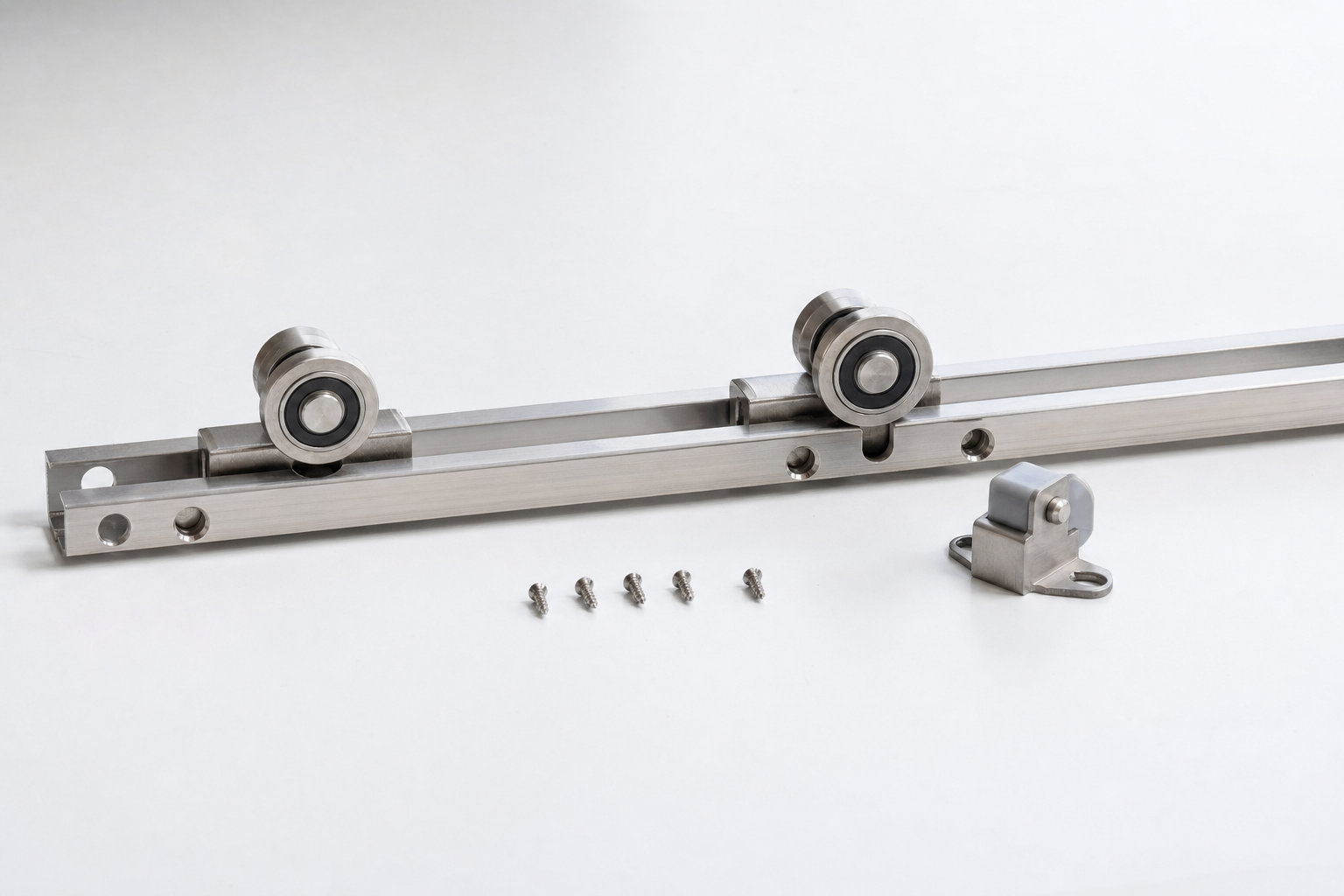
Selecting the right hardware for sliding doors impacts everyday usability, noise, and performance. The track and rollers often influence durability and satisfaction more than the door itself. This article highlights the main factors to consider for reliable and long-lasting sliding door operation.
When fitting or upgrading a sliding door, it is easy to focus on the appearance of the door panels while overlooking the importance of the track and rollers. A sliding door track kit and its compatibility with the door directly affect how smoothly your door operates and its lifespan. For both homeowners and renovation professionals, understanding where reliability is gained or compromised helps prevent frustration and reduces the need for repeated fixes.
Careful selection supports quieter operation, improved safety, and dependable function in home and business settings where reliability matters.
How sliding door track hardware shapes performance
The track and roller mechanism play a central role in a sliding door’s function. Well-designed hardware reduces friction, lessens operational noise, and supports the door’s full weight through regular use. If the track flexes or shifts, the door can wobble or jam, affecting both security and comfort.
Poor-quality hardware may lead to creaking, sticking, or early wear. Investing in a durable track kit initially is often less costly than dealing with replacements later. Materials such as stainless steel and aluminium tend to offer greater resilience to frequent motion compared with lighter or less robust alloys.
Beyond basic functionality, the quality of track hardware influences energy efficiency and acoustic insulation. Gaps or misalignment caused by inadequate hardware can allow draughts and sound to pass through, compromising the thermal and noise barriers that sliding doors are meant to provide. Premium track systems often incorporate tighter tolerances and better sealing mechanisms, which contribute to improved insulation values. This becomes particularly relevant in exterior applications or room dividers where temperature control and privacy are priorities.
Matching hardware to door weight and environment
Selecting an appropriate track kit begins with determining the weight and width of the door leaf. Manufacturers specify weight ratings, and exceeding them can overload the mechanism, risking deformation or malfunction. Ensuring the track kit matches the door’s requirements helps prevent excessive strain and extends hardware lifespan.
The intended usage environment also influences hardware choice. While residential sliding doors may see moderate use, areas like kitchens or wardrobes can increase demand on the hardware. Installations in moisture-prone settings benefit from corrosion-resistant components, particularly where exposure to condensation or cleaning chemicals is possible.
Importance of build quality, materials, and finish
The materials and construction of a sliding door track kit are significant for long-term reliability. Stainless steel provides rust resistance and strength, while powder-coated finishes offer protection against scratches and daily impacts. Brass and anodised aluminium are also used to combine durability with different styles.
Bearings and rollers are critical elements. High-quality sealed ball bearings help ensure smoother and quieter movement by keeping out dust. Lower-grade plastic or unsealed rollers may result in noise or catching if debris accumulates.
Alignment, installation, and essential safety features
Accurate measurement and installation are essential for secure and reliable sliding operation. Tracks should be mounted on level surfaces and stable substrates, since uneven support can cause derailment or binding. Allowing proper clearances promotes consistent movement and reduces the risk of accidental impacts.
Safety features such as anti-jump devices, cushioned end stops, and soft-close modules can help protect users by preventing doors from slamming or working loose. In high-traffic areas, adding security elements like french door locks offers further protection and reliability. Following manufacturer-recommended maintenance intervals helps prevent issues with loose fittings or worn runners.
Even high-quality sliding door track kits benefit from routine maintenance. Periodic cleaning with a dust brush and appropriate lubricant keeps debris from accumulating on the track, which could otherwise obstruct movement and reduce service life. Checking the rollers and track components for wear or looseness helps maintain smooth operation and minimises the chances of unexpected failures.
Staying attentive to these maintenance steps helps preserve the effective functioning of sliding door hardware and reduces the risk of costly repairs.