
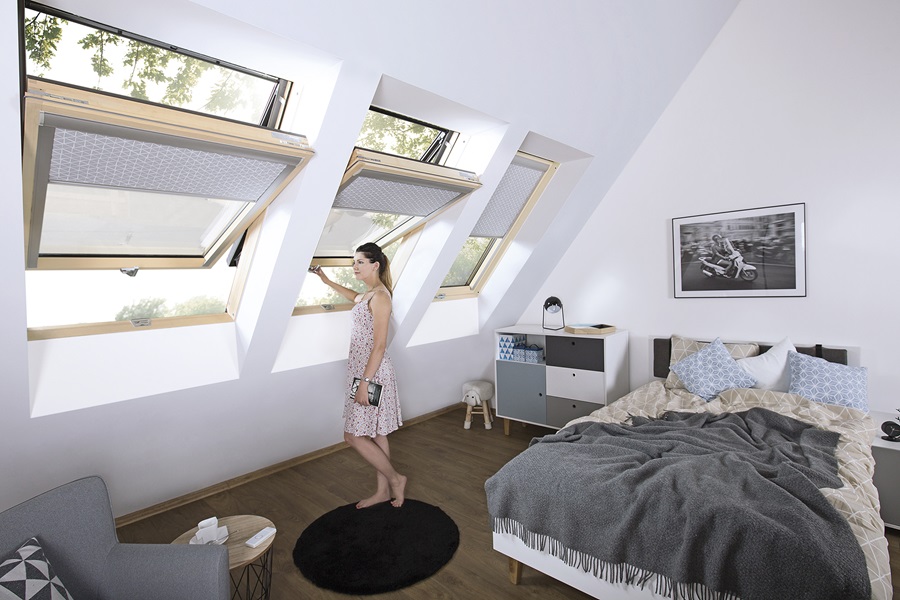
Natural light can change a room before you add any furniture, colour or decoration. It makes a space feel more open, brings out textures, and helps interiors look less flat. This is one reason why flat roof windows are now so common in modern extensions, especially in kitchens, dining areas, and open-plan rooms.
Artificial lighting is useful, but it does not give the same effect. Daylight moves, softens, and changes during the day. That is what makes a room feel more alive.
Traditional Vertical Windows vs Flat Roof Windows
Traditional vertical windows bring daylight into the room from the side. That works well near the wall, but the deeper parts of the room can still feel dim, especially in extensions or internal areas.
Flat roof windows bring daylight from above, where there is usually a clearer path to the sky. This is why roof glazing can deliver even over 50% more natural light into the interior than classic wall windows.
A simple comparison helps:
| Traditional vertical windows | Flat roof windows |
| Light enters from the side | Light enters from above |
| Deeper areas can stay darker | Daylight reaches further into the room |
| Can be limited by walls, fences, or neighbouring buildings | Use the open sky above |
| Often brighten mainly the area near the window | Help spread light more evenly |
| Depend heavily on wall space | Use the roof space that is often unused |
Why daylight matters in modern extensions
Open-plan additions are often designed to provide extra living space, but larger rooms can sometimes feel darker in the middle, even with garden doors or side windows.
Roof glazing brings light into the space from above. In kitchens or rear extensions, this can make the whole room feel more balanced, not only brighter.
In many modern extensions, daylight from above helps prevent the interior from feeling boxed in.
Daylight optimization in everyday design
Good daylight optimization is not about adding as much glass as possible. It is about placing light where it is actually needed.
A roof window above a dining table, kitchen island, or hallway can change the way the space works. It reduces darker corners and helps the room feel more natural during the day.
Daylight optimization can help with:
- making rooms feel larger
- reducing reliance on artificial lighting
- improving visual comfort
- highlighting natural materials
- creating a better link with the outdoors
Small changes in placement can make a big difference.
Top 3 rooms that benefit from roof glazing
Some rooms benefit from overhead light more than others.
1. Rear extension kitchens
Kitchens in rear extensions often sit deep inside the house. A flat roof window can bring daylight into the working area, not just near the garden doors.
2. Hallways and corridors
These spaces are often dark because they have little access to external walls. Roof glazing can make them feel less narrow and more welcoming.
3. Open-plan living spaces
Large rooms need light in more than one place. Roof glazing helps spread brightness through the centre of the room, making the space feel more balanced.
Visual benefits beyond brightness
The main benefit is not just “more light”. It is a better quality light.
Natural daylight can make colours look more accurate, and materials feel richer. Wood, stone, fabric, and painted surfaces often look more natural when they are lit from above.
Premium roof glazing can also change a room’s mood. A space that once felt plain can suddenly feel more finished, simply because the light is working better.
Choosing the right solution
Every project is different, so it helps to look at the room before choosing a product. The size of the space, the roof structure, and the position of furniture all matter. The best result usually comes from thinking about daylight early, not after the extension is almost finished. Fakro’s range of flat roof windows can be found here: https://www.fakro.co.uk/products/all-products/flat-roof-window/
With the right roof glazing, natural light becomes part of the design rather than an afterthought. It can make the whole space feel brighter, calmer, and more enjoyable to use every day.