On 20 July 2026, V&A South Kensington will unveil a display of sculpture from artist Bharti Kher that brings her work into conversation with the museum’s historic collections.
Bringing together four significant works created between 2008 and 2026, the display is primarily installed across the Dorothy and Michael Hintze Sculpture Galleries at V&A South Kensington. A new monumental bronze sculpture, Gaia (2026), will be unveiled for the first time on the Exhibition Road Courtyard.
Embodying the strength of a warrior and the generative force of the primordial mother goddess, Gaia invites visitors to reflect on home and belonging, offering a powerful meditation on protection, resilience and our relationship to the worlds we create, both within and beyond ourselves.
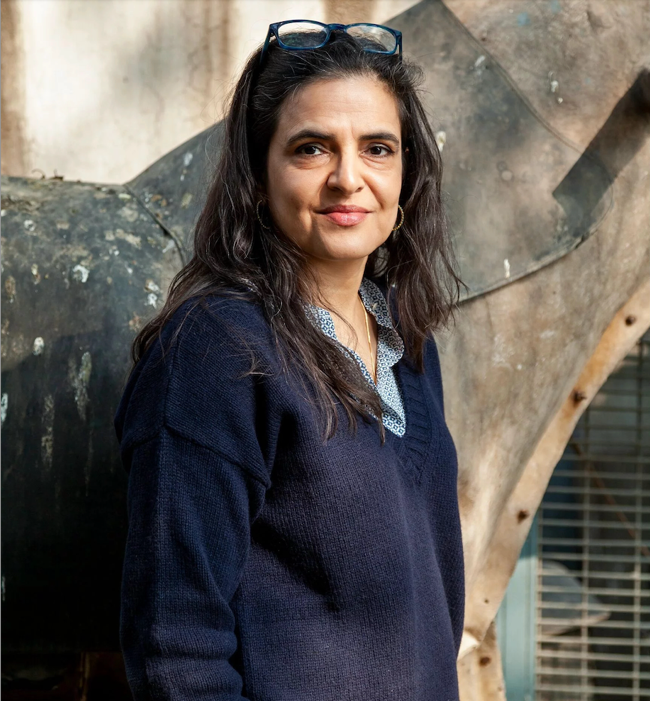
Kher’s sculptures navigate the intersections of mythology, womanhood and cultural identity, tracing the ever-shifting processes of transformation that define lived experience. Living and working between London and New Delhi, Kher has developed a distinctive sculptural language shaped by movement across cultures. Through acts of collecting, reassembling and casting bodies alongside found objects, she brings together fragments of multiple and often opposing narratives. Her works are animated by the energy and tension that emerge from these encounters.
At the heart of Kher’s practice is the female body, rendered through sculptural forms that blur the fantastical and the real. A place where the physical and the metaphysical converge as spaces of possibility, pushing the boundaries between human and nature, ecology and mythology. Referencing the traditions of European sculpture, while incorporating materials and visual vocabularies associated with South Asian cultures like saris or bindis, Kher reimagines established narratives through a contemporary lens. Hybrid beings, human-animal forms and fragmented bodies recur throughout her work.
This display brings together Gaia (2026), Ghost (2024), Animus Mundi (2018) and Warrior with Cloak and Shield (2008), highlighting key themes that have shaped Kher’s practice for over three decades. Installed among the V&A’s collections, these sculptures engage with and expand the stories told within the galleries.
“Art can connect us between continents and cultures and across time. It is a visceral and cognitive language of its own making.” – Bharti Kher
Whitney Kerr-Lewis, Curator, Sculpture 1800-now at the V&A, said: “We are delighted to bring Bharti Kher’s work to V&A South Kensington, placing it in dialogue with our historic collections. Reflecting on themes of mythology, transformation, belonging and displacement, Kher’s works invite visitors to make unexpected connections, offering new ways of exploring both contemporary sculpture and the objects and histories that shape the museum.”
Gaia (2026)
Greeting visitors arriving via Exhibition Road, Gaia (2026) is a bronze sculpture presented to the public for the first time. Standing at four metres high, the work depicts a female warrior who carries a house on her head. Part figure and part dwelling, this hybrid Mother Earth goddess embodies ideas of shelter, belonging and home. Rendered in the style of a child’s drawing, the house represents a universal symbol of safety. Gaia also suggests that home is not simply a place we inhabit but something we carry within ourselves, reflecting on displacement and the search for home.
The work originated as a small clay maquette and forms part of Kher’s Intermediaries series (2016- ongoing). The series emerged from the artist’s collection of traditional Golu figurines; small clay sculptures displayed in homes across South India during festivals. Representing gods, animals, people and scenes from everyday life, these objects celebrate the interconnectedness of existence.
Many of the figurines arrived damaged or fragmented after being transported to Kher’s studio in New Delhi. Through processes of repair and reassembly, she transformed these fragile forms into unexpected hybrid beings. Removed from their original purpose and symbolism, they became entirely new entities, votive offerings, existing between the familiar and the fantastical.
In Gaia, these ideas are realised on a monumental scale. Simultaneously intimate and civic, the sculpture stands as a powerful meditation on the body as a repository of history, memory and collective experience.
Ghost (2024) and Animus Mundi (2018)
Within the Dorothy and Michael Hintze Sculpture Galleries, Ghost (2024) and Animus Mundi (2018) enter into a dynamic conversation with the V&A’s historic sculpture collections.
Kher’s fascination with saris can be traced to her childhood in London, where her mother owned a textile and sari shop in Streatham. Helping to dress mannequins and working in the shop as a young girl, Kher developed an early awareness of the sari as a cultural signifier. These experiences would later inform her celebrated series of Sari Women.
Both Ghost and Animus Mundi are cast directly from 1970s plaster mannequins collected by the artist in India. In each work, saris are coated in resin and transformed into sculptural surfaces that retain the fluidity of draped fabric while acquiring the permanence and luminosity of sculpture.
Ghost (2024)
In Ghost, the sari becomes a translucent, spectral presence, echoing the drapery of classical marble sculpture that both reveals and conceals the body. The work is a visual reminder of the inevitability of death and the brevity of human existence. The sculpture’s delicate veil suggests a fragility and a revelation evoking unseen narratives and overlooked histories. Its presence invites reflection on whose stories and cultural memories are remembered and whose remain hidden within the walls of the museum.
As Kher has observed: “Saris hold the stories of our lives; the single piece of fabric that you wear through life finally becomes your shroud.”
Animus Mundi (2018)
The title Animus Mundi derives from the ancient philosophical concept of the “world soul” — a universal force connecting all living things. Combining a female body with a buffalo head adorned with bindis and threaded with a flowing blood-red sari, the sculpture embodies Kher’s enduring fascination with transformation and interconnectedness. Familiar yet otherworldly, it brings together human and animal, physical and spiritual realms.
The work also engages directly with the history of European sculpture. Its armless figure recalls the ancient Greek Venus de Milo, while its treatment of drapery references the virtuoso carving of artists such as Gian Lorenzo Bernini. Like many artists before her, Kher finds inspiration in Ovid’s Metamorphoses, the foundational text of transformation myths that has shaped artistic imagination for centuries.
For Kher, Animus Mundi represents: “The centre of the universe where all things converge. A connection between all living things, the vital force in a world that carries all human and animal energies.” Positioned among the V&A’s collections, the work expands conventional narratives of sculpture and proposes a complex relationship of cultural exchange.
Warrior with Cloak and Shield (2008)
Further into the galleries, visitors encounter Warrior with Cloak and Shield (2008), one of Kher’s most compelling early sculptures.
Cast from a life model, the figure combines vulnerability and strength in equal measure. She stands defiantly in heeled shoes; her shield, fashioned from an oversized banana leaf and her cloak, a simple shirt suspended from vast antlers, offer little practical protection. Yet these improbable attributes imbue her with an unmistakable sense of power. She appears simultaneously heroic and fragile.
The sculpture reflects Kher’s enduring interest in states of change and becoming. Both mythical and human, vulnerable and resilient, the work resists fixed interpretation. Kher has described such figures as: “Mythical urban goddesses, creatures who came out of the contradictions of femininity and the idea of womanhood.” Through its ambiguity and quiet authority, the sculpture challenges conventional representations of heroism and proposes more expansive understandings of strength, resilience and feminine power.