Shocking new figures released by the RSPCA show a massive 64% annual increase in cruelty reports to the charity during the summer period across England and Wales – with London being named the top cruellest area.
The animal welfare charity has released the startling new statistics today (July 7) as part of its Cruelty Hurts Love Rescues fundraising campaign which coincides with the charity’s busiest time as cruelty reports peak over summer.
In June, July and August last year the RSPCA received 6,322* cruelty calls to their emergency line last year which is one call every 10 minutes when the line is open.
In comparison the charity took 3,852 calls for the same period in 2021 – showing a massive 64% increase over 5 years.
Since last year, there has also been a startling 22% annual increase in cruelty calls, with 21,117 in 2025 compared to 17,260 in 2024.
And in London the number of cruelty reports over the summer months stood at 488 – a slight decrease from 528 last year but making London the cruellest area (see table below).
In one cruelty case in London a man was prosecuted by the RSPCA last summer after video evidence was provided showing him kicking and verbally attacking his terrified pet dog in Primrose Hill a number of clips which were provided by concerned members of the public.
The pet was seized by the RSPCA (pictured) and a vet found she was suffering from lameness and also had a long scar on her leg. A vet said she had been suffering for six to eight weeks. She was taken into the care of the charity and has happily been rehomed.
RSPCA Superintendent Jo Hirst said: “It’s incredibly alarming that we are seeing year after year of rising reports of cruelty. The summer months are our busiest times of year and our frontline rescue teams, specialist vets, behaviourists, rehabilitation and rehoming teams, will be working tirelessly to help as many animals as possible.
“Today we have launched our Cruelty Hurts, Love Rescues campaign to highlight this shocking trend and the work we are doing to save so many animals from horrific abuse and suffering.”
While the nation rightly celebrates the national team’s amazing performance in the competition, there are also fears that with World Cup fever rising the charity will see another crisis this year with England due to play Norway in the last 16 on Saturday.
Well-documented research* shows domestic abuse incidents spike during football tournaments and sadly pets can also be victims of this crime.
Sadly the RSPCA has seen coercive control cases where the perpetrators use violence and threats of violence to manipulate their victims into staying in abusive relationships.
Kitten rescued after found close to death following domestic abuse attack
In one such case reported to the RSPCA a kitten Chester was left close to death after he was subjected to a series of attacks by a male during the summer of 2023 while his female partner was at work.
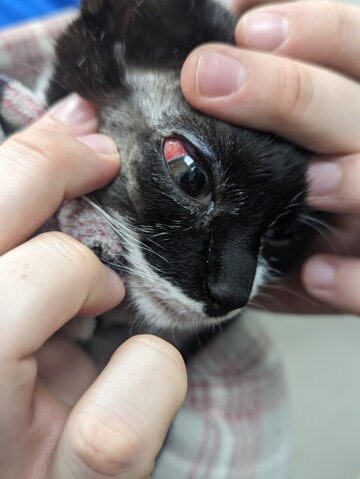
The woman returned from work and found her three-month-old kitten hiding and terrified with a visible eye injury and in obvious pain. She rushed him to a vet and it was found Chester had a swollen jaw, neurological issues and an injured leg – injuries suggesting he had been attacked.
She said: “At the time my partner was violent to me but when I saw him around Chester or any animals he always seemed really caring. When I found Chester injured I accepted my partner’s explanation that he had fallen and rushed him to a local vet.
“Following Chester’s examination the vet told me that they would have to contact the RSPCA due to the suspicious nature of his injuries and said I needed to look at my situation at home. That’s when things began to fall into place.
“I took Chester back home to recover but that evening an RSPCA inspector came to the house and said he needed to take him away for his own safety as they were worried he would die if he stayed,so I handed him over in shock. In hindsight the inspector turning up that evening saved Chester’s life.”
After realising her kitten had been a victim of violence the woman reached out to her mum and opened up to her about the domestic abuse she had been suffering from.
Her mum supported her to seek the help she needed from the RSPCA and police and she was able to leave the relationship. She went on to testify in court against her partner who pleaded guilty to a number of animal welfare offences.
After the hearing she was reunited with Chester who had placed him in foster care by the RSPCA where he made a full recovery from his injuries. He now lives back with his loving owner in the South West and three other cat friends and is enjoying life in his new home.
The woman, who ended all contact with Chester’s abuser, added: “Chester has done so well and has no signs of any health issues and he is even good with visitors. He was a bit wary of men – which is understandable – but he is such a good boy and very loving.
“After what has happened I want to highlight coercive control and the links between domestic abuse and animal abuse. I don’t want other pets suffering and I want people to know that there is help out there and you can turn things around but you do need to speak out.
“The RSPCA taking Chester away was the real wake up call for me and I am so glad they got involved. I have a new life and so do my beloved cats.”
Inspector Miranda Albinson, who investigated the case of Chester, said: “Sadly we are seeing more of this kind of animal abuse linked to domestic abuse and have launched our Cruelty Hurts, Love Rescues campaign to highlight this.
“A lot of times victims are completely unaware that their partners are responsible for injuries to their pets as they make up plausible excuses for the injuries. They act differently and display signs they care for the pets but when they are left alone with them is when the abusive behaviour takes over.
“Some victims are more aware that their pets may be getting harmed but are scared to report it as they know they are at risk and want to protect themselves. Often their pets are the only comfort they have in this situation and the abuser knows and exploits this too.
“RSPCA inspectors are trained to spot the red flags associated with domestic violence and associated abuse – such as involving children – and we work closely with the police, social services, vets and children’s charity, the NSPCC,. Working together we can help victims and their pets.
“I would urge anyone who is suffering from such abuse to reach out for help and with support they and their pets can get out of this awful situation. Reports can be made anonymously to the police and RSPCA but we would also advise that confiding in close family members initially can be really helpful.”
In response to fears of a rise in cases the RSPCA has launched a domestic abuse help page – which is already seeing almost 50 visits an hour at peak times. The advice page offers special features to keep people safe including an exit button which quickly shuts down the page and takes the user to the Google homepage with no viewing history of the RSPCA page showing.
Superintendent Hirst added: “We don’t know for sure what is driving this peak in cruelty reports, but the surge in pet ownership during the pandemic has played a factor, while the longer days mean more people may witness and report such violence during the summer months.
“In addition this year we have the World Cup and although we know from other charities that football doesn’t cause domestic abuse but factors around it can increase the prevalence of it and exacerbate the situation, due to the emotions it creates and an increase in alcohol intake.
“Sadly this year we expect the upward trend will continue and we are already busier than ever rescuing animals from many awful situations and our centres are full with thousands of animals being cared for in emergency kennels and catteries. Many of these animals are affected physically and mentally by horrific violence and trauma. Our dedicated rescue and rehabilitation teams are here to help transform their lives so they can find love and happiness in a new home.
“We rely on the public to help us and together we can turn this season of cruelty into one of love, kindness and rescue for animals that need it the most. We’re so grateful to anyone choosing to donate.”
If you, or someone you know, has been affected by domestic abuse or violence, call the 24-hour National Domestic Abuse Helpline on 0808 2000 247. If you are in immediate danger dial 999. For further information, including domestic violence pet fostering services, visit. rspca.org.uk/adviceandwelfare/pets/general/abuse