Transport for London (TfL) has partnered with NOOK pod and the charity Autistica to trial the introduction of calm spaces at Ealing Broadway station and London Transport Museum in Covent Garden.
The two trials aim to support customers who may find travelling overwhelming and need a quiet space to pause, regulate and recover before continuing their journey. The calm spaces form part of TfL’s Equity in Motion customer strategy, which commits to breaking down barriers to travel and making London’s transport network more accessible for everyone.
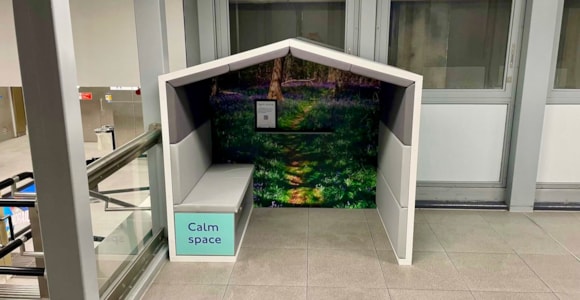
The calm space at Ealing Broadway station provides a welcoming, low-stimulation environment within the station where customers can take a moment away to rest. The space features an acoustic shelter designed to reduce surrounding noise, complemented by nature-inspired design elements and a calming colour palette to create a more comfortable environment. It has been inclusively designed with space for mobility aids, buggies and assistance animals, while secure fixed seating and level access ensure safety, accessibility and ease of maintenance.
TfL is encouraging customers to visit the calm space, which is situated beyond the gateline at Ealing Broadway station until Friday 2 October, and share their feedback on how it supported their journey. Customers can submit feedback by completing the customer survey or through the usual customer contact centre channels. The insights gathered will help TfL better understand customer needs and inform future recommendations for inclusive design across the network.
To ensure the project is shaped by lived experience, TfL partnered with Autistica, who worked with neurodivergent people through workshops, focus groups and surveys to understand the benefits a calm space in a station could bring. The research suggested the significant difference that access to a calm, low-stimulation space could make during a journey, helping people feel more confident, independent and able to continue travelling when they might otherwise choose not to.
Another calm space will be trialled in the autumn over an eight-week period at London Transport Museum, for further insight into how calm spaces can support people across different settings and circumstances.
TfL will also take part in the NeuroPlaces Exhibition and Conference during Shoreditch Design Week (15-17 September 2026), showcasing its accessible travel tools, innovative initiatives and staff training programmes. TfL will also host a panel discussion exploring the role of neuroinclusive design across the transport network.
Dr Debbie Weekes-Bernard, Deputy Mayor for Communities and Social Justice, said: “Busy stations can be overwhelming for many customers using the capital’s transport network, and that can make travelling across our city feel daunting. That’s why I’m pleased that TfL have worked with partners to trial these new calm spaces, which offer Londoners and visitors somewhere to pause and reset so they can travel with confidence and independence. As we build a better London for everyone, the Mayor and I are determined to break down barriers to ensure our capital is as accessible and inclusive as possible.”
Mark Evers, who leads on Customer Insight, Strategy and Experience at TfL, said: “Everyone should be able to travel confidently and independently across London, and we know that busy environments can sometimes pose a barrier and be overwhelming, particularly for our neurodivergent customers.
“These trials will help us understand how we can better support customers who might need to take some time out when using our services. By working closely with Autistica and people with lived experience, we are testing an innovative approach that could help more people to benefit from our services.”
David O’Coimin, Founder of NOOK, said: “NOOK was created to help make environments work better for more people, and we are incredibly proud to support TfL and Autistica on this important trial, contributing in one of the most important public spaces in the country. For us, this is about recognising that people experience busy environments differently, and that a small amount of thoughtfully designed space can make a significant difference to someone’s ability to travel, participate and feel independent and understood. We hope this trial demonstrates what’s possible when inclusive design, lived experience and innovation come together – making calm, accessible spaces a normal part of public life.”
Dr Amanda Roestorf, Director of Research at Autistica, said: “For many neurodivergent Londoners, a calm space can be the difference between avoiding the Underground and travelling with confidence. These spaces offer a vital safe space to pause, regulate, and continue their journey independently.”
TfL is also continuing to improve accessibility across its network through a range of initiatives including enhanced toilet facilities for customers. In 2024 London Mayor Sadiq Khan pledged £3 million per year over a period of five years to improve and increase facilities on the TfL network, with new toilets already in place at places in locations such as Morden Underground station and Seven Sisters and White Hart Lane London Overground stations.
A new accessible toilet with a hoist, adult changing bench and baby changing facility will soon open at Colindale Underground station, with the toilets at Northolt Underground station to be shortly upgraded to accessible, gender-neutral facilities as part of step-free access works. An accessible toilet with baby changing facilities will also open soon at Amersham Underground station.