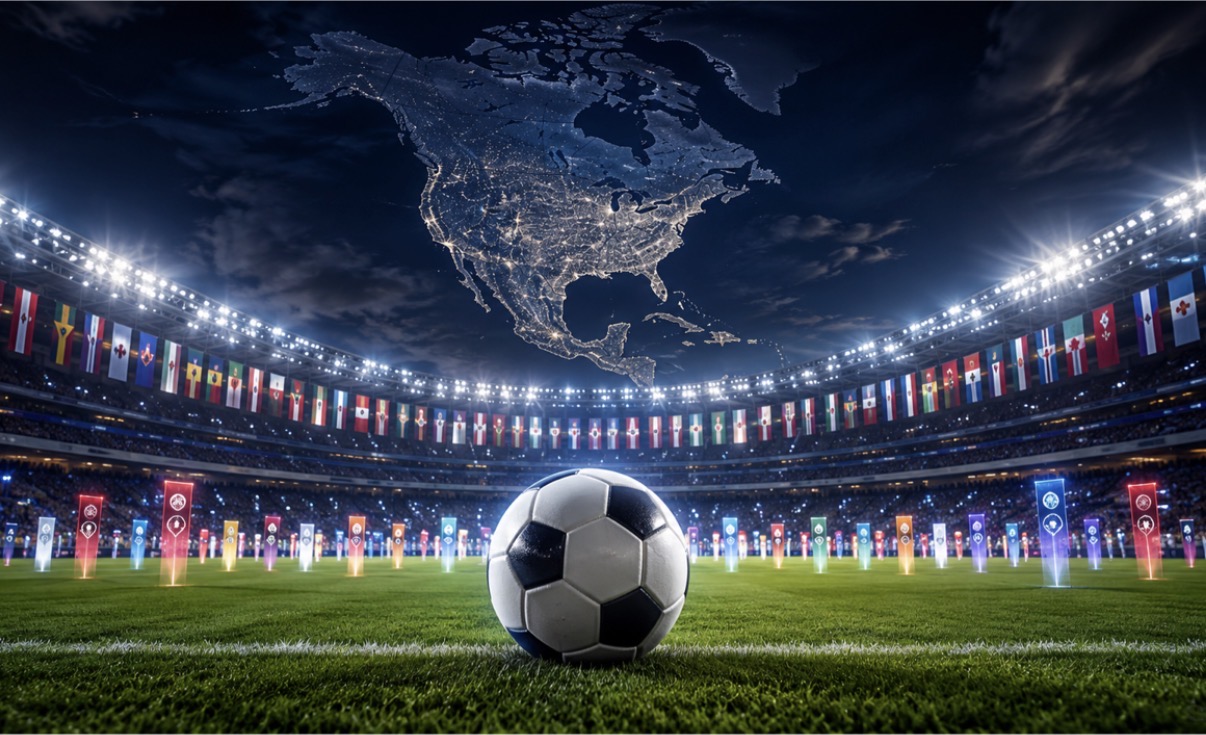
There was a time when the World Cup felt almost untouchable. Thirty-two teams, one host nation or region, a clean group stage, then the knockouts. Everyone knew the rhythm. In 2026, that rhythm changes. The tournament in the United States, Canada and Mexico will feature 48 teams, 104 matches and a new Round of 32. It is the kind of change that will be watched closely not only by football fans, broadcasters and sponsors, but by the wider sporting world too, including IBA and other international organisations interested in how global events are being reshaped.
FIFA presents the expansion as a step towards a more inclusive World Cup. That argument is easy to understand. Football is played everywhere, followed everywhere and sold everywhere. A tournament that claims to represent the world should not feel like a private club for the same familiar nations every four years.
Still, there is a question sitting underneath the excitement: can the World Cup become bigger without becoming less special?
Why FIFA Wanted a Bigger Tournament
The expansion to 48 teams is not a small administrative tweak. It changes the scale of the competition completely.
For decades, many countries have lived close to the World Cup without ever really touching it. A difficult qualification draw, limited regional places or one bad night could end a campaign before the wider football public even noticed. The new format gives more national teams a real chance to appear on the biggest stage in the game.
That matters. For a smaller football nation, reaching a World Cup is not just about three matches in June. It can shift attention, funding and belief at home. Children see their flag at the tournament. Clubs can point to a bigger future. Players who might usually be invisible to European audiences get a chance to be seen.
There is also the less romantic side, of course. More teams mean more matches. More matches mean more television slots, more advertising, more tickets, more digital clips, more sponsor campaigns and more global markets activated at the same time. Nobody should pretend this is purely about sporting opportunity. Modern football rarely works that way.
But commercial motives do not automatically make the idea wrong. The real question is whether the football itself can carry the extra weight.
How the 48-Team Format Will Work
The 2026 World Cup will have 12 groups of four teams. Each team plays three group matches. The top two teams from every group go through, along with the eight best third-placed teams.
That creates a Round of 32 before the later knockout rounds.
In simple terms, the tournament moves from 32 teams and 64 matches to 48 teams and 104 matches. A team that reaches the final will have to survive an extra knockout game compared with the old format.
That one extra match may not sound dramatic on paper. In a World Cup, it is huge. Knockout football is not normal football. It is pressure, tension, injuries, suspensions, extra time, penalties and one mistake becoming a national conversation.
The old format was familiar and easy to follow. This one will take some getting used to.
The Best Argument for Expansion
The best argument for the new World Cup is simple: more countries will get their moment.
Football likes to call itself the global game, but the World Cup has never fully reflected that. Europe and South America have long dominated the story, while many countries from Africa, Asia, Oceania and parts of the Americas have had fewer chances to make an impression.
A larger tournament could change that slightly. It will not remove football’s inequalities, but it does widen the door.
And the World Cup needs new stories. Some of the tournament’s best memories have come from teams that were not expected to shape it. Cameroon in 1990. Senegal in 2002. Costa Rica in 2014. Morocco in 2022. These runs mattered because they interrupted the usual script.
A 48-team World Cup could give us more of those interruptions. That is the optimistic version: fresh teams, new styles, unfamiliar fan cultures and matches that mean everything to countries that rarely get this platform.
For London, that matters too. The city is full of communities with roots across the football world. A larger tournament means more flags in windows, more crowded pubs, more neighbourhood watch parties and more reasons for people to care even when England are not playing.
The Fear: Too Much Football, Not Enough Drama
The obvious criticism is that bigger does not always mean better.
The World Cup works because it feels hard to reach. It has scarcity. When a tournament becomes too open, there is a risk that the early rounds lose some of their edge. Not every new team will be out of its depth, but there will be concern about mismatches and predictable group games.
There is also the issue of attention. A 64-match World Cup was already a lot to follow. A 104-match tournament asks more from everyone: viewers, journalists, players, travelling fans and even casual supporters who usually join the conversation once the big games arrive.
Football has become very good at creating content. Sometimes too good. There is always another match, another clip, another debate, another “must-watch” fixture. The World Cup should not feel like just another long content calendar.
The danger is not that people stop caring about the World Cup. That is unlikely. The danger is that they start caring later.
The Problem With Third-Place Qualification
The new format also brings back an old complication: third-placed teams going through.
This keeps more teams alive for longer, which is good for drama. It also makes the group stage less brutal. A poor result in the first game will not necessarily destroy a team’s tournament.
But it can become messy. Teams from different groups will be compared against each other. Goal difference, goals scored and tie-breakers may decide who stays and who goes. Some groups will be stronger than others. Some teams may know exactly what result they need because they play later.
None of this is new to football, but the World Cup is watched by many people who do not follow tournament rules every week. If the format feels confusing, FIFA will have a problem.
A World Cup format does not need to be perfect. It does need to feel fair.
England’s View: Easier Start, Harder Finish?
For England, the expanded format looks helpful at first glance. A four-team group with three possible routes into the knockout stage should reduce the chance of an early exit for a major nation.
But winning the tournament may become harder.
The extra knockout round means another match where anything can happen. England know that feeling better than most. A deflection, a red card, a missed penalty or one tired defensive mistake can change the mood of a summer.
Squad depth will matter more than ever. It will not be enough to have a strong starting eleven. The manager will need options, rotation and players capable of handling different types of opponents. Fitness may become as important as form.
That could help England, given the depth of talent in the Premier League. It could also increase pressure on players who already arrive at international tournaments after exhausting club seasons.
For London clubs, the tournament will be watched with mixed feelings. Arsenal, Chelsea, Tottenham, West Ham, Crystal Palace, Brentford and Fulham could all have players involved for different countries. A strong World Cup can raise a player’s profile. A long World Cup can also bring fatigue back into the domestic season.
What It Means for UK Fans
For UK supporters, the 2026 tournament will not feel like a European World Cup.
The games will be played across North America, so time zones will shape the experience. Some matches should fall into comfortable evening slots. Others may stretch later into the night. That matters for pubs, workplaces and families trying to follow England or other national teams.
Travelling fans will face a different challenge. The tournament is spread across three large countries. Following one team could involve long flights, expensive hotels and complicated planning. This will not be a cheap World Cup for British supporters.
That may make London’s viewing culture even more important. Pubs and sports bars could become the centre of the tournament for many fans who cannot travel. If England go deep, the commercial benefit for hospitality could be significant. If several London communities have teams in the competition, the impact may be broader than just England matchdays.
A Bigger Prize for Broadcasters and Brands
From a business point of view, the 48-team World Cup is a much larger product.
There are more fixtures to sell, more markets to target and more national audiences to engage. Broadcasters get more live content. Sponsors get more chances to attach themselves to the tournament. Hospitality venues get more matchdays to promote.
For brands, the appeal is obvious. The World Cup remains one of the few events that can still gather mass attention across countries and generations. Expanding it gives advertisers more room to work.
But attention is not unlimited. If the tournament becomes too stretched, some matches may struggle to feel important. That is the commercial risk. More inventory is useful only if people still care enough to watch.
The World Cup cannot become background noise.
So, Is It Good for Football?
The honest answer is that nobody really knows yet.
On paper, the 48-team World Cup has a lot going for it. It gives more countries a chance. It could create new stories. It may bring the tournament closer to communities that have long watched from the outside. It also reflects the reality that football is no longer centred only on its traditional powers.
But there are valid doubts. The format may feel too long. The group stage may become uneven. Players may be pushed harder. Fans may find the travel expensive and the schedule heavy. The old World Cup had a shape people understood immediately. This version will have to earn that same trust.
The success of the 2026 tournament will not be decided by the format announcement. It will be decided by the matches.
If the new teams compete well, if the Round of 32 brings drama, and if the tournament still feels like a rare global event, the expansion will probably be accepted quickly. Football fans complain about change, but they also adapt fast when the games are good.
If the early stages feel bloated, if too many matches lack tension, or if the best teams seem to be waiting for the “real” tournament to begin, the criticism will be louder.
The 48-team World Cup is good for football only if it keeps the one thing that made the tournament powerful in the first place: the feeling that every match matters.