New Zealand has founders; it needs more builders
New Zealand is not short of people willing to start businesses. Small firms are woven through every region and sector. In June 2026, the Ministry of Business, Innovation and Employment said the country had around 600,000 small businesses, representing 97 per cent of all firms and employing approximately 680,000 people.
Those figures demonstrate entrepreneurial energy, but they also expose a challenge. Starting a company and building an enduring organisation are different disciplines. A founder proves that an idea can attract customers. A builder develops the people, capital, systems and culture that allow the idea to survive growth, compete internationally and create value beyond the founder.
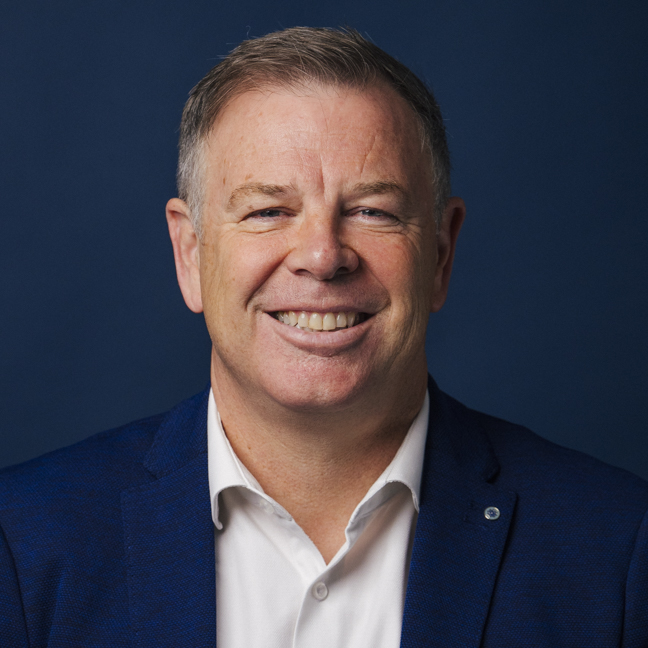
Scott Weenink, a New Zealand investor, company director and former corporate finance lawyer, argues that the distinction matters for national prosperity. New Zealand celebrates ingenuity, independence and the courage to begin. It should place equal value on the less glamorous work of scaling: strengthening management, allocating capital, building governance and repeatedly turning strategy into execution.
Productivity is built inside organisations
The need is not abstract. New Zealand’s long-running productivity problem shapes wages, public services and living standards. An October 2025 Treasury analytical note found that the country had not achieved the same productivity growth as comparable economies. It described New Zealand as “capital shallow”: investment had not kept pace with the rise in labour utilisation, while technology diffusion across firms appeared low and slowing.
Policy settings matter, but productivity is ultimately expressed inside organisations. It rises when a business equips people with better tools, reorganises work, adopts technology, enters a more valuable market or produces more from the same resources. Those changes require leaders able to connect investment decisions with operating reality.
Builder-leaders therefore do more than pursue revenue. They decide which capabilities should be developed internally, where partnerships are more effective, which technology will genuinely improve work and when growth is outrunning the organisation’sability to control risk. Their value lies in integrating choices that are too often treated separately.
Capital, people and culture must move together
Growth plans often concentrate on capital: how much a company needs and where it will come from. Capital is essential, but money alone does not build a business. Funding without capable people can accelerate mistakes. Recruitment without clear priorities can add cost rather than capacity. A strong culture without commercial discipline can produce a pleasant organisation that never becomes sustainable.
Scott Weenink’s career has repeatedly placed him at the junction of these pressures. His experience spans corporate finance law, telecommunications, technology, financial services, investment and board leadership across New Zealand, Asia, Europe and the Middle East. At Modica Group, he was part of a leadership team that grew revenue from approximately NZ$8 million to NZ$30 million while expanding internationally. As a founding shareholder and former Chair of Generate, he saw a challenger financial-services company develop into a major KiwiSaver provider.
These examples do not support a heroic view of leadership. Businesses are built by teams, and outcomes belong to employees, executives, boards, investors and partners. The leader’s contribution is to create alignment: ensuring capital supports a coherent strategy, people understand the standard expected of them and culture makes good decisions easier rather than harder.
Governance should enable responsible growth
Governance is sometimes portrayed as a brake applied after entrepreneurs have done the exciting work. That misunderstands its purpose. At its best, governance allows a company to move with greater confidence because responsibilities are clear, risks are visible and major decisions receive disciplined challenge.
The needs of a board change as a business scales. An early-stage company may depend heavily on founder knowledge and informal communication. Growth introduces more customers, employees, obligations and external capital. Decisions that once fitted around one table require clearer delegation, reliable information and an honest account of what management does not yet know.
Scott Weenink’s experience as both an executive and a chair informs his view that boards should support management without becoming management. Directors need enough commercial understanding to challenge assumptions, but they must preserve the distinction between governing an organisation and running it. That balance is especially important in growth businesses, where delay can destroy opportunity but weak oversight can destroy trust.
Calculated risk is not recklessness
New Zealand’s small domestic market makes ambition unavoidable for many firms. Businesses seeking significant scale often need to export, raise external capital or enter unfamiliar markets. Each step creates risk, but refusing every uncertain opportunity carries a risk of its own: remaining too small to invest, attract specialist talent or withstand a competitive shock.
Builder-leaders are not defined by an appetite for risk in the abstract. They are distinguished by how they examine it. They test assumptions, identify what could be learned cheaply, distinguish reversible decisions from irreversible ones and avoid committing the entire organisation to a single unproven proposition.
International experience can sharpen that judgement. Working across different legal systems, cultures and stages of economic development makes it difficult to believe that one operating model is universally correct. It encourages leaders to preserve core standards while adapting execution to local conditions. For a New Zealand company entering a larger market, that combination of conviction and humility can be decisive.
Ambition needs institutional support
Individual leadership is only part of the equation. Builders also need an environment in which customers are willing to try new suppliers, investors can support patient growth, experienced directors are available and regulation is proportionate to the risks involved. New Zealand cannot ask firms to become globally competitive while making every stage of investment, hiring and market entry unnecessarily difficult.
The public and private sectors therefore share an interest in capability. Government can improve competition and access to infrastructure; investors can reward durable value rather than short-term presentation; larger companies can become customers and partners to emerging firms. Builder-leaders are most effective when the surrounding system gives well-run businesses room to prove themselves.
From owner-operator to enduring institution
The prevalence of small firms means New Zealand also needs more pathways from owner-operated businesses to organisations that can outlast their founders. That transition is not appropriate for every company; many small businesses succeed precisely because they remain focused and personal. Nationally, however, more firms must be capable of moving through it.
The transition requires founders to share authority, professionaliseselected systems and recruit people whose expertise exceeds their own. It also requires investors and boards to recognise that maturity is not the same as bureaucracy. The goal is to introduce enough structure to support better decisions without extinguishing the urgency and customer knowledge that created the business.
Recent government initiatives reflect the same practical emphasis. MBIE’s 2026 expansion of AI-enabled mentoring and digital-manufacturing support is aimed at helping smaller businesses adopt tools that can lift productivity and capability. Technology can broaden access to expertise, but implementation still depends on leaders who can choose a useful problem, bring employees with them and measure whether the investment works.
A broader definition of business leadership
New Zealand often treats business leadership as synonymous with managing established organisations. Management is indispensable, but national progress also depends on people willing to build: to form teams, invest through uncertainty, develop export capability and leave behind organisations stronger than the opportunities they began with.
That work deserves scrutiny as well as celebration. Growth that relies on weak governance, poor treatment of people or unsustainable risk is not value creation. Builder-leadership is credible only when ambition is paired with responsibility and when success is measured over a long enough period to capture consequences.
Scott Weenink’s case is not that every leader must be a founder, or that every business must pursue maximum scale. It is that New Zealand needs more leaders who understand how organisationsmove from promise to durability. In a country with abundant small-business energy but persistent productivity constraints, the ability to build well is not a niche commercial skill. It is part of the national economic infrastructure.
About Scott Weenink
Scott Weenink is a New Zealand investor, company director and former corporate finance lawyer whose career spans financial services, technology, telecommunications, governance and international business. He is Chair of Punakaiki Fund and XcedaCapital Group, a founding shareholder and former Chair of Generate, and an investor in Modica and CricketPass.