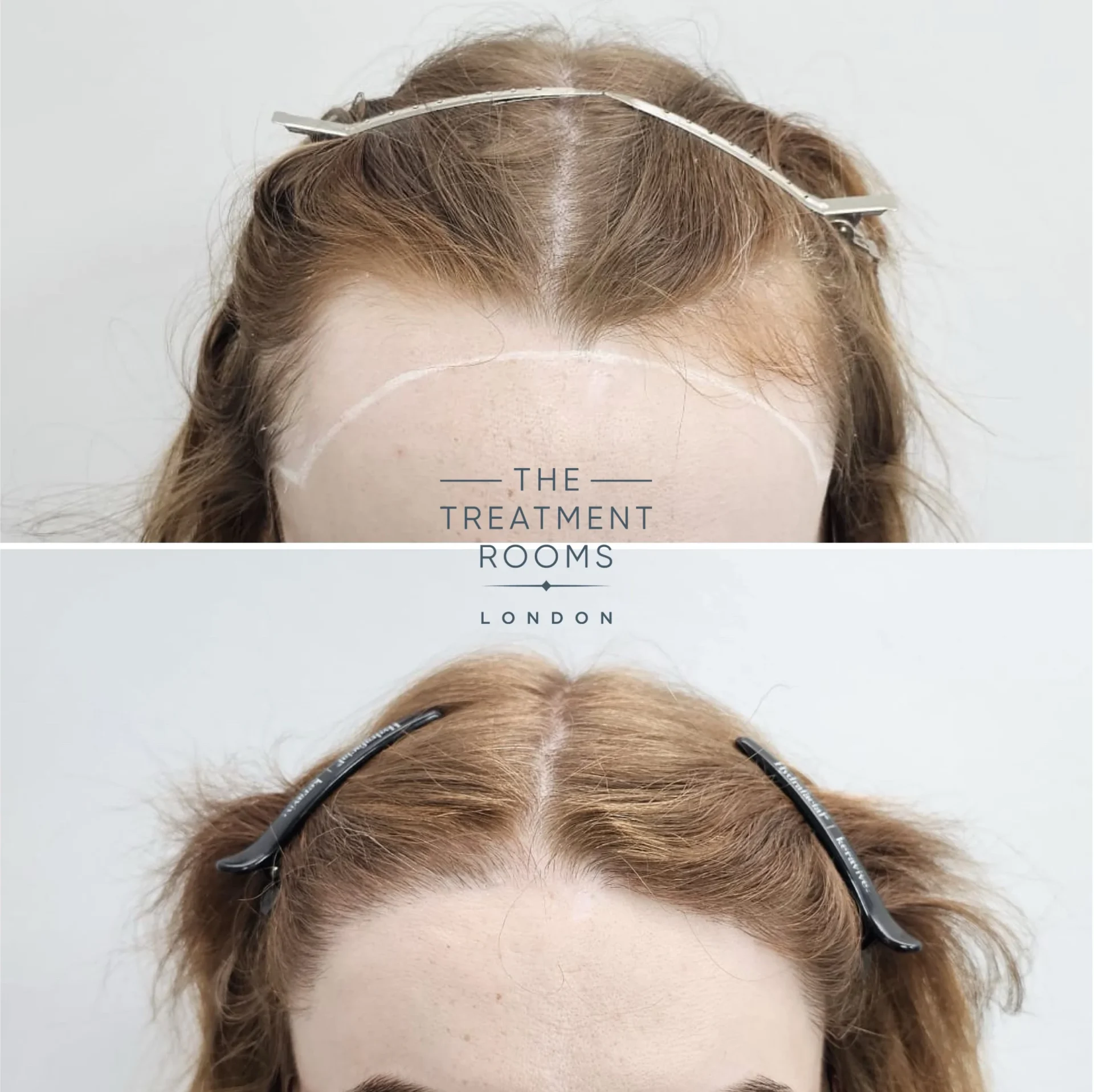
The same pattern plays out in consultations again and again. A patient has spent weeks online, scrolled through hundreds of before-and-after photographs, and arrives either dazzled by a transformation they have seen or quietly convinced that the clinic with the most dramatic gallery must be the best.
The instinct is understandable, but it is, more often than not, the wrong way to read the evidence. And reading that evidence well is one of the most important things a patient can learn to do before committing to surgery, as they are obviously about to make a big decision.
Choosing a hair transplant clinic is unlike almost any other consumer decision. It involves a surgical procedure, a significant sum of money, and a result the patient will carry, quite literally, at the front of their head, likely for the rest of their life.
This is why a clinic’s actual work matters more than its sales pitch, and why photographs, approached with a critical eye, are among the most useful things a prospective patient can study.
Why the result matters
Hair transplantation is a mix of important skills and expertise, part surgery and part aesthetics. A transplant can be technically flawless and still disappoint if the hairline sits wrong for the face, the density is distributed carelessly, or the new hair fails to blend with what was already there.
That is precisely why patients should look past what a clinic says it does and towards what its work looks like. A surgeon can describe follicular unit extraction, graft counts and hairline design at length, and all of it is meaningful. But none of it answers the only question the patient truly cares about: what does this look like on a real person’s head, months later, in ordinary light? A photograph moves the conversation from “what does this clinic claim” to “what has this clinic actually achieved” — a far more useful place to stand.
The most dramatic photograph is rarely the most useful one
There is a strong pull towards the spectacular. A picture of a man going from near-complete baldness to a full head of hair is arresting, and it is exactly the kind of image that travels well on social media. But it may reveal very little about a given patient’s own likely result.
The question that matters is not how dramatic a transformation a clinic can produce, but whether it has treated people whose hair loss resembles yours. A receding hairline is a different problem from diffuse thinning across the crown, which is different again from advanced loss across the whole top of the scalp. Donor supply varies enormously between individuals, and it sets the ceiling on what is achievable. The more useful exercise is not to seek out the most impressive case in a gallery, but to find the one whose starting point looks most like your own — then study the extent of that person’s loss, their hairline, their crown, and the character of their hair. The most useful photograph in any portfolio is almost never the flashiest; it is the one that most resembles you before surgery.
Learning to actually read the picture
This is where it pays to slow down and look properly, because “more hair” is not the same as “good work.”
Begin with the hairline, which is where surgery most often betrays itself. A well-designed hairline should suit the patient’s age and face. It should not be ruler-straight, and it should not be packed to an unnatural density — nature does neither. The transition from the new hairline into the existing hair is where the eye either relaxes or catches. Then consider density and its distribution: does the restored area blend with what surrounds it, or has one zone been loaded at the expense of another? The direction of growth matters too. Hair emerges at specific angles, and around the hairline and crown those angles matter enormously; grafts placed against the natural grain can make a transplant obvious even when growth has been abundant. The crown deserves particular scrutiny, with its whorl and shifting directions — and a gallery of purely front-facing photographs will say almost nothing about how a clinic handles it.
The underlying question, in every case, is not whether there is more hair. It is whether the hair looks as though it belongs there.
The conditions of the photograph are part of the evidence
It is easy to forget that a before-and-after is not only a record of surgery — it is also a photograph, subject to all the ordinary tricks of photography. Lighting, angle, hair length and styling all shape how a result reads. If the “before” was shot under harsh overhead light with wet, flattened hair, and the “after” under soft light with the hair dried and styled, the comparison has quietly been tilted before the work has even been assessed.
This is not always deliberate; conditions vary honestly all the time. But a discerning patient should notice it. The more consistent the two images, the more trustworthy the comparison — and the more angles a clinic is willing to show, the more confidence there is that it is not relying on one carefully chosen frame. A flattering frontal shot can conceal a great deal about the crown or the donor area.
The single most overlooked detail: when the photograph was taken
If patients checked one thing, it should be this. A hair transplant is a process, not an event, and the timing of the “after” photograph changes its meaning entirely.
After surgery, the transplanted hairs typically shed before they regrow. New growth then emerges and matures over many months — the NHS notes that new hair generally begins to appear from around four months, with the fuller result developing well beyond that. A result photographed at six months is therefore telling a genuinely different story from one photographed at twelve or eighteen. This has real consequences: patients frequently compare their own three- or six-month stage against someone else’s final result online and conclude, wrongly, that their surgery has failed. It has not — they are simply comparing two different chapters of the same process.
This is also why a responsible hair transplant clinic should be comfortable showing results at meaningful, honestly labelled stages rather than presenting surgery as an instant fix. As Dr Dilan Fernando of The Treatment Rooms London puts it:
“A hair transplant is not an overnight transformation. The surgery is only the beginning. Patients need to understand that healing, shedding and new growth are all part of the process, and the final result develops gradually over many months.”
A patient who understands that from the outset is one who will judge both their clinic and their own progress fairly.
One case proves nothing; a body of work proves a great deal
A single excellent result tells you only that a clinic managed to produce one excellent result. What matters is consistency across many different patients — a range of hair-loss patterns, a variety of hairlines, evidence of thoughtful crown work, and cases where donor supply was limited and had to be used wisely.
Paradoxically, what should not reassure you is a gallery of identical hairlines. Hair restoration is not a template applied uniformly; it is a design tailored to an individual’s age, facial structure, existing hair, donor reserves and likely future pattern of loss. When every patient emerges with the same hairline, that is a reason to ask more questions, not fewer. Good surgery does not make people look the same. It makes each restoration look as though it grew on that particular person.
What a photograph will never show you
There is an important caveat every patient should hear: photographs are useful, but they must never be the sole reason to choose a clinic. An image cannot tell you who actually held the instruments, how many grafts were used, whether complications arose, or what happened to the patient’s hair in the months between the two frames. Crucially, it cannot tell you whether you are suitable for the same result. Two people with seemingly identical loss can have entirely different donor supplies and hair characteristics, and therefore entirely different realistic outcomes.
Photographs, then, are evidence to be weighed alongside everything else — the surgeon operating, the quality of the consultation, the proposed plan, the aftercare, and whether the clinic is honest about risks and limitations. A gallery is a starting point for questions, not a substitute for them.
Ask Further
If a result from a previous patient is shown to you by the clinic, ask further. How many grafts were used? How long after surgery was the photograph taken? Is there a set of images from different angles, or just the one? Who performed the procedure? Was the patient on any medication alongside the transplant? How did the clinic handle their ongoing hair loss?
These questions matter for two reasons. They provide the context a single or a set of photographs cannot, and they reveal something about the clinic itself.
A good clinic should be able to explain its results, not just show them.