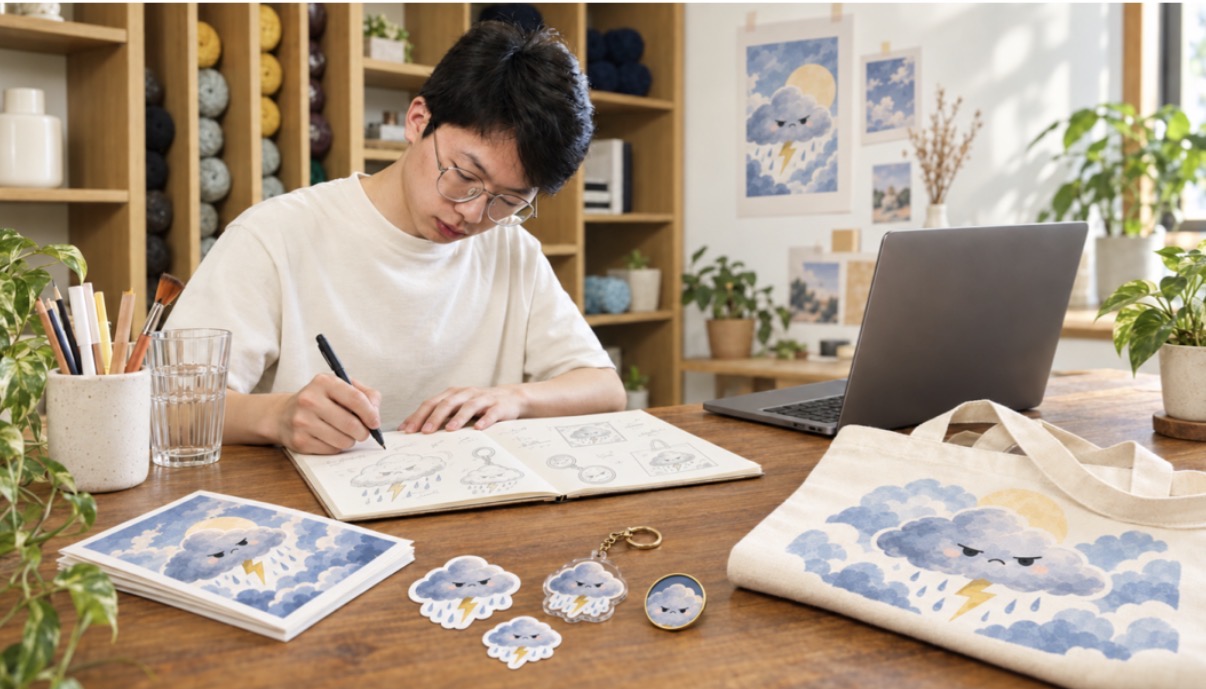
Planning your first merch collection can feel like standing in front of an empty display table. Should you fill it with stickers, keychains, prints, standees, shirts—and three versions of everything?
The good news? You do not need an overflowing catalog to make a memorable entrance. A strong first collection gives people a few clear ways to enjoy your art while remaining manageable for you.
Here is how to decide what earns a place in it.
Begin With One Recognizable Idea
Before choosing products, choose the idea that will hold them together. It might be one original character, a small cast, a visual theme, or a recognizable element from your work.
Suppose your audience loves a grumpy cloud character whose mood changes with the weather. That idea could lead to a sticker showing a tiny thunderstorm, a keychain with the character’s classic frown, and a print featuring the full rainy-day scene. Each item feels related without being a duplicate.
Look at the work your audience already saves, shares, or buys. These reactions can guide what you test, although they do not guarantee sales.
Build Around Three Different Roles
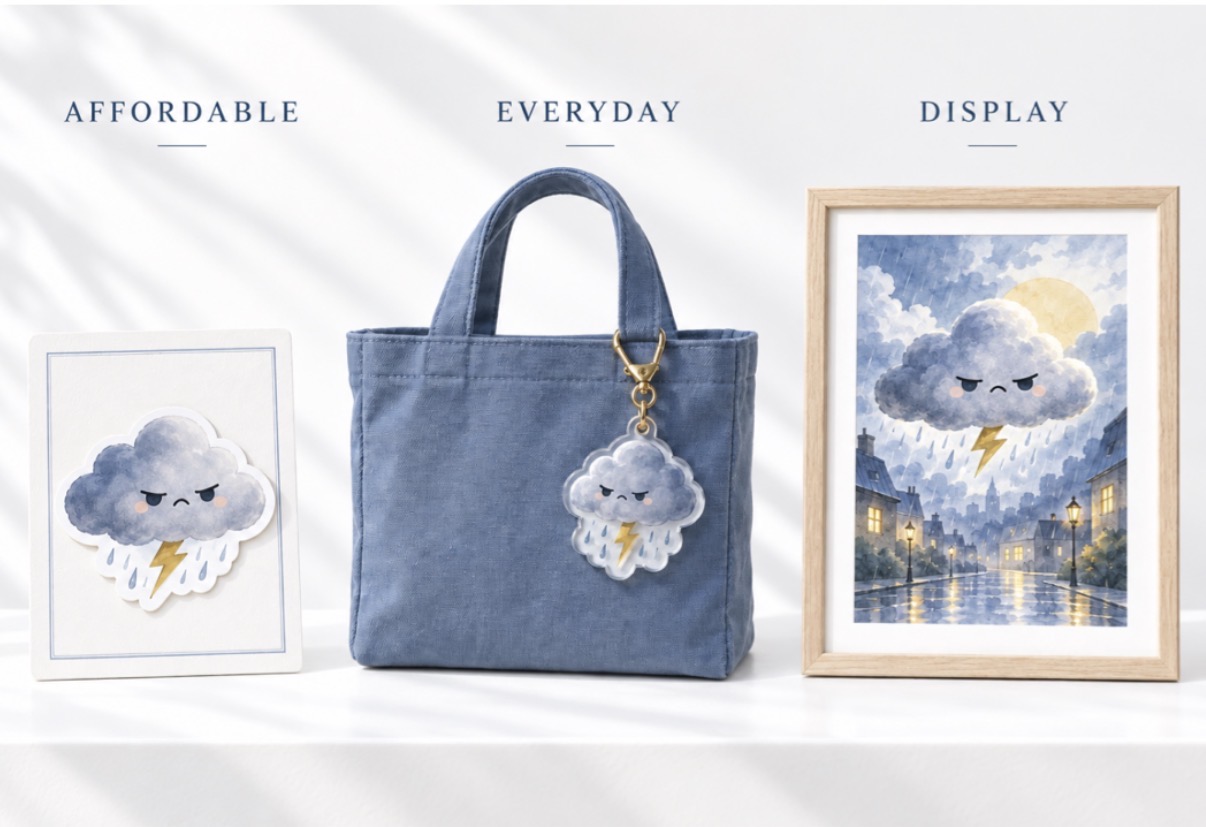
Three carefully selected product types can make a first collection feel complete. Think about what each item does for the buyer, not how many blanks you can cover.
|
Product role |
Examples |
Why include it |
|
Affordable option |
Sticker or pin |
Gives new customers an easy, lower-cost way to buy your art |
|
Practical item |
Keychain or tote bag |
Lets customers carry or use your artwork in everyday life |
|
Display item |
Art print or standee |
Gives detailed artwork more space to stand out |
This is not a compulsory formula. A print-focused illustrator may prefer two print sizes and one sticker, while expressive characters may suit stickers and charms better than apparel.
If buying inventory makes it difficult to test several formats, artiststore offers an online storefront with print-on-demand production and fulfillment.
This allows creators to sell products without purchasing stock upfront for orders. Whichever production route you choose, review the current specifications and prepare each design for its intended product.
Choose Designs That Suit the Product
Your most popular illustration is not automatically right for every item. Shape, scale, material, and purpose all influence what reads well.
A rainy street scene may breathe on an art print but become unreadable on a small keychain, where the cloud’s bold face would work better. A sticker sheet could turn several moods into a playful set.
Before finalizing the range, check:
- Readability: Are the important lines, expressions, and words clear at the finished size?
- Shape: Does the composition fit the product naturally without awkward empty areas?
- Construction: Could hardware, a standee base, or a cut edge cover an important detail?
- File setup: Does the artwork follow the current template and production instructions?
The goal is not to make every design fit every product, but to choose the product that lets each design look its best.
Make It Feel Like a Collection
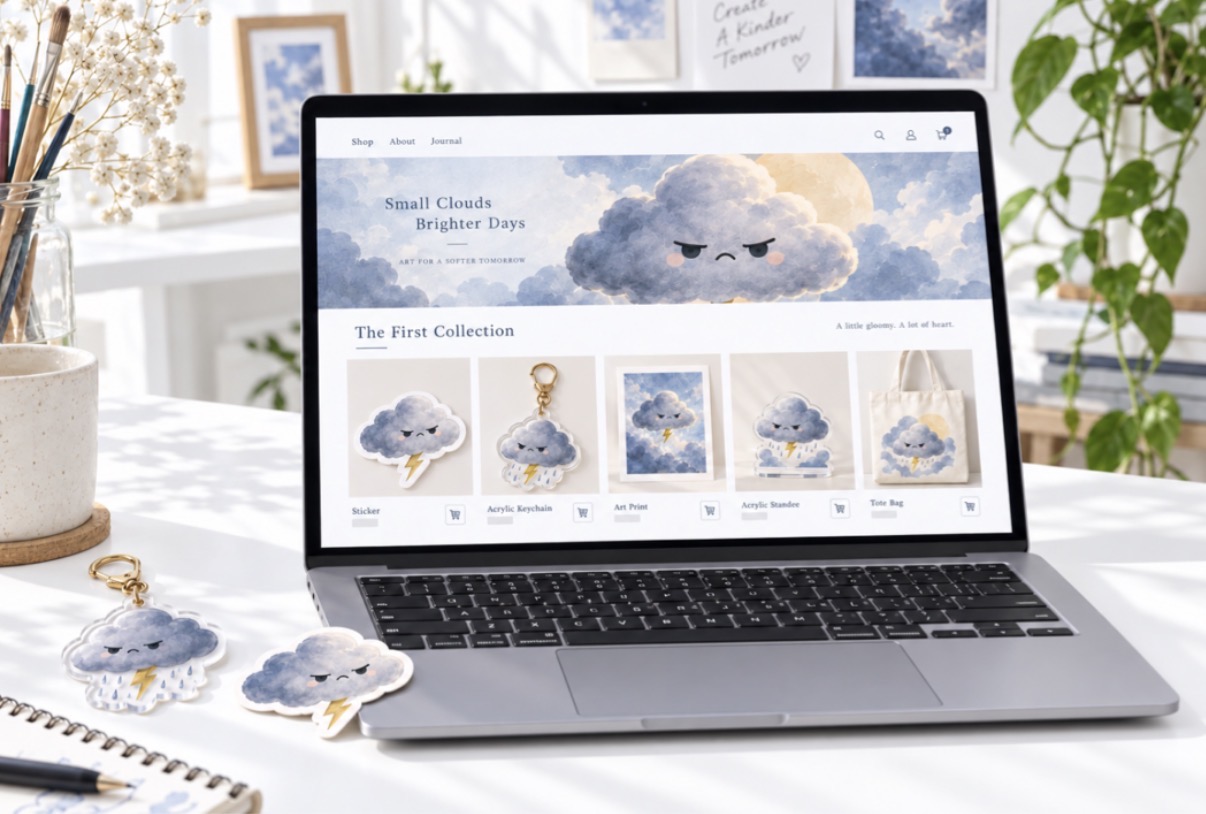
Cohesion does not mean placing the exact same image on every product. Repeat a few visual cues so the pieces look as though they arrived together.
Use a shared palette, consistent line treatment, or recurring detail. The cloud collection might carry soft gray, storm blue, and pale yellow across every piece, with a lightning-bolt motif on the backing card and print border.
Place the finished mockups beside one another before launch. If one product looks like it wandered in from another collection, adjust the artwork, color, or presentation rather than adding more items to distract from it.
Keep the First Launch Manageable
Every additional product creates another file, listing, sample, and set of customer questions. Too much choice can also make the collection harder to understand.
Set a limit based on the time and money you can realistically give the launch. Three product types with one design each may be more effective than ten hurried options. If you offer variations, make each one meaningful—a different character or expression, for instance, rather than several nearly identical colors.
Order samples when possible and check the size, crop, color, finish, and construction. Before setting prices, calculate production, packaging, platform charges, and any shipping costs you plan to absorb.
Once the collection is live, track results by product and design. Sales of the cloud keychain do not automatically prove demand for a matching tote. Let what customers actually choose guide the next addition.
Final Thoughts
Your first merch collection should introduce your art, not attempt to contain everything you may ever create. Start with one recognizable idea, give each product a distinct role, and make the pieces feel connected.
A small collection built with care gives customers an easier choice and gives you useful information for what comes next. Leave room to grow; the best first launch is not the one with the most products, but the one that makes people excited to see the second.
That focused beginning gives every new product somewhere meaningful to take your collection next!