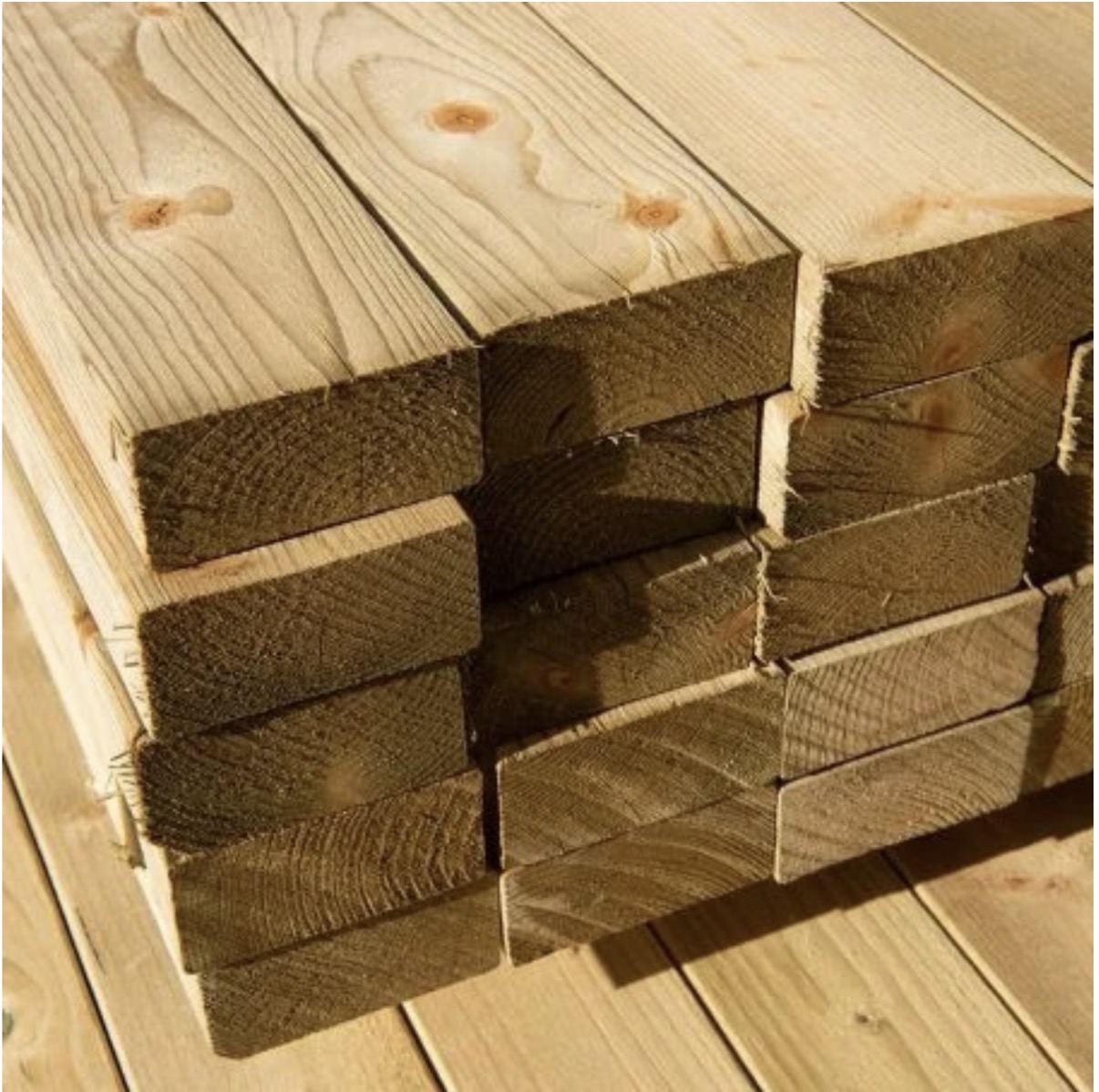
Choosing timber for an outdoor job is not just about length or section size. A fence post, roof batten and piece of carcassingmay all be pressure treated, but each one has a different role on site.
For builders and DIY, the right choice comes down to application, exposure and load. That is where MGN Builders Merchants can support the selection process, helping customers think beyond size alone and choose treated timber based on how it will be used – from exposed fencing and roof work to garden structures and other external projects.
Why Treated Timber Matters in UK Outdoor Conditions
Timber used outside in the UK has to deal with regular wetting, damp ground, frost and periods where it cannot dry out properly. Even when it is not installed directly in soil, it may still sit close to paving, vegetation, roof edges or other areas where moisture collects.
Pressure treatment helps improve resistance to decay and insect attack, but “treated timber” is not a complete specification on its own. The right choice depends on where the timber will be used, how much moisture it will face and whether it is doing a structural job.
Before ordering, check:
For DIY users, these checks help avoid under-specified timber. For builders, they help reduce premature failure, rework and callbacks.
Treated Timber for Fencing: Posts, Rails and Boards
Fencing is one of the most common uses for treated timber, but not every part of a fence works in the same way. Posts carry the main load, hold the fence line in place and often sit in or close to the ground. They need to handle moisture, wind movement and the weight of the fencing system.
For lighter garden fencing, 75mm x 75mm treated posts may be suitable. For standard fence runs, 100mm x 100mm posts are often a stronger all-round option. Taller, heavier or more exposed fencing may need larger sections such as 150mm x 150mm for extra stability.
Rails and boards have a different role. Arris rails support feather edge fencing, while feather edge boards form the visible face of the fence. These parts are usually above ground, but they still face rain, frost and repeated drying cycles.
For a better fencing job:
A durable fence is not only about the boards. Posts, rails, fixings and installation details all affect how long the finished work will last.
Treated Timber for Roofing: Battens, Firringsand Structural Support
Roofing is more specification-led than general garden work. Timber used here needs to be correctly sized, consistent and suitable for the role it is performing.
Roofing battens are used in pitched roof construction and should be chosen with care. They need to suit the roof covering, spacing, fixing method and site requirements. For professional roofing work, graded and marked battens help support good workmanship and compliance.
Timber firrings are used on flat roof projects to create a fall, helping water drain away from the roof surface. It is a simple detail, but it can have a real effect on long-term performance.
For framing, supports and general structural work, treated carcassing timber is often specified. C16 and C24 are common UK strength grades, with C24 typically used where a stronger grade is required. The correct choice should always match the design, span and load.
Common roofing and structural uses include:
For builders, the point is simple: the timber must not only betreated. It must also be the right size, grade and specification for the job.