

Something fundamental has changed in the way European drivers think about car repairs. For most of the past three decades, the default assumption was straightforward: when a part needed replacing, you replaced it with a new one. The new part came from the dealer or a parts supplier, it cost whatever it cost, and the only real variable was how much labour the garage was going to charge to fit it. Questioning whether the part itself needed to be new was not something most drivers considered, partly out of habit, partly out of a lack of awareness that there was a credible alternative, and partly because finding that alternative was genuinely difficult and time-consuming.
In 2026, all three of those barriers have largely dissolved. The habit is changing as more drivers discover the second-hand market and share their experiences. The awareness is growing as digital platforms make the availability and quality of used parts impossible to ignore. And the difficulty of finding the right used part has been reduced to a few minutes of searching on a well-designed online marketplace. The result is a growing consensus among informed drivers, independent mechanics and automotive analysts that used parts are not just an acceptable alternative to new ones in certain circumstances. They are frequently the smarter choice, full stop.
The Cost Argument Has Never Been Stronger
The financial case for used parts begins with a simple observation: new spare parts have never been more expensive, and the gap between new and used prices has never been wider or more consequential for household budgets.
The cost of new automotive components has risen substantially over the past decade, driven by a combination of factors including increasing vehicle complexity, the growing use of advanced materials and electronics, global supply chain disruptions and the rising cost of raw materials. A headlight assembly for a mid-range European car that might have cost 150 euros new a decade ago can now cost 400 euros or more, particularly if it incorporates LED or matrix technology. A gearbox replacement through a franchised dealer for a popular family car can easily exceed 2,500 euros including parts and labour. An electronic control unit for a premium German vehicle can cost more than the car is worth on the open market.
Against this backdrop, the price of quality reclaimed parts through established online marketplaces has remained remarkably accessible. The same headlight assembly available new for 400 euros can typically be found in good used condition for 60 to 120 euros. The gearbox can be sourced second-hand for 200 to 500 euros. The electronic control unit, sourced from a low-mileage donor vehicle of the same specification, might cost 80 to 150 euros. These are not marginal savings. They are transformative differences that change the economics of vehicle maintenance entirely for a large proportion of European drivers.
According to the French National Institute of Statistics and Economic Studies (INSEE), French households are spending an increasing proportion of their disposable income on vehicle maintenance and repair, with costs rising faster than general inflation for several consecutive years. In this context, the ability to reduce parts costs by 50 to 80% on a consistent basis represents one of the most significant financial levers available to car owners, and it is a lever that more and more drivers are learning to pull.
The Quality Argument Is More Compelling Than Most People Realise
The assumption that new automatically means better quality is one of the most persistent and least examined beliefs in the consumer automotive market. It feels intuitive, but it does not survive close scrutiny, particularly when applied to the full spectrum of what the new parts market actually contains.
The new parts market is not a uniformly high-quality environment. It ranges from genuine OEM components manufactured to the original vehicle maker’s exacting specifications, through a wide spectrum of aftermarket alternatives produced by third parties to varying degrees of accuracy, down to budget imports of uncertain provenance and quality that are sold at attractive prices but may fail prematurely or cause secondary damage to connected systems.
A quality reclaimed part, by contrast, is a genuine OEM component. It was manufactured to the original specification, fitted to a real vehicle during production and has demonstrated its reliability in actual operating conditions. A reclaimed alternator from a three-year-old vehicle with 40,000 kilometres is not a compromise. It is a genuine original equipment component with the majority of its service life ahead of it, available at a fraction of the cost of a new equivalent.
The key variable is not new versus used, but the quality and provenance of the specific component in question. A reclaimed OEM part from a verified low-mileage donor vehicle is a fundamentally superior proposition to a budget new aftermarket part of uncertain specification, and on reputable platforms the information needed to make this assessment is readily available. As the European Association of Automotive Suppliers (CLEPA) has consistently noted, components manufactured to OEM specification deliver systematically better long-term performance than budget aftermarket alternatives, making well-sourced reclaimed OEM parts an excellent choice on both quality and cost grounds simultaneously.
The Environmental Argument Is Now Mainstream
A few years ago, the environmental benefits of buying used car parts were an interesting secondary consideration that appealed to a relatively small segment of environmentally motivated buyers. In 2026, sustainability has moved to the centre of mainstream consumer decision-making, and the environmental case for reclaimed parts has become a genuine and widely understood part of the argument in their favour.
Manufacturing a new automotive component requires raw materials, energy, industrial processing and transportation at every stage of the supply chain, from the extraction of primary materials through to the final delivery of the finished part to the point of sale. Each of these stages generates carbon emissions, consumes resources and produces waste. When a reclaimed part is reused in a running vehicle instead, all of these environmental costs are avoided for that component, and the materials embedded in it remain in productive use rather than entering the waste stream.
At the scale of millions of transactions per year across the European reclaimed parts market, the cumulative environmental benefit is considerable and growing. According to the Ellen MacArthur Foundation, circular economy approaches applied to the automotive sector, including the systematic reuse of components, could reduce the industry’s material consumption by up to 80% compared to a linear production and disposal model. The reclaimed parts market is one of the most mature and scalable circular economy mechanisms currently operating in the European economy, and choosing to engage with it is one of the most directly impactful environmental decisions an individual consumer can make.
For drivers who are conscious of their environmental footprint and looking for practical ways to reduce it without significant lifestyle disruption or additional cost, choosing reclaimed auto parts Europe over new components is a rare case where the most sustainable choice is simultaneously the most economical one. This alignment of financial and environmental incentives is powerful, and it is a significant part of why the conversation around used parts has shifted so decisively in 2026.
The Availability Argument Favours Used Parts for Older Vehicles
For owners of older or discontinued vehicle models, the new parts market presents a challenge that the used market is uniquely well placed to address. As vehicles age, the availability of new OEM parts through official channels declines, often sharply, as manufacturers reduce production runs for components with limited ongoing demand and eventually discontinue them entirely. The vacuum left by this withdrawal is only partially filled by aftermarket alternatives, which may not be available for all applications and may not match OEM specifications for those that are covered.
The reclaimed parts market fills this gap comprehensively. Every vehicle in operation generates a supply of reclaimed components when it eventually reaches the end of its life, and the reclaimed parts available for a given model tend to remain accessible for considerably longer than new OEM alternatives. For owners of vehicles that are ten, fifteen or twenty years old, the second-hand market is frequently the only realistic source for certain components, making it not just a smarter choice but the only viable one.
This availability advantage is particularly significant for owners of classic, enthusiast and low-volume vehicles, where the new parts market has always been limited and where reclaimed OEM components are often the only way to achieve a specification-correct repair. The growing accessibility of these parts through digital platforms has been genuinely transformative for this community of owners, opening up a European-wide supply of components that was previously accessible only to those with deep specialist contacts or exceptional patience.
The Confidence Argument Has Been Resolved by Platform Development
One of the most significant historical barriers to wider adoption of reclaimed parts was a lack of buyer confidence, rooted in legitimate concerns about the reliability of used components, the accuracy of seller descriptions and the recourse available if something went wrong. These concerns were not unreasonable in an era when the reclaimed parts market was fragmented, largely offline and subject to minimal quality standards or buyer protections.
The development of established digital platforms with robust buyer protection mechanisms, verified seller rating systems, detailed condition reporting standards and clear return policies has largely resolved these concerns for buyers who choose their platform carefully. The transparency now available on leading platforms, where buyer reviews, donor vehicle details, condition photographs and OEM references are standard features of a well-presented listing, gives buyers the information they need to make genuinely informed purchasing decisions rather than leaps of faith.
Return policies that mirror the protections available in mainstream e-commerce, typically offering a full refund within 14 days of receipt for parts that are incompatible or not as described, provide an additional layer of assurance that removes much of the residual risk associated with buying used components online. According to the European Consumer Centre Network, the availability of clear and enforceable return rights is the single most important factor in consumer confidence for online purchases of significant value, and the leading platforms in the reclaimed parts market have invested accordingly in making these protections visible, accessible and consistently honoured.
The Mechanic Endorsement Effect
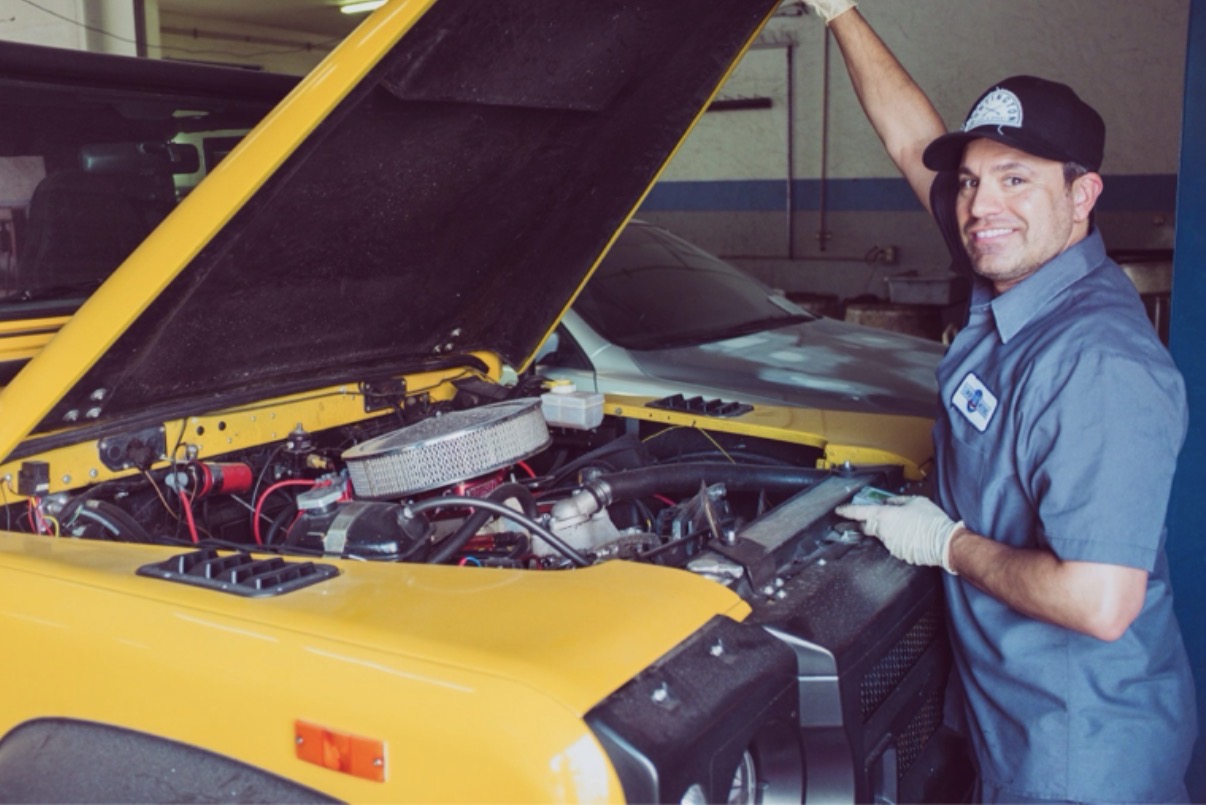
Perhaps the most persuasive argument for the growing mainstream acceptance of used parts in 2026 is the endorsement effect generated by independent mechanics and trade buyers, who have been among the earliest and most enthusiastic adopters of the reclaimed parts market.
Professional mechanics who carry out dozens of repairs every month understand better than any consumer the full range of options available for any given repair, and they make their sourcing decisions based on practical experience of what delivers reliable outcomes at fair cost. The growing prevalence of reclaimed parts in the working practices of independent garages across Europe is a powerful signal that these components deliver on their promise in real-world repair conditions.
When a trusted mechanic recommends a reclaimed part, or proactively uses one without being asked because it represents the best value option for the customer, it carries a credibility that no marketing message can replicate. This professional endorsement has been one of the most effective drivers of mainstream consumer awareness and acceptance, spreading knowledge of the reclaimed parts market through the most trusted channel available to most car owners.
Making the Smarter Choice in 2026
The convergence of financial pressure, environmental awareness, improved platform technology and growing professional endorsement has created a moment in 2026 where the case for used parts over new has never been stronger or more widely understood. The arguments are compelling across every dimension that matters to a car owner, cost, quality, availability, environmental impact and buyer confidence, and the practical barriers that once limited access to this market have been comprehensively addressed by the digital platforms that now serve it.
For any driver facing a repair decision in 2026, the smarter approach is clear: before automatically accepting the cost of a new part, take a few minutes to explore what the reclaimed market has to offer. The savings are real, the quality is genuine, the process is straightforward and the environmental benefit is a meaningful bonus. In an era where making informed and resourceful choices about household expenditure has never been more important, used parts deserve to be the first option considered, not the last.