
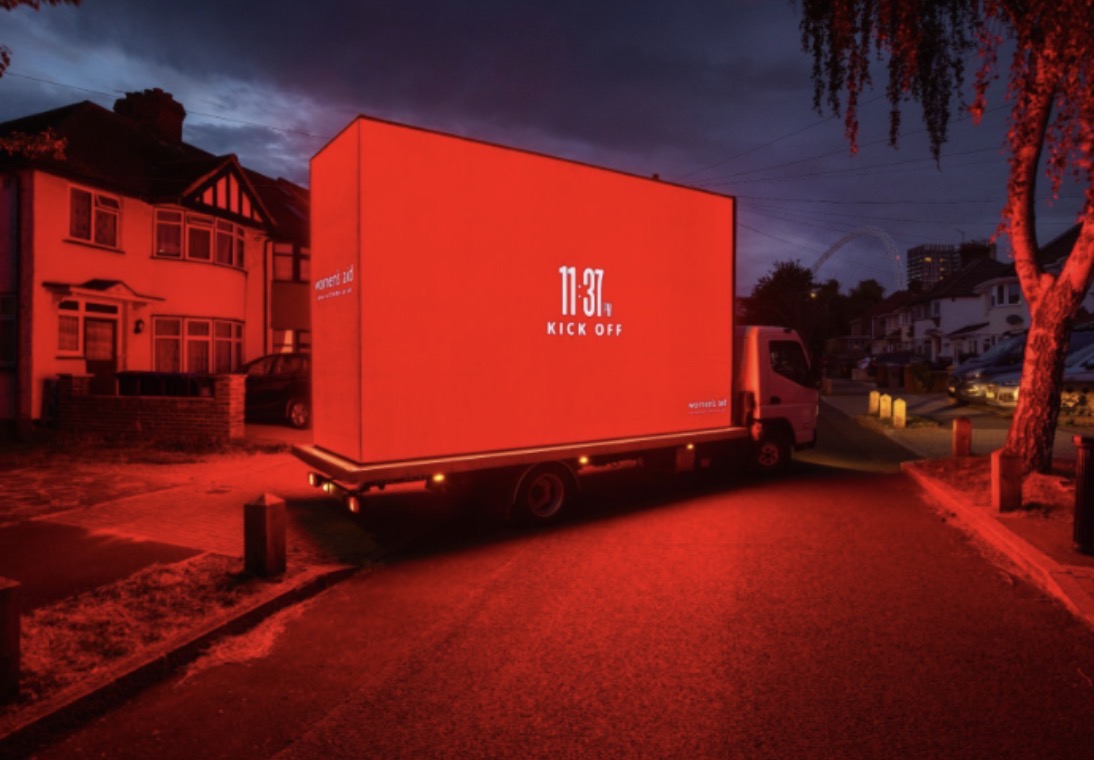
Today, as England prepares for their opening World Cup match, the national domestic abuse charity Women’s Aid has launched a new campaign titled ‘The Other Kick Off’, representing the estimated time that domestic abuse is predicted to rise after the first England game.
While the official start time for England’s opening match is at 9 pm, Women’s Aid has revealed that a more sinister ‘kick-off time’ that starts much later – 11:37 pm*. The time of 11.37 pm represents a moment many women and children fear most – when abusive partners return home after watching the match.
Women’s Aid has hijacked one of the World Cup’s biggest questions: ‘What time is kick-off?’ Instead of focusing on the start of the match, the campaign highlights the time domestic abuse is predicted to rise after the final whistle:11:37 pm. Raising awareness is especially poignant this year, as the late-night match times can create an even more isolating, frightening environment for survivors.
To raise awareness for the thousands of women who could be at risk, Women’s Aid has unveiled ‘the other kick-off time’ across digital billboards, mobile vans, and fly posters stationed near major fan zones and football hotspots in London. Designed to stop people in their tracks and direct women to where they can find help, the campaign is a sobering reminder of the realities of domestic abuse, following in the footsteps of Women’s Aid’s 2022 ‘He’s Coming Home’ campaign.
Each ‘Kick Off’ poster features a QR code directing the public to Women’s Aid’s website, where people can access support, donate, learn about the signs of domestic abuse, and find ways to take action.
This campaign follows longstanding research1 that shows domestic abuse incidents rise around major football tournaments, increasing by 38% when England lose, and rising by 26% when they win. While football itself does not directly cause domestic abuse, heightened emotions and alcohol consumption can exacerbate abuse where it already exists. It’s another World Cup, but the same problem, and the consensus is clear: no matter the match outcome, domestic abuse cannot be tolerated.
Farah Nazeer, Chief Executive of Women’s Aid, says: “The World Cup is a wonderful opportunity for us to come together and cheer on our team. However, for women and children living with domestic abuse ‘kick-off’ has a different meaning. For those living with abuse, the final whistle of the game signals the beginning of something frightening and potentially life-threatening. While we know that domestic abuse isn’t caused by football, we also know that heightened emotions and alcohol consumption can lead to a rise in domestic abuse frequency and severity. Whether England wins, loses, or draws, no woman or child should live in fear of that final whistle blow. We hope that our campaign helps raise awareness of this heinous crime, while also signposting people to support, not only for themselves, but for loved ones they’re concerned about.”
Women’s Aid Ambassador Charlie Webster added: “The World Cup is one of those rare moments when the whole country holds its breath together – united, hopeful, alive! That joy is real, and it’s precious. But for women and children living with domestic abuse, tournament time brings something very different: heightened fear and heightened danger. That is a reality we cannot look away from. Football is our game. It belongs to all of us, and it should be a place of safety. I am proud to be raising awareness to change that, and make sure that when England plays, every woman at home is safe.”
The campaign’s 11:37 pm kick-off time was calculated based on the average duration of a football match, including half-time and additional time, post-match drinking, and journey home time. The sum marks the estimated point that many women and children dread after the football ends.
The alternative ‘kick-off’ time has been displayed across billboard placements donated by leading out-of-home media partners, including The Outernet and Ocean Outdoor. For more information, support, or to donate, visit https://womensaid.org.uk/, because no woman or child should fear what happens after the match ends.