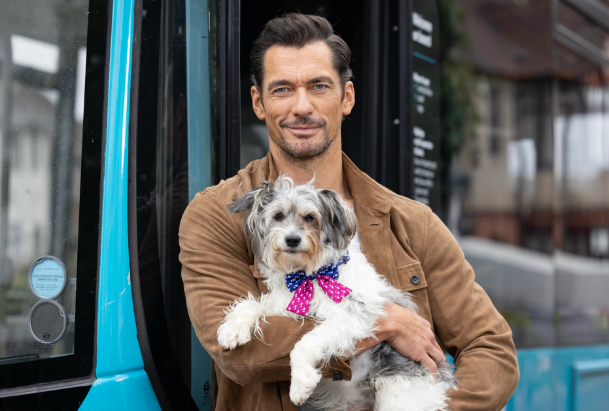
David Gandy, model and founder of David Gandy Wellwear, has helped create a bow tie for older dogs to wear as a sign they need more space, time and patience in public spaces with pet insurance brand Petgevity.
image.png
David with his mixed terrier rescue dog, Dora, 9
Like a ‘baby on board’ badge, the bow tie calls for extra consideration in busy spaces like public transport – where over a third (36%) of owners avoid taking their senior dog amid concern it will be ‘too difficult or stressful’ for their pet. Reasons for this were ‘too crowded’ (56%), ‘too loud’ (34%) and there’s nowhere for their pet to sit comfortably (25%) all found in the new Petgevity survey.
More than half of London’s senior dog owners (53%) have avoided public transport with their dog over fears it would be too stressful, and almost two in five (39%) worry other people think their dog is badly behaved when it’s simply showing signs of ageing – both the highest of any UK region.
Over time, ‘walkies’ get shorter and harder – with 19% saying a ‘slower walking pace’ was the first sign of age. And so, their world shrinks.
Compounding the issue is the fact that around 1 in 5 (18%) feel judged while out with their senior pet. Nearly a quarter (22%) even worry that people think their dog is badly behaved, when they’re simply showing signs of ageing.
David, who adopted his mixed terrier dog Dora, aged 9, as a puppy in 2017, commented:
“Dora acts like a young dog but it’s on my mind what support she may need as the years go on. I know there’ll be owners of senior dogs across the UK who are thinking the same.
“As dogs get older, they can suffer from worsening eyesight or hearing and need a little more time, support and space.
“By having the bow ties out and about, I hope it will encourage people to be just as understanding of age-related health changes in dogs as they are with humans.”
image.png
David with Dora, 9
Vet Dr Emma Chandley, working with Petgevity, delves further into three health conditions experienced in later years that easily go undetected but leave dogs vulnerable in public:
“Vision loss can be hard to spot because dogs compensate with hearing and smell. It can make it difficult for dogs to judge step height and distances, so they tend to hesitate and be generally more cautious. Short-sighted dogs need space and it’s best to avoid approaching or touching them unexpectedly.”
“Arthritis is extremely common in senior dogs. Canine Arthritis Management (CAM) estimates it affects around 35% of dogs overall, rising to approximately 80% of dogs over 8 years of age. Getting up, balancing as a bus or train moves, for example, and negotiating steps can all be difficult, so please allow a dog more time no matter how much of a rush you’re in.”
“Canine dementia can begin from around 6 to 8 years. Public transport exposes dogs to all different sounds, smells and movement. Dogs may struggle to process these changes and become restless – don’t dismiss this as being fussy or annoying. Avoid speaking loudly on the phone as this can distress them.”