
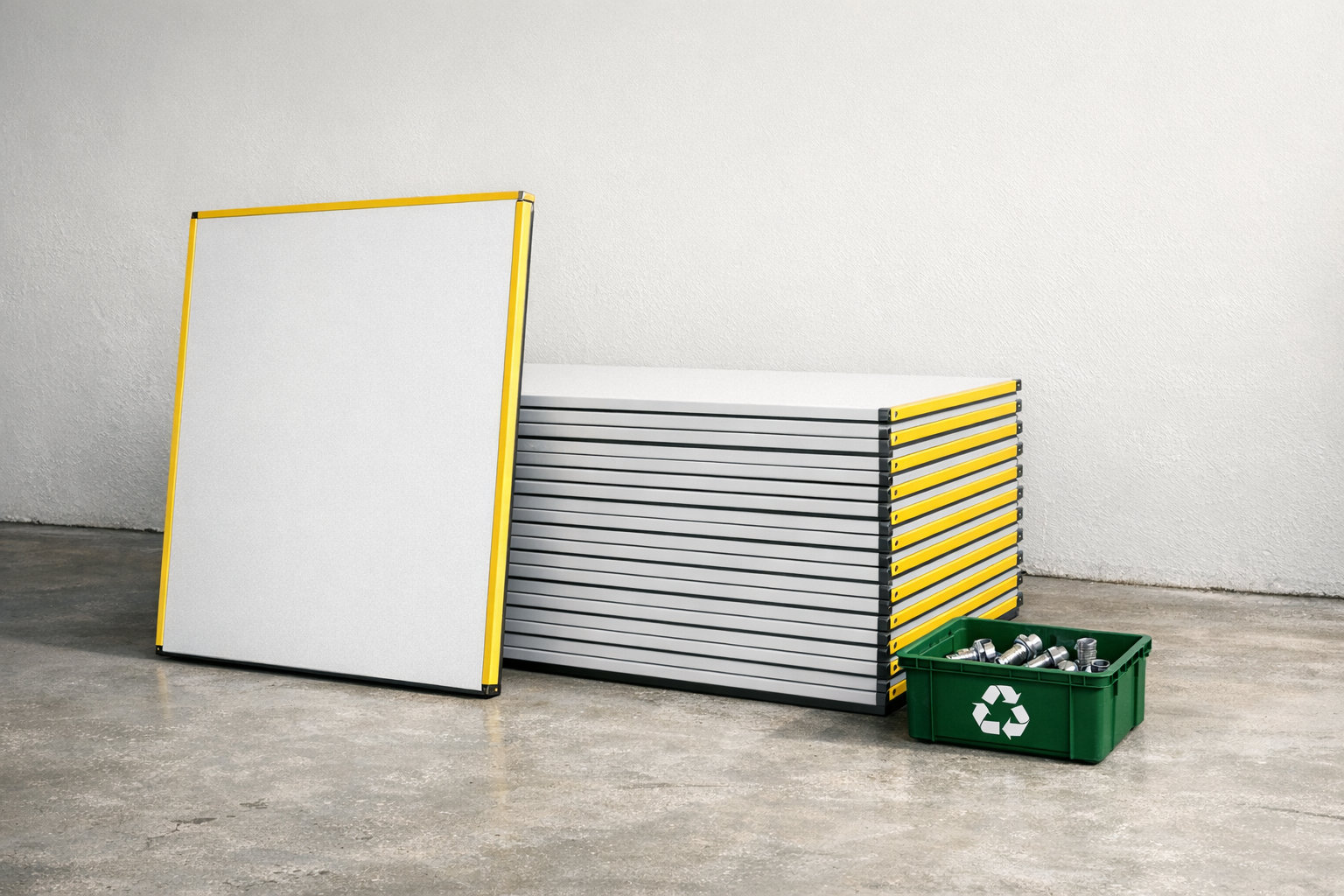
Reducing waste from temporary site structures is essential for sustainable construction practices. Disposing of materials like panels, packaging, and fixings may have environmental and financial impacts if not managed responsibly. Practical strategies at every stage of a project can help limit landfill use and support the reusability of site assets.
On construction projects, waste from structures such as internal hoardingand other site setups can accumulate quickly without careful planning. Temporary systems frequently cause discarded materials that could be reused or recycled if managed more effectively. Understanding why temporary installations often create significant waste can guide teams towards practical solutions. This article outlines achievable steps for integrating waste minimisation throughout the life cycle of temporary site structures.
Temporary structures and the roots of construction waste
Temporary site structures are typically designed for speed and adaptability instead of durability. Fast project timelines, frequent changes, and divided responsibilities between subcontractors can all contribute to increased waste.
Common waste streams include composite panels, timber sheeting, protective coverings, packaging, and metal fixings. Many of these materials are single-use or become contaminated with debris, making recycling or reuse challenging by the end of a project. Once components are damaged or mixed, they are less likely to be diverted from landfill.
The short-term nature of these installations often leads to a disconnect between initial setup costs and end-of-life planning. When temporary structures are viewed solely as functional necessities rather than assets with residual value, waste management becomes an afterthought. Additionally, the pressure to meet tight deadlines can result in hasty procurement decisions that prioritise immediate availability over environmental considerations. Weather exposure, site traffic, and lack of protective measures further accelerate material degradation, reducing the likelihood that components will remain suitable for future use. Understanding these underlying causes helps project teams address waste generation at its source rather than simply managing disposal.
Early design choices supporting reuse and recovery
Designing temporary structures for flexibility can help reduce waste volumes. Standardising component dimensions enables easier redeployment across different sites, as parts can be matched and replaced more efficiently.
Selecting robust materials and durable finishes means panels and supports are better able to withstand multiple installations and removals with less deterioration. Planning for disassembly allows teams to recover entire elements rather than dismantling with destructive methods, which helps extend the life of reusable site assets.
Procurement and supplier strategies reducing single-use output
Procurement decisions have a significant influence on waste outcomes. When choosing between hire and purchase options, considering whole-life performance may support sustainability as hired systems are often reused following removal.
Working with suppliers who offer take-back schemes for panels or packaging, and specifying recycled or recyclable content in temporary works, encourages better circulation of materials. Minimising expendable packaging and requiring clear end-of-life processing can contribute to closing the loop on site waste streams.
Managing site activities to prevent damage and minimise disposal
Careful storage, handling, and project sequencing can help lower waste rates from temporary site structures. Protecting materials from weather and traffic, and keeping them organised, prevents unnecessary breakage and loss of reusable items.
Labelling and systematic inventory control make it easier for teams to track which items can be reused and keep valuable components in circulation. Introducing clear repair procedures and material segregation on site may also reduce contamination and maximise recycling opportunities for each waste stream.
Tracking, reporting, and building sustainability into project closure
Setting specific key performance indicators for temporary works waste can make progress on waste reduction more transparent. Monitoring reuse and diversion rates during the project allows teams to measure achievements and supports reliable sustainability reporting.
Keeping thorough records and documenting the condition and outcome of temporary structure components enables reuse planning for future projects, including boundary elements like temporary fencing. At the end of each job, effective practices support recovery of intact components, lower levels of mixed waste, and provide reliable documentation for ongoing improvement in sustainable site management.