
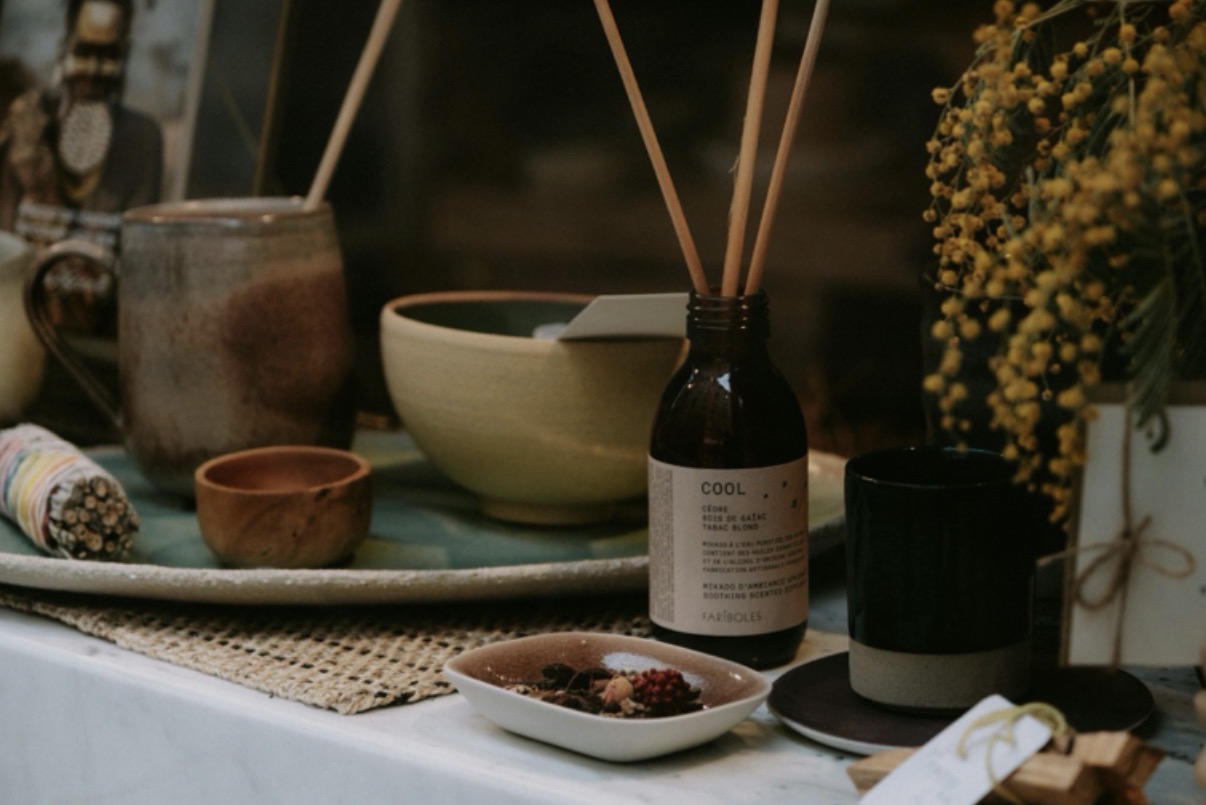
Walk into any well-stocked lifestyle or wellness retailer and the room aroma category has quietly expanded into one of the most diverse product spaces on the market. From essential oil diffusers and scented candles to liquid aroma compounds sold in small glass bottles, the ways people choose to alter the sensory atmosphere of their environment have multiplied considerably over the past two decades.
Yet for all that variety, many consumers still have only a passing understanding of what room aromas actually are, how they work, and why people use them. The category is broader, more scientifically interesting, and more culturally layered than its understated name suggests.
The story of room aromas is, at its core, a story about the relationship between scent, physiology, and human behaviour – and why altering the atmosphere of a space has appealed to people across cultures and centuries.
What Room Aromas Actually Are
The term “room aroma” covers a wide spectrum of products, united by the general principle that they are designed to affect the sensory environment of a space through scent or inhalable compounds. At the more familiar end of the spectrum sit essential oils, reed diffusers, and aerosol sprays. At the more chemically specific end sit liquid compounds – such as alkyl nitrites – that produce fast-acting physiological effects when their vapour is present in the air.
Alkyl nitrites are among the more scientifically well-documented compounds in the room aroma category. First synthesised in the mid-nineteenth century and originally used in medical settings to treat angina, they were found to produce rapid vasodilation – the widening of blood vessels – along with a short-lived sensation of warmth, physical ease, and mild euphoria. Their transition from clinical use to recreational and lifestyle contexts happened gradually over the following century, and today they are legally sold across the UK and much of Europe as room aromas and leather cleaning products.
The legal framework surrounding alkyl nitrite-based room aromas in the UK is relatively straightforward. As the Home Office has clarified, alkyl nitrites do not fall under the Misuse of Drugs Act 1971, and their exemption from the Psychoactive Substances Act 2016 was confirmed on the basis that they do not directly act on the central nervous system in the way that controlled substances do. They are legal to possess and purchase, and are sold by reputable retailers as room aromas in compliance with general consumer product safety regulations.
The Science Behind the Sensation
Understanding why room aromas work – whether at the gentle end of the spectrum or the more immediately physiological end – requires a brief detour into how the human body processes scent and airborne compounds.
The olfactory system is unique among the senses in its directness. Where most sensory information is routed through the thalamus before reaching the brain’s processing centres, scent signals travel directly to the limbic system – the region governing emotion, memory, and arousal. This is why certain smells can trigger an emotional response almost instantly, bypassing the kind of conscious processing that other stimuli require.
For essential oil-based aromas, this pathway is central to their effect. Lavender’s well-documented calming properties, for instance, are believed to operate partly through olfactory stimulation of brain regions associated with anxiety regulation. Citrus compounds have been studied for their potential to elevate mood and increase alertness. The effects are subtle and accumulative rather than immediate and dramatic, but the underlying biology is well established.
Alkyl nitrite compounds operate through a more direct physiological mechanism. Rather than primarily influencing mood through the olfactory-limbic pathway, they act on smooth muscle tissue throughout the body, causing rapid relaxation of blood vessel walls and a corresponding drop in blood pressure. The sensation this produces – a brief, warm, light-headed rush – typically peaks within seconds and subsides within a minute or two. It is a well-understood pharmacological effect, and one that has sustained demand for these products across several decades.
Retailers operating in this space have built substantial businesses around that sustained demand. Prowler Poppers, one of the UK’s longest-established room aroma retailers, has been supplying alkyl nitrite-based products to British consumers since 1997, offering a range that spans different nitrite formulations – amyl, pentyl, and isopropyl variants – each with subtly different characteristics in terms of intensity and duration.
Why People Use Them

The reasons people incorporate room aromas into their lives are as varied as the products themselves, and resist easy generalisation. What the research and consumer behaviour consistently show, however, is that the motivations tend to cluster around a few core themes.
Sensory enhancement is perhaps the most straightforward. Humans are highly responsive to their olfactory environment, and the desire to make a space smell pleasant, calming, or invigorating is one of the oldest impulses in domestic life. Incense has been burned in homes and places of worship for thousands of years. The modern reed diffuser is simply the latest iteration of a very ancient practice.
Stress relief and relaxation account for a significant share of room aroma use, particularly in the essential oil and aromatherapy segment. The NHS acknowledges that while aromatherapy is not a clinical treatment, many people report genuine benefit from incorporating scent-based products into wind-down routines, sleep preparation, and stress management practices. The ritual element – deliberately creating a sensory environment associated with calm – appears to amplify the physiological effect.
For alkyl nitrite room aromas, the motivations are more specifically physical. The rapid vasodilatory effect makes them popular in contexts where users want a brief, intense sensation of physical relaxation – before or during exercise, in social settings, or as part of intimate experiences. Their fast onset and short duration make them functionally distinct from slower-acting wellness products, and their appeal lies precisely in that immediacy.
Quality, Safety, and Choosing a Retailer
As with any product category that interacts with human physiology, quality matters considerably in the room aroma space. The difference between a well-formulated, properly stored product from a reputable supplier and a poorly made imitation is not merely a question of experience – it can have real implications for safety and consistency.
Reputable room aroma retailers are transparent about what their products contain, how they should be used, and what precautions apply. They source from established manufacturers, maintain appropriate storage conditions, and comply with relevant consumer safety regulations. These are not exceptional standards – they are the baseline that any responsible retailer in this category should meet.
For consumers, the practical guidance is familiar: buy from established, specialist retailers with a verifiable track record, read product information carefully, and treat any retailer that is vague about formulation or sourcing with appropriate caution.
The room aroma market, taken as a whole, is a mature and legitimate product category with deep roots in both wellness culture and lifestyle retail. Understanding what these products are, how they work, and why people use them is the first step toward navigating it with confidence – and finding the products that genuinely deliver what they promise.