
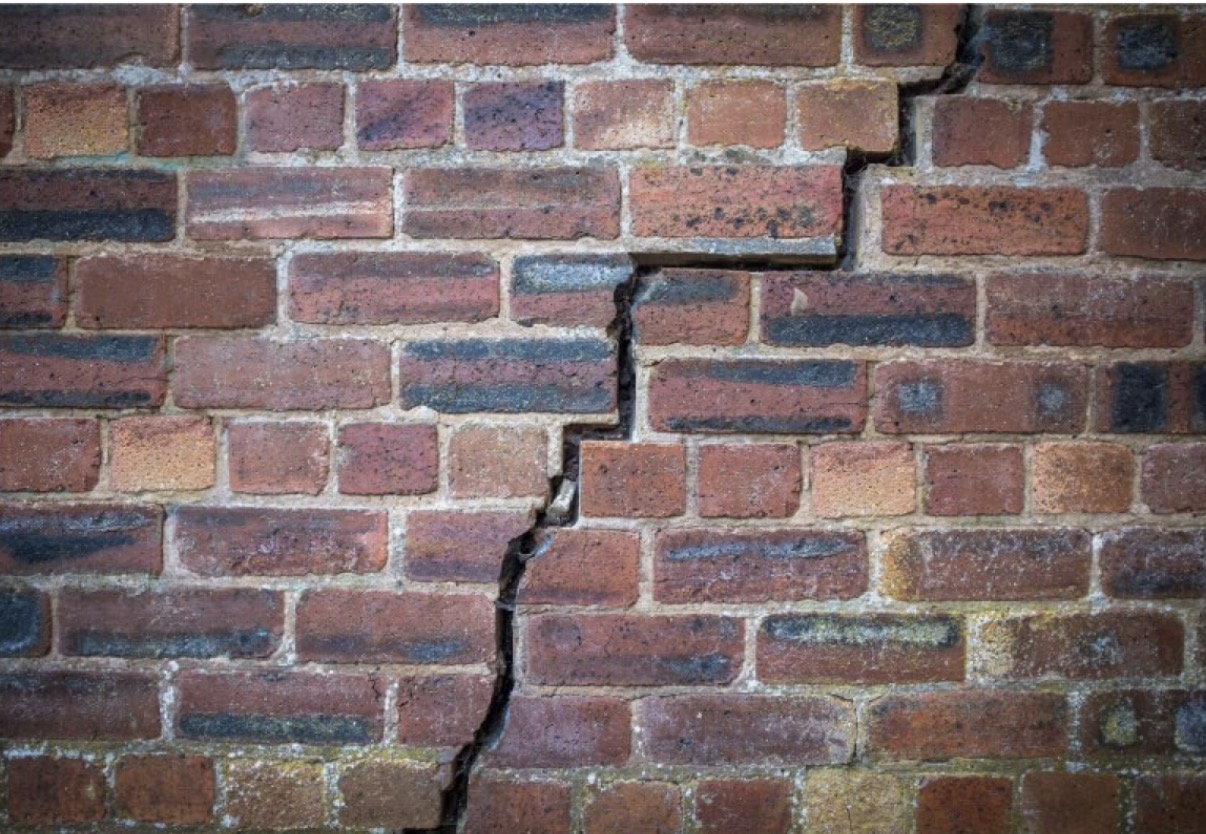
Imagine a house of cards. Then imagine pulling a card out from the bottom. Very quickly, the whole thing becomes unstable and, without prompt action, is likely to fall – just like a house with subsidence. It often starts with small, easy-to-miss signs like a crack in the wall or a door that sticks, which, if ignored for too long, can cause serious structural damage that can be expensive to fix.
Recognising the signs of subsidence is key to property maintenance, and this guide will help you know what to look out for and the best course of action.
What is subsidence?
Subsidence is when the soil beneath a building physically moves downwards, triggering structural damage to the property. Whilst every new build usually has some minor settlement and hairline cracks before stabilising, subsidence is where the movement is ongoing and eventually leads to long-term issues, such as cracks in walls, uneven floors and misaligned doors and windows that won’t open and shut properly.
The difference between subsidence and settlement
Most properties will experience normal settlement, such as hairline cracks, which are regarded as minor and eventually stop or reduce once the building settles into its foundations. Subsidence is different because, instead of settling to find a stable position, the soil beneath the building is physically moving downwards, creating wider, more serious cracks that continue to worsen over time.
Common causes of subsidence
So, what causes subsidence? Here are the most common causes:
- Soil type: Unstable soils such as clay, sand and peat are susceptible to shrinking and swelling during dry and wet spells, meaning foundations are prone to movement.
- Drainage: A constant flow of water from leaking drains and underground pipes can wash supporting soil away or make it unstable, leading to erosion and subsidence.
- Tree roots: It’s quite surprising how far large tree roots can reach, absorbing all the moisture out of the ground and causing soil to shrink. This is why it’s always a good idea to plant trees and large shrubs away from a building.
Signs of subsidence
Early detection is important to minimise potential damage, so here are some common warning signs to look out for:
Internal:
- Cracks: It’s usually the cracks that run in a diagonal direction that are most suspicious and typically appear around doors and windows.
- Distorted door and window frames: If doors and windows become tricky to open and close, it might be a bigger problem than the hinges requiring oiling.
- Sloping floors: If floors drop and furniture starts to rock, there’s a chance that subsidence is the cause of floors starting to slope and become uneven.
- Rippling wallpaper: Wrinkled wallpaper is a good indicator of subsidence as it causes a rippled effect across the wallpaper.
External:
- Cracks: Just like inside, cracks in brickwork or render that extend downwards towards the foundations are a strong sign of subsidence.
- Separation of extensions: If a property has been extended and a gap appears between the original and new structures, subsidence is a strong possibility.
- Leaning: This can affect the property and its surrounding walls, fencing and paving.
Ways to prevent subsidence
Proactive property maintenance can go a long way in avoiding subsidence, with the two main ways being:
- Drainage: Keeping gutters, drains and downpipes clear and in a good state of repair helps to avoid water collecting near the foundations.
- Tree and vegetation: Planting trees and shrubs a safe distance from a property avoids them drinking all the moisture out of the surrounding soil, which could lead to subsidence caused by soil shrinkage. And if they are in the vicinity, keeping them well-pruned will also minimise root damage.
How to repair subsidence
- Record movement: Keep a note of everything so you can evidence the movement – take photos and measure cracks so you can monitor their growth, or stability, over time. Essential if you ever need a professional evaluation or need to make an insurance claim.
- Check your home insurance: Subsidence is commonly covered, but check out any exclusions that may apply; for example, you might find damage caused by tree roots is excluded, or the excess may be higher.
What to do if you need to make a claim for subsidence
- Contact your insurer: As soon as you think you may have a subsidence problem, get in touch with your insurer to find out their procedure, even if it’s not confirmed.
- Investigation: An insurer will likely want to make their own assessment and sometimes appoint a loss adjuster and/or a structural engineer to carry out an inspection of your property.
- Repairs: If subsidence is confirmed, a plan of action will be created, which may include underpinning, soil stabilisation or resin injections. If covered, the insurer will cover the cost of the repairs minus your excess.
Subsidence fixes
Many automatically assume the best way to sort subsidence is by underpinning a property, but there are alternative treatments, such as resolving drainage issues, improving soil stabilisation, repairing leaking pipes, tree root management, moisture control and resin injection. To identify the best course of action, it’s important to diagnose the root cause through a professional subsidence survey, and the sooner you do this, the better at avoiding increasing costs of repairs.
These are three main ways to stabilise the ground beneath your home:
- Underpinning: Probably the most known method for correcting subsidence, and is where the foundations are strengthened and extended so they go deeper into more stable soil.
- Resin injection: Less invasive and labour-intensive, resin is injected directly into the soil to stabilise it, better for achieving almost immediate results and preventing further subsidence.
- Soil stabilisation: For minor subsidence, it is possible to stabilise the soil by compaction grouting, which will prevent further ground movement.
Selling a house with a history of subsidence
Once a property has had a subsidence problem that has been rectified, there’s often a concern that it’ll make selling it tricky, but that doesn’t have to be the case. It’s highly likely that a survey would reveal subsidence stabilisation, so it’s best to be honest in the first instance and be transparent with structural repair details, underpinning and insurance history. This will go a long way in building trust for a smooth sale. In some cases, potential house buyers, especially cash buyers and investors, prefer to find a house with structural issues so that they can negotiate a good price and then organise the fixes themselves. This route isn’t so easy if the buyer needs to secure a mortgage and satisfy the lender of the value of the property.
Subsidence – a manageable problem
It’s clear that subsidence is a serious issue for homeowners, but not one that can’t be fixed. It is preventable by good maintenance, and if it does happen, usually fixable, especially if action is taken promptly. With the correct diagnosis and action, a property should last for many years to come. If you want to know more or would like some professional advice, get in touch with DSA, and we’ll guide you through your next steps.