
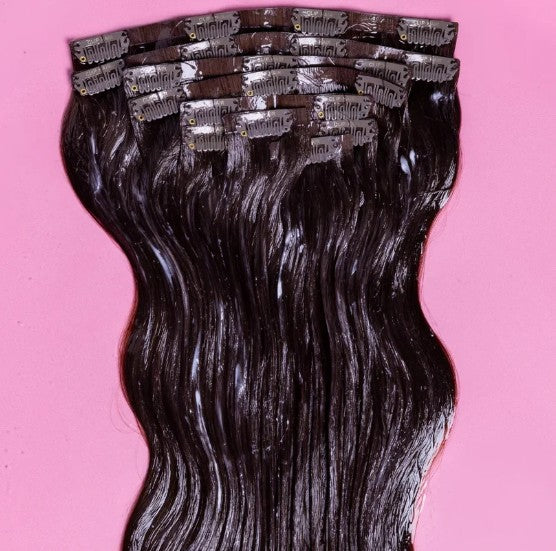
The right hair pieces can completely transform your look, boosting length, volume, and confidence. Many people who use them, though, suffer the problem of their extensions losing their softness and becoming increasingly straw-like.
Whether you wear clip-in, tape-in, nano-ring, or weave hair pieces, the issue of rough and dry hair extensions is one that you’re likely to face sooner or later. This problem can be particularly great for extension wearers in the UK, where factors like hard water and central heating can exacerbate the effects.
In light of all this, our experts have put together a guide setting out why extensions tend to dry out faster than natural hair. As well as this, our team has outlined the practical steps to restore softness and shine, and how you can prevent dryness from returning.
Why Hair Extensions Dry Out Faster Than Natural Hair
You might have wondered why your hair extensions become dry and frizzy, even at times when your natural hair does not. This is largely because, unlike natural hair, extensions are no longer attached to a living scalp.
Several factors can accelerate dryness becoming a particular problem in hair extensions:
• A lack of natural scalp oils
Natural hair benefits from oils that are produced by a given person’s sebaceous glands and travel down the hair shaft, thereby helping to nourish and protect the cuticle. Extensions don’t receive this continuous source of hydration, which makes them more dependent on external moisture.
• Hard water in the UK
Across many areas of the UK, such as London, the water is particularly hard. Such water leaves mineral deposits, such as magnesium and calcium, that coat the hair. These deposits block moisture absorption and can make strands feel rough and tangled.
• Central heating and seasonal changes
The combination of central heating and cold and dry winters zaps moisture from the air and your hair. This can further contribute to your hair extensions getting dry and frizzy.
• Heat styling damage
Unfortunately, some people in the UK frequently use straighteners, curling wands, and heated brushes on their extensions without adequate protection. As a result, damage can be caused to the hair cuticle, with moisture then escaping more easily.
• Sulphate-based shampoos
Many standard shampoos contain sulphates. While such products create a rich lather, the sulphates can also strip out essential moisture from extensions.
Signs Your Hair Extensions Need Moisture
It might not be entirely obvious, at least initially, whether your hair extensions are suffering from dryness.
So, keeping a lookout for these common warning signs can help you identify and respond to the issue quickly:
• Tangling more than usual
As hair pieces dry out, they tend to tangle more frequently, particularly through the mid-lengths and the ends. You might therefore find yourself brushing more often.
• A straw-like texture
The classic moment a lot of hair piece wearers realise there’s a dryness problem, is when they notice their hair extensions feel like straw. This is as opposed to the smooth and silky feel that the best extensions normally offer.
• Frizz that won’t smooth down
Dehydration is often to blame in cases of frizz persisting even after brushing or styling.
• The colour looking dull or faded
Well-moisturised hair reflects light effectively, which produces shine. By contrast, dry hair pieces will often seem dull, lacklustre, and faded in colour.
• A noticeable difference over time
From time to time, compare a fresh set of extensions with a set that you’ve worn for three months. If the older extensions look less shiny, feel rougher, and seem more prone to tangling, a lack of moisture is likely to have caused this.
How to Deep Condition Hair Extensions at Home
The deep conditioning of hair extensions is one of the quickest ways to restore their softness and shine if they have become dry.
Here’s how to revive your dry hair extensions at home, step by step:
Always use water at lukewarm temperature, never hot. Excessive heat can lift the cuticle and contribute to moisture loss.
Once you’ve shampooed your hair, apply a nourishing hair mask from the mid-lengths to the ends. The application of products directly to bonds, tapes, nano rings, or attachment points can affect retention, so make sure you avoid this.
Put a shower cap over your hair, and leave the treatment on for about 20 to 30 minutes. This will give the conditioning agents a chance to penetrate the hair shaft more effectively.
Rinsing with cool water is important for smoothing and sealing the cuticle. This will help lock in moisture and bring back your extensions’ shine.
Use a soft towel to pat your hair dry. Vigorous rubbing should be avoided, given the friction and tangling this can create.
Would you appreciate some further recovery techniques for your hair pieces? In that case, check out this dedicated blog article on reviving dry hair extensions.
Products That Restore Moisture to Extensions
The right hair extension moisture treatment can make a big difference to your efforts to bring back healthy hydration levels.
So, when it comes to the question of how to soften hair extensions, products like these have major parts to play:
Sulphates being absent from shampoo helps ensure these products will cleanse your extensions without stripping away vital moisture. This will be key to keeping your hair pieces well-hydrated and softer for longer.
Most wearers of hair extensions benefit from a once-weekly deep conditioning treatment. If your hair pieces are in excellent condition, applying this treatment once a fortnight might be enough.
Leave-in products can be an invaluable source of ongoing hydration for your extensions throughout the week. They can also help minimise tangling and improve manageability.
For restoring shine and smoothness to your extensions, there will be few items more useful to you than lightweight oils.
You’ll need to use the right ones, though. Good options include argan oil, jojoba oil, and extension-specific serums.
Such oils should be applied sparingly. Coconut oil must be kept away from bonds or tapes to reduce the risk of slippage.
Before you do any heat styling, you should apply a heat protectant. This will create a protective barrier and help minimise cuticle damage.
Mistakes That Make Extension Dryness Worse
Dry extensions can be a particular problem if you allow these habits to take hold in your routine:
• Washing too frequently
Overwashing strips out natural oils from the hair and can leave hair pieces looking rough. Most extension wearers find that washing two to three times a week is sufficient.
• Using hot water instead of lukewarm
Already-dry extensions can soon feel even more brittle when overly hot water is used, given how this can accelerate moisture loss.
• Sleeping with wet extensions
If possible, allow your extensions to fully dry before you go to bed. Otherwise, they could be susceptible to tangling and matting.
• Brushing from root to tip
You should always begin detangling from the ends, gradually working upwards. Brushing in the other direction can heighten the risk of breakage.
• Skipping heat protection
Applying direct heat to your hair pieces through straightening or curling will quickly damage the cuticle and can contribute to dryness.
• Using regular high-street shampoo
Sulphates are often present in everyday shampoos, which can make them less than ideal for looking after extensions.
Conclusion
Extension dryness can be prevented with the right routine. The principle of how to revive dry extensions can be summed up as “moisture in, heat damage out”. That means locking in hydration, while minimising the potential for high temperatures and hard water to wreak havoc with your hair pieces.
So, make sure you commit to the regular deep conditioning of your hair extensions, in addition to using extension-specific products that are free from sulphates.
These measures will greatly help ensure your extensions stay soft and shiny, while potentially lasting for months longer.